The “invisible white elephant” in many Muslim households isn’t the lack of financial stability or career success; it is the silent death of intimacy. Often, after 10 or 15 years of marriage, couples transition from being lovers to being “roommates” or merely “co-parents.”
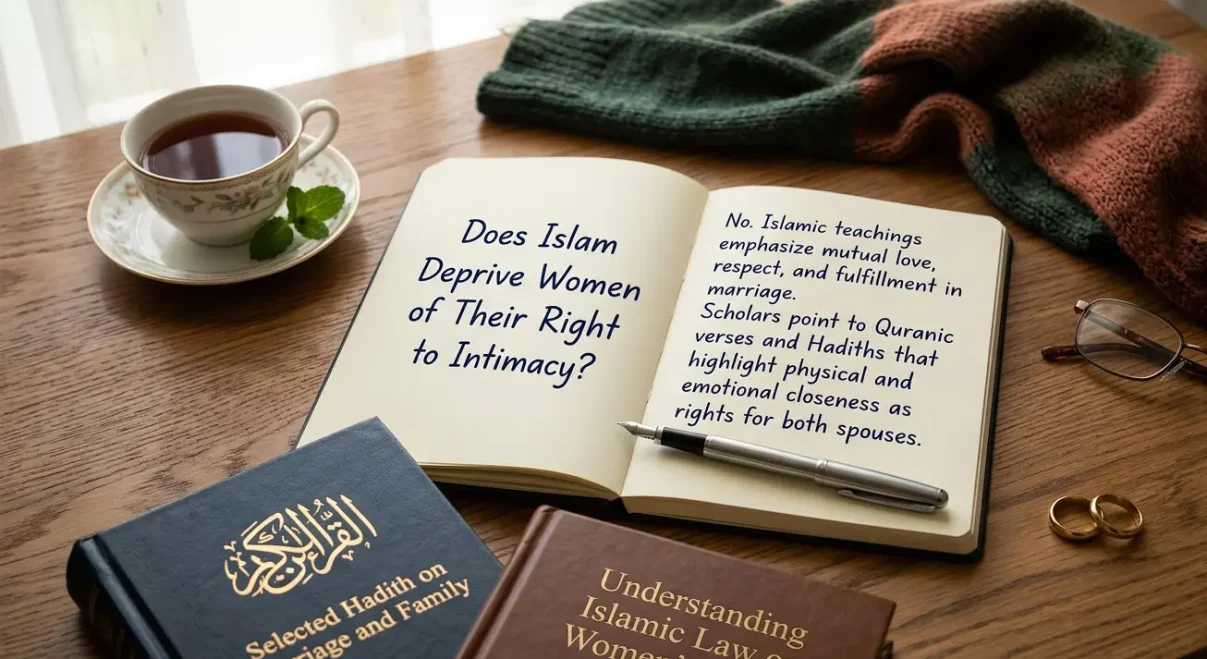
There is a lingering misconception that Islam views intimacy as a one-sided duty where the woman is perpetually on trial, and the man is the sole seeker of pleasure. But is that the reality of the faith? Does Islam truly deprive women of their rights to desire, comfort, and emotional connection?
Let’s peel back the layers of cultural taboo and look at the spiritual and psychological depth of intimacy in Islam.
1. The “Roommate Syndrome” and the Invisible Elephant
In clinical settings, when we discuss mental health and depression in adults, we often find that a lack of intimacy plays a significant role. It’s the “white elephant”—it’s huge, it’s there, but no one wants to talk about it.
In many marriages, the “switch” for intimacy is treated like a light. You expect it to turn on instantly, regardless of the day’s arguments, the stress of the kids’ exams, or the exhaustion from work. When one partner (often the husband) feels a core biological and psychological craving, and the other (often the wife) feels overwhelmed or resentful, a wall begins to build.
If a wife says “no” 25 out of 30 days a month without communication or valid reason, the husband doesn’t just feel “unlucky”; he feels rejected, insulted, and eventually, he “switches off” emotionally. Conversely, when a husband ignores a wife’s emotional needs for years, he cannot expect her to be physically vibrant.
2. Intimacy as a Spiritual Mercy: Insights from the Quran
In Surah Al-Baqarah (2:187), Allah mentions that during the nights of Ramadan, intimacy is permissible. Think about this: Ramadan is a month of intense worship, fasting, and spiritual heights. Yet, Allah highlights the permissibility of intimacy. Why?
Because Allah knows the human Fitrah (innate nature). He knows that for a man, especially in a world filled with external temptations, his wife is his sanctuary. For a woman, the embrace of her husband is a source of security. By allowing intimacy during the holiest month, Allah acknowledges that physical connection is not “unholy”—it is a vital part of a healthy human existence.
The Metaphor of the “Garment”
Allah describes spouses as “Libas” (garments) for each other.
In the Quran (Surah Al-Baqarah, 2:187), Allah describes husbands and wives as “garments” for one another.
Think about what a garment does-
It stays closest to your skin.
It protects you from the elements.
It hides your flaws and beautifies you.
It provides warmth and comfort.
When you deny intimacy for years, you aren’t just saying “no” to an act; you are stripping away that garment, leaving your partner vulnerable to the “cold” of external fitna (temptation) or internal depression.
Intimacy isn’t just a physical act; it’s a release of “feel-good” hormones like oxytocin and serotonin. When you deny your partner intimacy for weeks or months without a valid
3. Does Islam Only Care About Men’s Desires?
A common grievance is the Hadith regarding the “curse of the angels” for a woman who refuses her husband without a valid reason. To understand this, we must look at the context and the entire Islamic framework.
Islam emphasizes the husband’s right because, biologically and socially, men are often more susceptible to external visual triggers. In a world of “hyper-sexuality” and easy access to pornography, a husband who chooses to stay “Halal” and centers his world around his wife is making a spiritual commitment. When he is constantly rejected or insulted for his needs (“You only care about the body!”), he feels like a “beggar” in his own home.
However, this is not a one-way street.
The Rights of the Wife
In Surah Al-Baqarah (2:222-223), Islam protects women in ways people often overlook-
During Menstruation: Allah explicitly calls it a “painful” or “uncomfortable” time (aza). He commands men to stay away from intercourse during this period. This isn’t because women are “dirty,” but because it is a time for her to rest.
Emotional Care: The Prophet (PBUH) showed us how to be affectionate during this time—resting his head in Aisha’s (RA) lap, sharing the same cup, and providing emotional warmth without the pressure of performance.
The “Tilth” Metaphor: Verse 223 compares women to a “tilth” (a field/shosho khetro). While some misinterpret this as “ownership,” the psychological reality is different. A farmer cherishes his field. He nurtures it, protects it, and knows that if he doesn’t take care of the soil, it won’t yield anything. This metaphor implies that for a man to “enter his tilth,” he must have nurtured the relationship first through “Foreplay” and emotional kindness.
4. Marital Rape, Trauma, and Valid “No’s”
Does a woman have the right to say no? Yes.
Islam does not advocate for “Berhom” (cruelty) toward oneself. There are several valid reasons to decline intimacy-
Physical Illness: If you are genuinely sick or in pain.
Menstruation/Post-natal bleeding: As commanded by Allah.
Trauma & Abuse: If a woman has a history of sexual abuse or is suffering from conditions like Vaginismus or OCD (cleanliness issues), she needs professional help, not coercion.
Marital Abuse: If a husband is abusive, he has already violated the “Libas” contract.
Allah reminds men in the bedroom: “And fear Allah, and know that you will (one day) meet Him.” This is a stern warning. If you use your strength to torture or ignore the emotional well-being of your wife, you will be held accountable.
5. Reviving the Spark: Actionable Advice
If you feel like you and your spouse have become “roommates,” it’s time for self-reflection.
For the Husbands: Are you providing the emotional “Foreplay”? Do you help with the kids? Do you compliment her? You cannot ignore her all day and expect a “smiling face” at night.
For the Wives: Do you understand the weight of your husband’s loyalty? In a world full of “fitna,” your appreciation and intimacy are his greatest shields.
For Both: When was the last time you tried to “seduce” your spouse? Don’t let the excitement die just because the marriage is 15 years old. Dress up for each other, flirt, and maintain the “thrill” that existed before the responsibilities of parenthood took over.
Conclusion: A Journey Toward Allah
Intimacy in Islam is not just a physical act; it is an act of Ibadah (worship) when done with the right intention. It guards your gaze, softens your heart, and creates a stable home for your children.
Don’t let pride, misunderstandings, or “mental walls” ruin the most beautiful relationship Allah has gifted you. Reflect on your standing before Allah: are you a “garment” for your spouse, or have you become a stranger?
A passionate content creator and technology enthusiast, who has been writing on various IT and informational topics for the past 3+ years. As a regular writer for Information Bangla, he loves to present complex topics to the readers in simple language.