
Cotton Fiber Properties, Quality Testing, and Identification

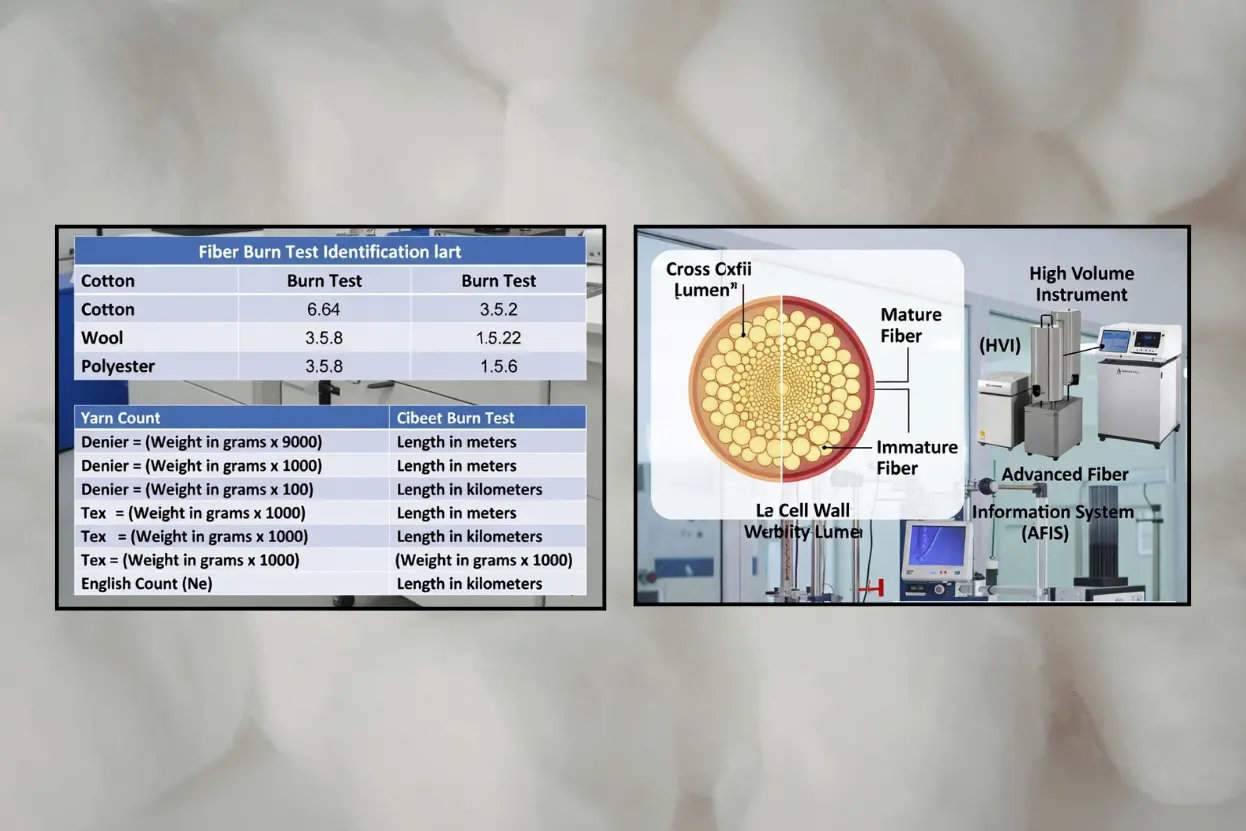
Learn about essential cotton fiber properties including maturity, fineness, and micronaire value. This guide covers technical quality testing using HVI and AFIS, plus professional methods for identifying cotton, wool, silk, and synthetic fibers.
Fiber Maturity, Micronaire Value, Fiber Fineness, Textile Fiber Identification, HVI Testing, AFIS Testing, Fiber Tenacity.
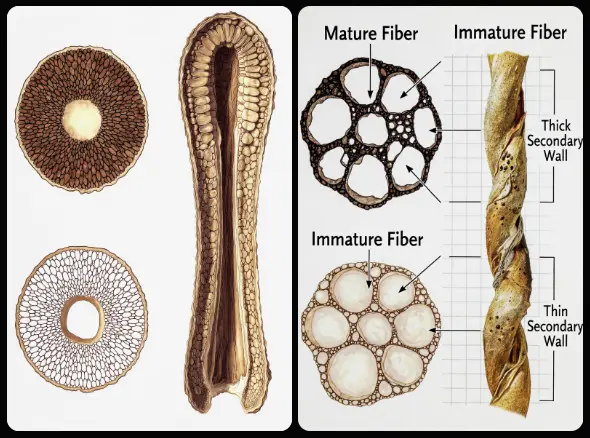
Q: What is Fiber Maturity?
A: Maturity is a relative measure of the extent of development of the cell wall. A mature fiber is one in which the cell wall has been developed to a great extent. On the other hand, an immature fiber is one in which the cell wall has been developed to a small extent.
Q: Why is Fiber Maturity Important?
A: Maturity is an important property of cotton because:
- Immature fibers are not capable of absorbing as much dye as mature fibers.
- Immature fibers are very weak and they may break during processing.
- The yarn made from immature fibers will have a very poor look.
Q: What is Fiber Fineness?
A: It is a relative measure of the diameter or cross-section of the fiber. It is generally expressed in terms of weight per unit length.
Q: What is Micronaire Value?
A: Micronaire value is a measure of both fiber fineness and maturity. It is expressed in micrograms per inch.

Q: How can we Identify Different Fibers?
Cotton: When we untwist/unravel the yarn and pull out the fiber, we see that the fiber length is very short (1 inch to 1.5 inches). When we burn it, it gives a smell like burning paper.
Wool: When we untwist and pull out the fiber, we see that the fiber is very rough and the length is around 2 to 3 inches. When we burn it, it gives a very strong smell like burning human hair. During the process of burning, it does not melt.
Silk: When we untwist/unravel the yarn and pull out the fiber, we will see that the fiber is very soft, fine, and pliable. When we burn it, it gives a very strong smell like burning human hair. During the process of burning, it does not melt.
Rayon: When we untwist/unravel the yarn and pull out the fiber, we will see that the fibre length is very long, very soft, and even in thickness. When we burn it, it burns like paper or cotton to grayish-white ash. In the process of burning, it does not melt.
Polyester, Nylon, Acrylic, etc.: When we untwist/unravel the yarn and pull out the fiber from it, we will see that the fiber length is very long, and in thickness. When we burn it, it melts first. When it catches fire, the smoke is black.

Q: What are the Instruments used for Testing Fiber and Yarn?
- HVI (High Volume Instrument): Used for testing fiber length, strength, micronaire, color, and trash.
- AFIS (Advanced Fiber Information System): Used for testing neps, seed coat neps, and fiber length distribution.
Q: What is Tenacity?
A: It is the ratio of the breaking force to the linear density of the fiber. It is expressed in grams per tex or centinewtons per tex.
[Reference: Dr. M. A Sayeed]

very easy and simple explanation, it was helpful for me, thanks