Have you ever found yourself staring at the ceiling in the middle of the night, wondering what went wrong in a relationship that seemed rock-solid? Or perhaps you’ve heard stories from friends about infidelity that left everyone baffled. “She had everything—why would she risk it all?” If these questions sound familiar, you’re not alone. Infidelity, especially among women, is a topic shrouded in mystery, judgment, and misconceptions. But understanding why women cheat isn’t about assigning blame; it’s about gaining empathy, insight, and tools to build stronger connections.
In this comprehensive guide, we’ll explore the multifaceted reasons behind female infidelity. Drawing from biology, psychology, real-life examples, and practical advice, we’ll break down the chemical processes in the brain, the stages of temptation, the role of social media, and much more. Whether you’re trying to safeguard your own relationship, heal from betrayal, or simply satisfy your curiosity, this article aims to provide valuable, actionable knowledge. Let’s dive in and demystify what drives some women to stray—and how to foster relationships that stand the test of time.
The Brain’s Secret Chemistry: How Hormones Fuel Infidelity
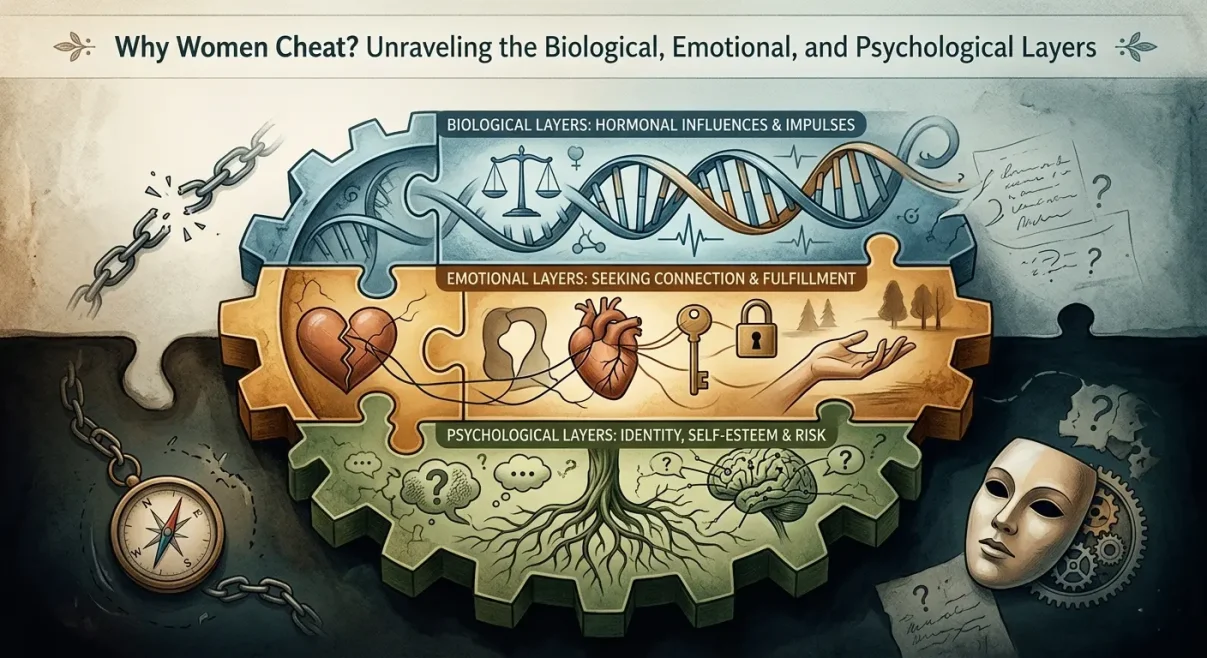
At the heart of many infidelities lies a powerful, often overlooked force: brain chemistry. It’s not just about willpower or morals; it’s about how our bodies are wired to respond to novelty and routine. Women’s brains, like men’s, are influenced by a cocktail of neurotransmitters that can make fidelity feel like an uphill battle when not understood.
Picture this: In the early days of a relationship, everything feels euphoric. That’s because the brain is pumping out dopamine—a feel-good chemical associated with reward and pleasure. Serotonin adds a sense of well-being, while oxytocin, the “bonding hormone,” fosters attachment. But over time, as the relationship settles into familiarity, these chemicals shift. Dopamine levels drop, and the excitement wanes, leaving room for boredom or dissatisfaction.
This isn’t unique to women, but societal expectations often amplify it. Women are frequently conditioned to seek emotional depth and validation, making them more susceptible to chasing that initial “high” elsewhere. Research from evolutionary psychology suggests this drive for novelty stems from ancient survival instincts—seeking genetic diversity or better resources. In modern terms, it translates to glancing at a charming colleague or responding to a flirty DM.
Key Chemicals at Play-
Dopamine: The thrill-seeker, triggered by new experiences, compliments, or risks.
Serotonin: Stabilizes mood but dips in routine, leading to restlessness.
Oxytocin: Builds long-term bonds but lacks the “spark” of dopamine.
Understanding this can be a game-changer. For instance, if you’re in a long-term partnership, recognizing these shifts allows you to proactively reignite sparks through shared adventures or surprises, rather than letting resentment build.
The Honeymoon High: Why New Love Feels Like a Drug
Remember the butterflies, the endless texts, and the can’t-keep-your-hands-off-each-other phase? That’s not magic—it’s biology on overdrive. In the initial stages of romance, the brain mimics the effects of addictive substances, flooding the system with pleasure chemicals. But like any high, it doesn’t last forever.
Take Sarah, a 35-year-old marketing executive I spoke with (names changed for privacy). She described her first year with her husband as “pure bliss—every dinner felt like a movie scene.” Fast forward a decade, and the routine of kids, bills, and Netflix nights had dulled that shine. When a new project partner started paying her attention, it reignited those forgotten feelings. “It wasn’t about him,” she admitted. “It was about feeling alive again.”
This pattern is common. Studies from the Journal of Sex Research indicate that the passionate phase typically lasts 6-24 months before transitioning to companionate love. When women don’t anticipate this, they might misinterpret the fade as a sign the relationship is flawed.
Practical Insight: To combat this, couples can schedule “novelty dates”—try a new hobby like rock climbing or cooking classes. This boosts dopamine without external temptation, keeping the bond fresh.
Comparing Passion Phases: A Quick Table
Phase
Key Chemicals
Common Feelings
Duration
Risks if Unmanaged
Honeymoon (Early)
High Dopamine, Oxytocin Surge
Euphoria, Obsession, Idealization
6-24 Months
Over-Reliance on Intensity
Transition (Mid)
Dopamine Decline, Oxytocin Rise
Comfort, Stability, Occasional Boredom
2-5 Years
Seeking External Thrills
Attachment (Long-Term)
Steady Oxytocin, Low Dopamine
Security, Deep Trust, Contentment
Ongoing
Resentment or Emotional Withdrawal
This table highlights why the shift feels jarring—it’s a natural progression, not a failure.
Real-Life Tales: When Routine Sparks Temptation
Infidelity doesn’t happen overnight; it’s often a slow burn fueled by unmet needs and ignored warnings. Let’s look at some anonymized stories that illustrate this.
Emily’s Story: A devoted mom of two, Emily felt invisible after years of prioritizing family. When an old high school friend reconnected on Facebook, his compliments made her feel seen. What started as nostalgic chats evolved into emotional sharing. “I wasn’t unhappy at home,” she said, “but this made me question everything.” Her affair ended her marriage, but retrospect showed it was the novelty, not love, driving her.
Lisa’s Dilemma: In her 40s, Lisa thrived in a high-powered job but felt stagnant in her partnership. A gym acquaintance’s flirtations provided the adrenaline rush missing at home. She rationalized it as harmless until it escalated. Post-divorce, she realized her brain was chasing the “drug” of attention, not a better partner.
These examples underscore a key point: Women often cheat not because they’re inherently disloyal, but because they crave validation and excitement that routine erodes. Psychological studies, like those from Dr. Esther Perel in her book The State of Affairs, emphasize that affairs are less about the partner left behind and more about rediscovering a lost self.
Bullet-Point Advice for Spotting Early Signs-
Increased focus on appearance (e.g., new wardrobe for “work”).
More time on social media or secretive phone use.
Criticizing the partner over minor flaws that were once overlooked.
Seeking out situations with potential admirers, like solo trips or new hobbies.
By addressing these proactively—through open dialogues about needs—you can prevent escalation.
The Slippery Slope: Stages Leading to an Affair
Cheating follows predictable stages, often starting innocently and building momentum. Recognizing them early can be lifesaving for relationships.
The Spark Stage: A fleeting attraction—perhaps a smile from a barista or a coworker’s joke. It’s subconscious, but it plants a seed of dopamine.
The Build-Up Stage: Attention is reciprocated. Compliments flow, leading to more interactions. Here, emotional bonds form under the guise of friendship.
The Justification Stage: Flaws in the current relationship are magnified. Thoughts like “We grew apart” emerge as rationales for deeper involvement.
The Crossing Stage: Emotional infidelity turns physical. By now, the original bond feels irreparably weakened.
Social media accelerates this. With endless connections at fingertips, a simple “like” can trigger the cycle. According to a 2023 Pew Research study, 20% of partnered adults admit to emotional affairs via digital platforms.
Insightful Tip: Set boundaries early, like shared social media rules or regular check-ins on emotional needs. This fosters transparency without control.
Contrary to stereotypes, women’s infidelity is rarely just about sex. It’s about reclaiming identity, feeling desired, and escaping roles like “mom” or “wife.” Affairs offer a mirror reflecting a vibrant, unburdened self.
Consider Marina’s regret: After leaving her stable marriage for a passionate fling, she found the new relationship mirrored the old one’s flaws once the thrill faded. “I was chasing a version of me that didn’t exist,” she reflected.
Cultural influences play a role too. Movies and social media perpetuate eternal passion myths, setting unrealistic expectations. Childhood patterns—unstable homes wiring brains for drama—can make calm relationships feel “wrong.”
Table of Common Motivations vs. Myths-
Motivation
Reality
Common Myth
Emotional Validation
Seeking to feel valued beyond daily roles.
It’s always about physical dissatisfaction.
Novelty and Excitement
Brain craving dopamine from new stimuli.
Cheaters are unhappy or unloved at home.
Identity Escape
Rediscovering lost aspects of self.
Affairs lead to happier endings.
Cultural Pressure
Media glorifying constant romance.
Fidelity is effortless for “good” people.
Faithful Foundations: Strategies for Lasting Loyalty
Not all women cheat—many thrive in long-term bonds by embracing the oxytocin phase. They view routine as strength, not stagnation.
Successful couples-
Communicate vulnerabilities openly.
Prioritize shared growth over fleeting highs.
Build rituals, like weekly date nights.
Prevention starts with education. Teach partners about chemical shifts, encourage therapy for patterns, and challenge cultural lies about “forever butterflies.”
FAQs: Common Questions on Female Infidelity
What triggers women to cheat? Often, it’s the fade of initial passion chemicals, leading to novelty-seeking.
Is it more emotional than physical? Yes, many start as emotional connections before escalating.
Can relationships survive infidelity? Absolutely, with therapy, honesty, and rebuilt trust—success rates hover around 60% for committed couples.
How to spot vulnerability? Look for emotional withdrawal or increased external focus; address with empathy.
If this resonated, share it or explore our posts on emotional cheating signs and trust rebuilding. Subscribe for more relationship wisdom—your future self will thank you!
Alex Asik is a passionate reader and an independent writer who believes in expressing thoughts without boundaries. Writing with zero filters and zero apologies, Alex shares whatever sparks curiosity.