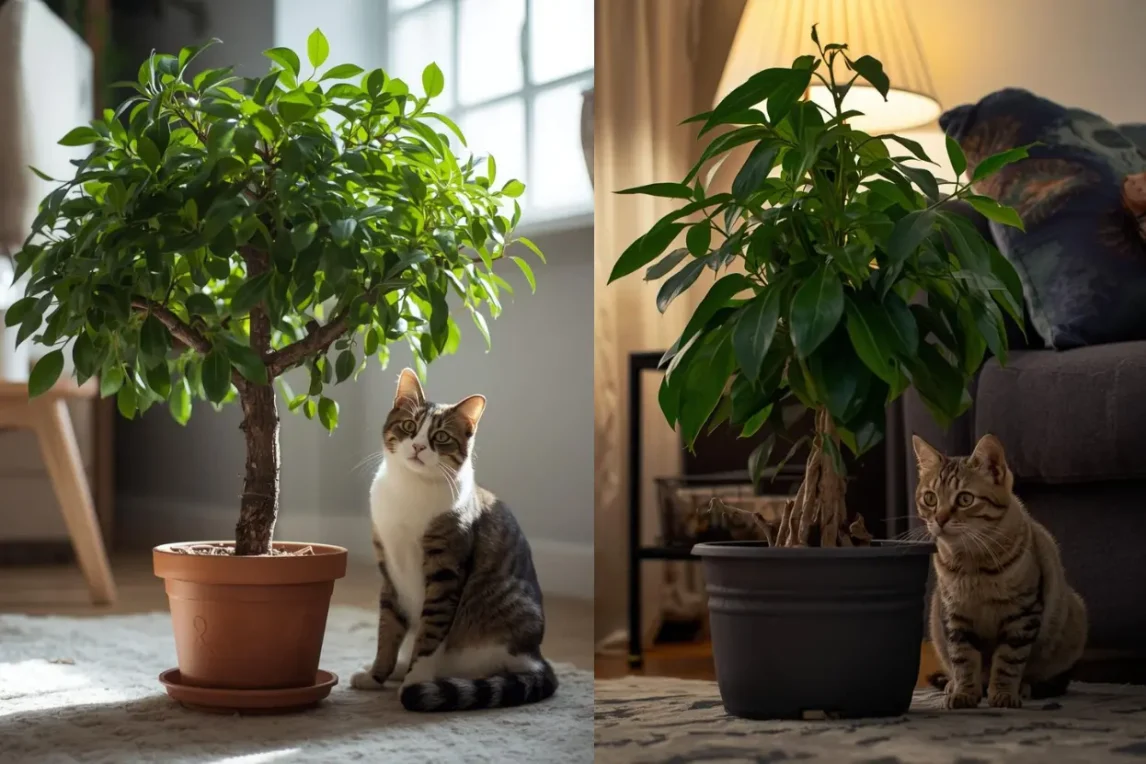
Are Money Trees Toxic to Cats?

If you are a cat parent who also loves a touch of greenery, you know the specific anxiety of bringing a new plant home. You spot a beautiful Money Tree with its braided trunk and lush canopy, and immediately wonder: Is this going to hurt my cat?
The short answer is no. The Money Tree (Pachira aquatica) is safe for cats.
However, as any experienced cat owner knows, “non-toxic” doesn’t always mean “trouble-free.” Below, we’ll break down exactly what you need to know to keep your feline friend safe and your Money Tree thriving, including a critical warning about a toxic plant that shares the same nickname.

The Verdict: Safe, But Not a Snack
According to the ASPCA (American Society for the Prevention of Cruelty to Animals), the Money Tree (Pachira aquatica) is officially classified as non-toxic to both cats and dogs.
This means the plant does not contain systemic poisons (like oxalates or cardiac glycosides) that would cause organ failure or severe neurological distress if ingested. If your cat takes a bite out of a leaf while you aren’t looking, you generally do not need to rush to the emergency vet.
The “Fiber” Factor
While the plant isn’t poisonous, it isn’t food. Cats are obligate carnivores; their digestive systems aren’t designed to break down the fibrous material of Money Tree leaves and stems.
If your cat treats your plant like a salad bar, they may experience Gastrointestinal Upset. This usually looks like:
- Mild vomiting (often just bringing up the leaf pieces).
- Loss of appetite.
- Loose stools.
Think of it like eating grass—it’s not toxic, but it might come back up.
⚠️ CRITICAL WARNING: The “False” Money Tree
This is the most important section of this guide for E-E-A-T and safety purposes.
There is a massive confusion in the plant world regarding common names. The Jade Plant (Crassula ovata) is also frequently nicknamed the “Money Plant” or “Money Tree.”
The Jade Plant IS toxic to cats.
Before you relax, check the scientific name of your plant-
- Safe: Pachira aquatica ( braided trunk, thin shiny leaves looks like a palm/umbrella).
- Toxic: Crassula ovata (succulent, thick fleshy leaves, rubbery texture).
If your cat eats a Jade Plant, it can cause depression, incoordination, and a slowed heart rate. Always verify the botanical name on the nursery tag.
Why Do Cats Love Money Trees?
You might be wondering why your cat is obsessed with this specific plant. It usually comes down to three factors-
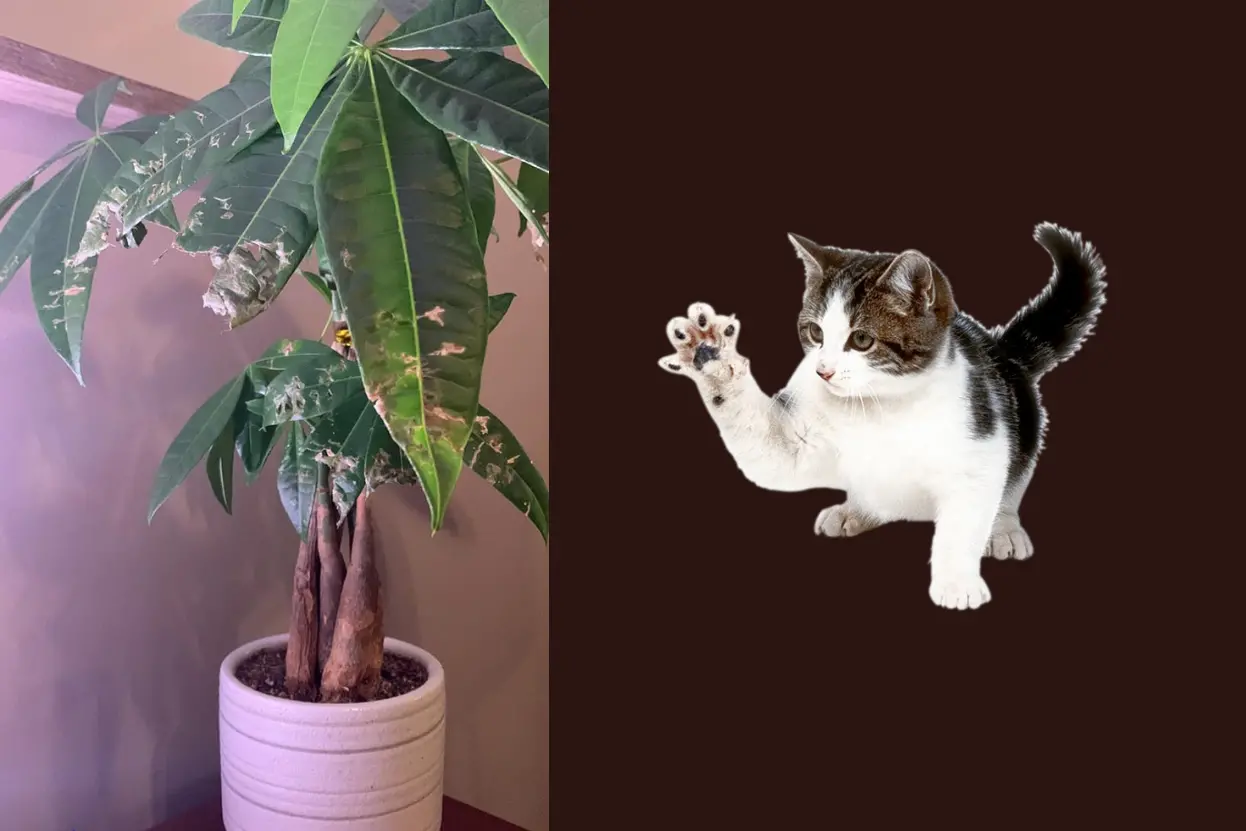
- The Predator Instinct: The leaves of a Pachira aquatica are long and hang loosely. When the AC kicks on or a breeze blows, they flutter. To a cat, this movement mimics prey (like a bird or insect), triggering their hunting drive.
- The Texture: The signature braided trunk of a commercial Money Tree feels remarkably similar to a scratching post. It offers a satisfying resistance that cats love to dig their claws into.
- Height: Cats love vertical territory. A mature Money Tree offers a “jungle” canopy that makes for a perfect hiding spot.
Hidden Dangers: It’s Not the Plant, It’s the Chemistry
Even though the Money Tree itself is safe, what you put on it might not be.
- Pesticides: Many nurseries spray plants with insecticides before sale. If your cat licks a leaf coated in harsh chemicals, they can suffer toxic effects unrelated to the plant genetics. Tip: Always wipe down the leaves of a new plant with a damp cloth before bringing it inside.
- Fertilizers: Potting soil often contains fertilizer pellets (white or blue balls). If your cat digs in the dirt and eats these, it can be dangerous.
- Potting Water: Standing water in a saucer can accumulate bacteria or fertilizer runoff. Don’t let your cat drink from the plant tray.
How to Coexist: 5 Proven Strategies
If your cat is determined to turn your symbol of prosperity into a chew toy, here is how to manage the environment-
1. The “Citrus Shield”
Cats generally despise the smell of citrus. You can place lemon or orange peels on top of the soil. This acts as a natural barrier that smells great to humans but repulsive to felines.
2. Sacrifice a Plant
Give your cat a “yes” option. Place a pot of Cat Grass (wheatgrass) or organic Catnip near the Money Tree. When you see them heading for the tree, gently redirect them to their plant.
3. The Foil Trick
If your cat is climbing the braided trunk, wrap the base loosely in aluminum foil for a few days. The sound and texture of foil are unpleasant to cats, and they will usually learn to avoid the area quickly.
4. Eliminating the “Wiggle”
Cats attack dangling things. If there are lower leaves that hang within easy batting range, prune them. Keeping the foliage higher up reduces the temptation.
5. Verticality
Since Money Trees can tolerate being moved, place them on a sturdy plant stand or a stool that doesn’t offer a ledge for the cat to jump onto. If the cat can’t reach the soil, they can’t dig.
Summary Table: At a Glance
| Feature | Money Tree (Pachira aquatica) | Jade Plant (Crassula ovata) |
| Toxicity to Cats | Non-Toxic (Safe) | Toxic (Dangerous) |
| Primary Risk | Mild stomach upset from fiber | Heart rate issues, depression |
| Visual ID | Braided trunk, thin palm leaves | Thick, fleshy succulent leaves |
| Action Required | Monitor for vomiting; prevent chewing | Immediate Vet Visit |
Final Thoughts
The Money Tree is a fantastic choice for pet owners. It brings a tropical, architectural vibe to your home without posing a chemical threat to your four-legged family members.
Just remember: while the plant won’t poison them, a bored cat can destroy a Money Tree in minutes. By using a few deterrents and double-checking that you haven’t accidentally bought a Jade Plant, you can enjoy your greenery and your kitty’s company simultaneously.