
Are Money Trees Safe for Cats?

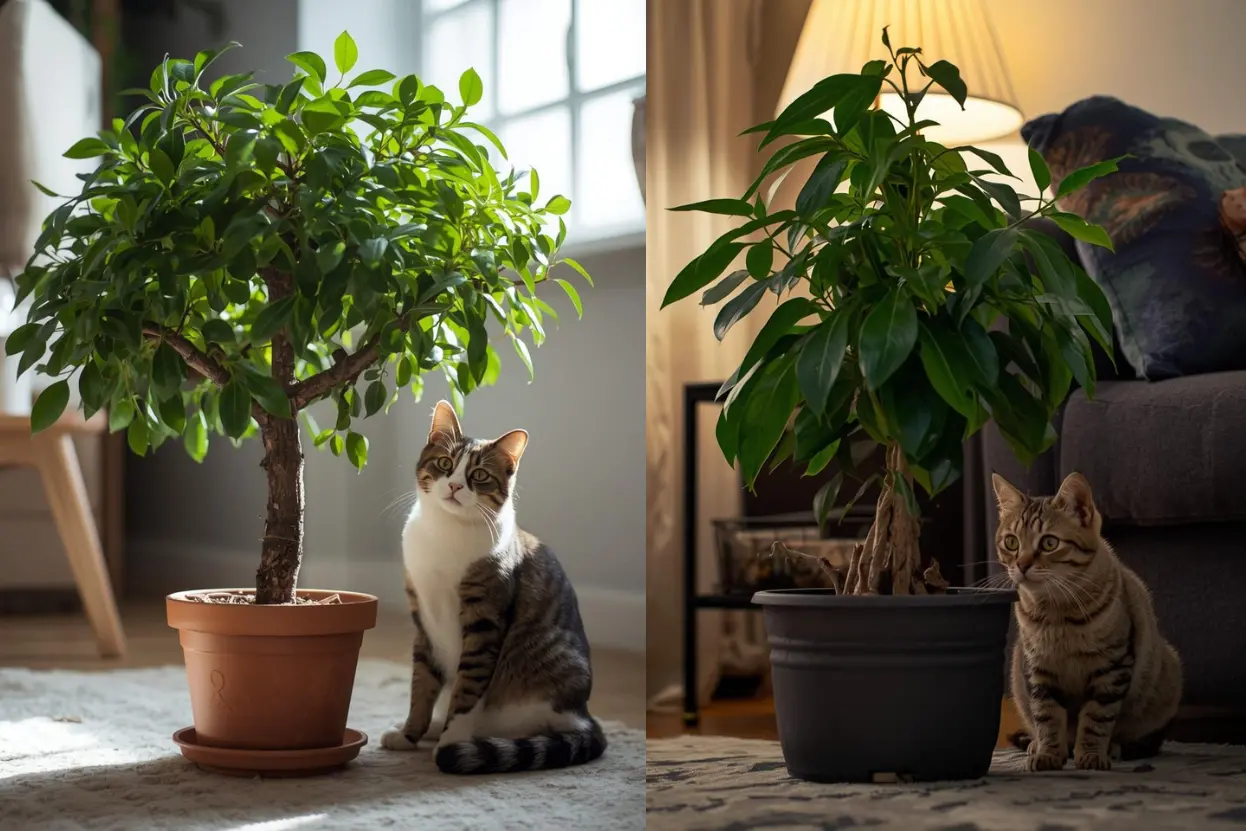
If you are a cat owner, you know the specific anxiety of bringing a new houseplant home. You set it down, admire the aesthetic, and then freeze as your cat slowly walks over to inspect it. You find yourself frantically Googling: “Is this going to hurt them?”
It’s a valid fear. We want our homes to look lush and green, but not at the expense of our furry roommates.
One of the most popular indoor trees right now is the Money Tree (Pachira aquatica). It’s prized for its braided trunk and promised “good luck” vibes. But is it safe for cats?
The short answer is yes. But, as with most things involving cats, there is a little more nuance to it. Here is everything you need to know about keeping your Money Tree alive and your cat safe.

The Verdict: Is the Money Tree Toxic?
According to the ASPCA, the Money Tree (Pachira aquatica) is non-toxic to cats.
This means if your cat decides to take a bite out of a leaf while you aren’t looking, they are not at risk of systemic poisoning. Unlike lilies or sago palms—which are veterinary emergencies—the Money Tree does not contain fatal toxins.
However, “Non-Toxic” Doesn’t Mean “Food”
I always remind plant owners that just because a plant isn’t poisonous doesn’t mean it’s a snack. Cats are obligate carnivores; their digestive systems aren’t designed to process large amounts of fibrous plant matter.
If your cat treats your Money Tree like a salad bar and eats a significant amount, you will likely see-
- Mild vomiting (usually clear or with plant bits)
- Diarrhea
- General grumpiness or lethargy
Think of it like a human eating grass—it won’t kill you, but your stomach isn’t going to thank you for it.
Why Do Cats Love Money Trees?
From a design perspective, the Money Tree is a tropical showstopper. But from a cat’s perspective, it’s a giant toy.
- The Leaves Wiggle: The leaves of the Pachira aquatica are long, glossy, and attached to thin stems. They flutter with the slightest airflow (or HVAC current). To a cat’s predatory instinct, that movement looks like prey.
- The Trunk is a Scratching Post: The signature braided trunk looks suspiciously like high-end cat furniture. It provides a perfect texture for sharpening claws.
- Height: If you have a larger floor plant, it provides a canopy that cats love to hide under.
⚠️ A Critical Warning: The “Other” Money Tree
This is the most important section of this article. Common names can be dangerous.
There is another plant often nicknamed the “Money Tree” or “Money Plant,” and that is the Jade Plant (Crassula ovata).
- Pachira aquatica (True Money Tree): Safe.
- Crassula ovata (Jade Plant): TOXIC.
Jade plants are succulents with thick, fleshy, oval-shaped leaves. If your cat ingests a Jade plant, they can suffer from severe vomiting, slow heart rate, and depression.
The Takeaway: Always check the Latin scientific name on the nursery tag. If it says Pachira, you are in the clear. If it says Crassula, keep it far away from your pets.
Real-World Tips: Saving Your Plant from Your Cat
Even though the plant is safe, you probably don’t want your cat shredding your beautiful new tree. Here are a few “battle-tested” strategies to keep them apart-
1. The “Citrus Shield”
Cats generally despise the smell of citrus. You can buy pet-deterrent sprays, or simply dilute some lemon juice with water and mist the base of the plant (test a leaf first to ensure it doesn’t burn). Some owners even place lemon or orange peels on top of the soil.
2. Change the Soil Texture
Cats sometimes dig in large pots because the soil feels like litter. To stop this, cover the soil with-
- Large decorative river stones (too heavy to move).
- Pinecones (they hate the texture on their paws).
- Aluminum foil (temporarily, to train them off it).
3. The “Sacrificial” Plant
Sometimes, cats chew plants because they crave greens. Give them a “yes” zone. Buy a pot of Cat Grass (wheatgrass) or Catnip and place it near the Money Tree. When they go for the tree, gently redirect them to their plant.
When to Call the Vet
If you come home to a shredded Money Tree, don’t panic. Clean up the mess and watch your cat.
You only need to call the vet if-
- Vomiting persists for more than 24 hours.
- The cat is refusing food or water.
- You notice blood in the stool.
- You are unsure if the plant was actually a Pachira aquatica.
Note: I am an experienced plant enthusiast, not a veterinarian. If your gut tells you something is wrong with your pet, always make the call.
Other Cat-Safe Options
If you want to build out your indoor jungle, here are three other plants that pair well with Money Trees and are ASPCA-approved-
- Spider Plant (Chlorophytum comosum): Very easy to grow, though cats are obsessed with the dangly babies.
- Boston Fern (Nephrolepis exaltata): Lush and green, loves humidity.
- Calathea (Prayer Plants): Beautiful patterned leaves and completely non-toxic.
Final Thoughts
The Money Tree is a fantastic choice for pet owners. It brings a vibe of prosperity and tropical calm to your home without introducing a hazard to your furry friends. Just remember to double-check that Latin name, and maybe buy some cat grass on the side—just to keep the peace.