Assaulted, Threatened with Death, and Broken by Fear: How a Hindutva Mob Forces a Young Muslim Man into Hindutva Chanting in Fatehpur, Uttar Pradesh, India
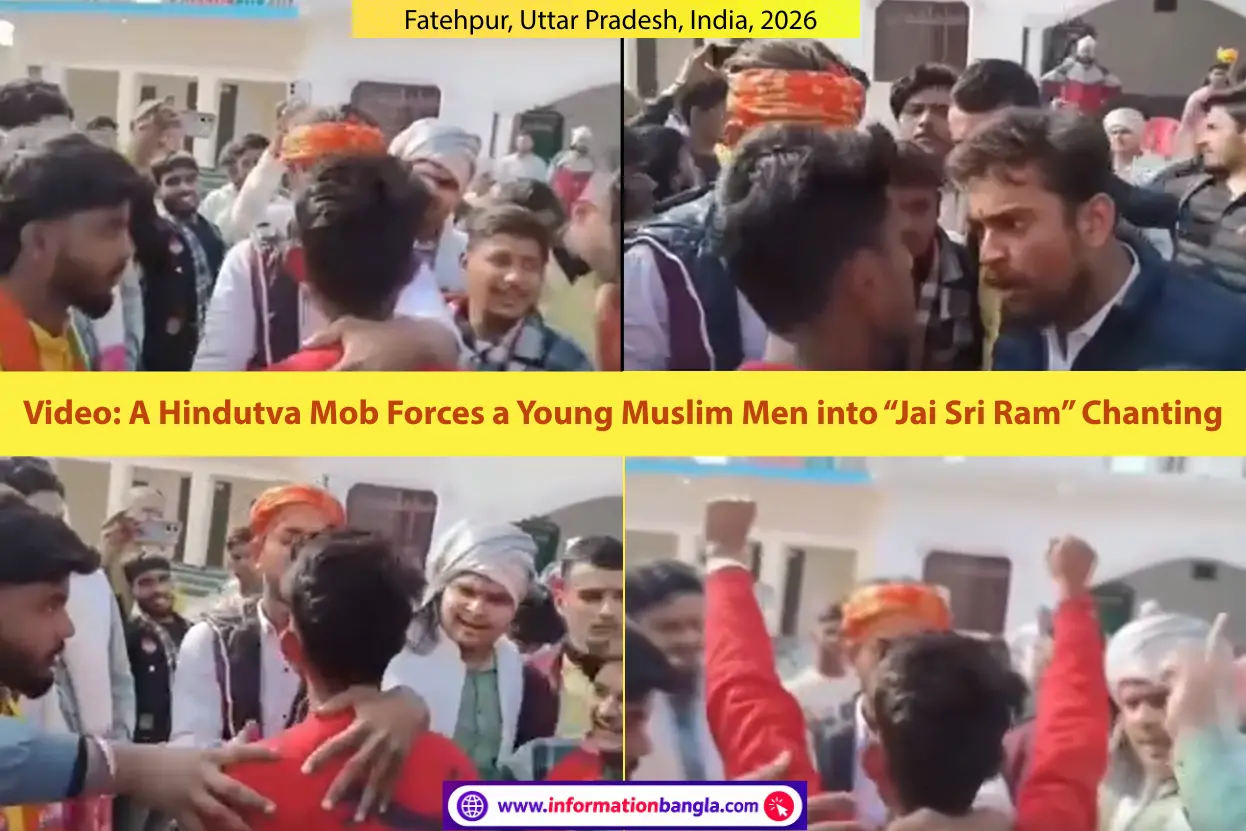
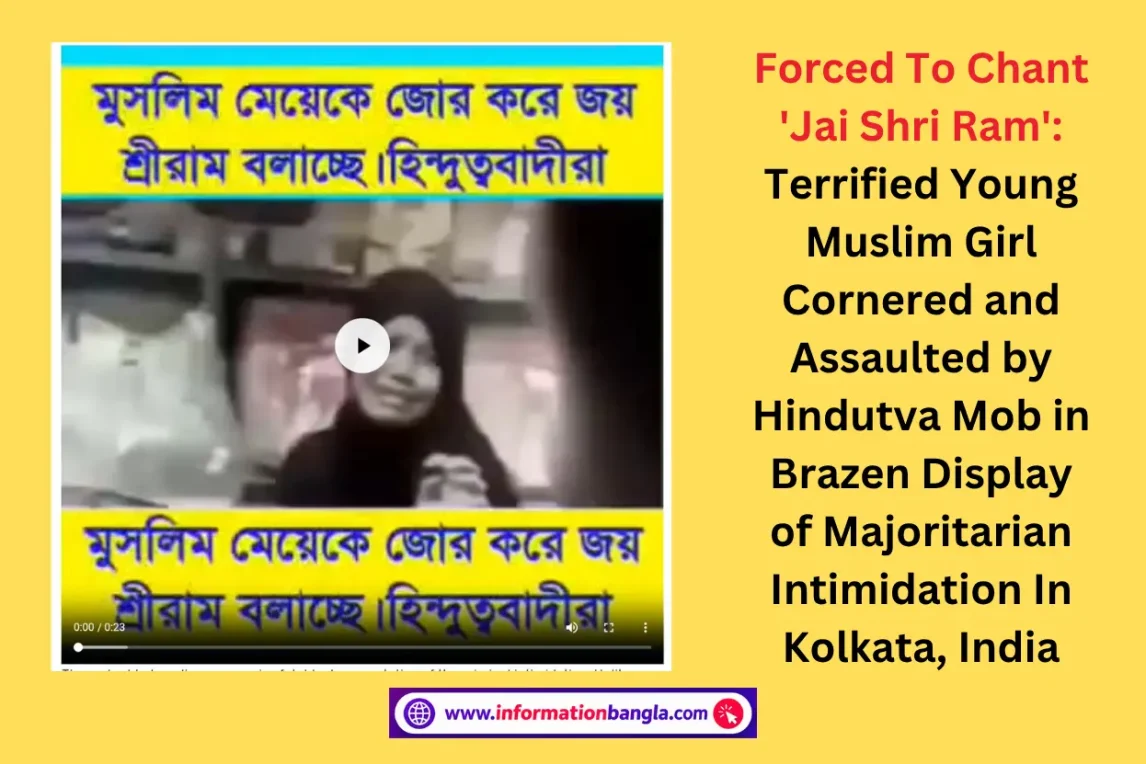
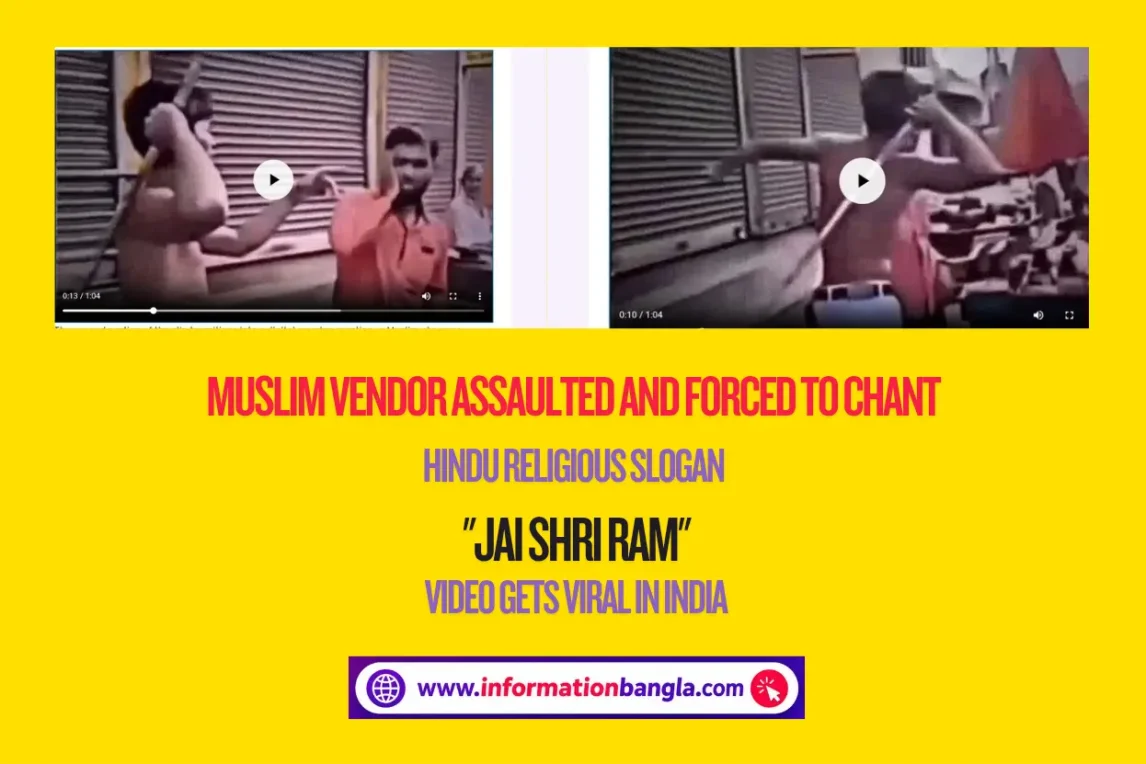
The images and sounds emerging from Fatehpur, Uttar Pradesh, are as harrowing as they are intimately familiar to anyone tracking the socio-political mutation of modern India. A young Muslim man stands cornered, swallowed by a sea of aggressive faces. Smartphones are thrust into his face—not merely to record, but to immortalize his humiliation. Several people physically assaulted him, threatened him, and forced him to shout Hindu religious slogans. In the video, the victim is seen repeatedly hitting her chest with his hand around her throat and threatening him. The demand from the mob is singular and uncompromising: he must loudly recite “Jai Shri Ram.” When he attempts to de-escalate with quiet compliance, the mob grows more furious, demanding a full-throated performance of submission. What follows are explicit, vulgar threats of physical mutilation if his tongue slips or if he invokes the name of his own God.
To look at this incident as an isolated scuffle or a random act of street-level bigotry is to completely miss the systemic machinery at play. This is not casual prejudice; it is choreographed majoritarian dominance. It is the ritualistic subjugation of a citizen based entirely on his religious identity, carried out in broad daylight with absolute certainty that no hand of law will intervene to stop it.
The Architecture of State-Sponsored Impunity
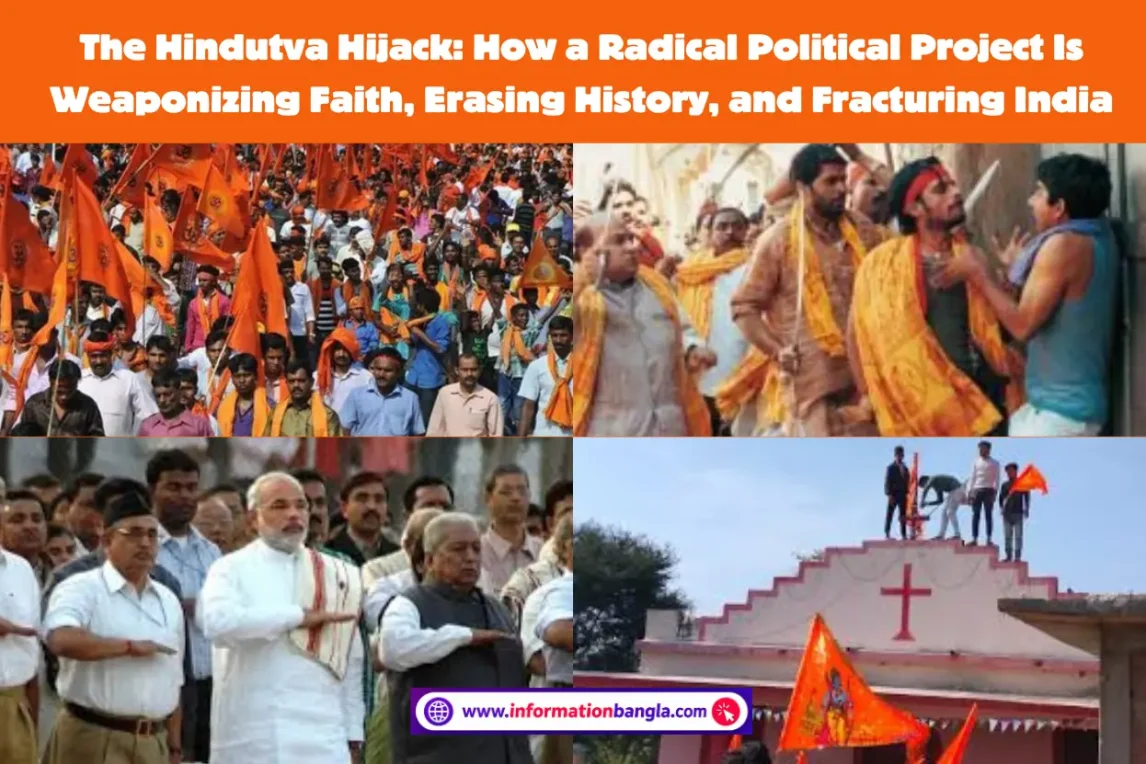
Why do these mobs operate with such brazen fearlessness? The answer does not lie in the psychology of the street goons, but in the halls of political power in Lucknow and New Delhi. Under the political dominance of the ruling Bharatiya Janata Party (BJP), particularly in states like Uttar Pradesh, the line between state apparatus and right-wing vigilante groups has effectively vanished.
Vigilantism has been normalized into a tool of governance. For the foot soldiers of Hindutva, the camera is no longer a deterrent; it is a weapon of propaganda. They do not hide their faces because they know that in today’s political climate, communal aggression is rarely punished—instead, it is frequently rewarded. Over the last decade, we have seen a recurring pattern where individuals involved in hate speech, cow vigilantism, and forced religious conversions are publicly garlanded by political figures, protected by local law enforcement, and elevated within party ranks.
When the state machinery selectively uses bulldozers to demolish minority homes, frames discriminatory legislation, and remains passive during communal assaults, it sends an unmistakable green light to the fringes. The message to the street is clear: The state is behind you. Consequently, local police forces often mirror this political bias, either arriving late to the scene or registering counter-cases against the victims to dilute the communal nature of the crime.
The Hijacking of the Sacred
For centuries, phrases like “Jai Shri Ram” lived in the private and cultural spaces of millions of devout Hindus as expressions of peace, righteousness, and spiritual devotion. One of the greatest tragedies of the current political landscape is how the Hindutva movement has systematically weaponized this sacred language.
In the hands of a political mob, a prayer is transformed into a war cry. It is used as a loyalty test, a tool of intimidation designed to break the psychological spine of the minority community. By forcing a Muslim youth to utter these words under the threat of horrific violence, the perpetrators are not seeking religious conversion; they are seeking total political capitulation. It is an assertion of ownership over public spaces, declaring to the minority population that their survival depends entirely on their willingness to perform obedience to the majoritarian identity.
This relentless atmosphere of siege has pushed India’s 200 million Muslims into a state of profound existential anxiety. Across community discussions and international human rights forums, comparisons are increasingly being drawn to historical atrocities, apartheid regimes, and modern humanitarian crises like the systematic displacement in Palestine.
When a community faces daily economic boycotts, hate campaigns on mainstream media, and routine physical threats on the streets, the fear of localized erasure or systemic violence becomes a terrifyingly logical conclusion for those living through it. The rhetoric of the far-right in India has openly moved from subtle dog-whistling to direct calls for demographic purging, creating an environment where the threat of large-scale violence feels perpetually on the horizon.
However, while the comparison to total erasure highlights the psychological trauma on the ground, India’s reality remains a complex, high-stakes battleground. Unlike historical instances of unchecked state genocide, India still possesses a deeply entrenched, albeit severely strained, democratic resistance. The battle is being fought daily by civil society activists, independent journalists, legal aid networks, and segments of the judiciary who continue to use the secular constitution to challenge majoritarian overreach. The struggle in India is an ongoing, fierce conflict between the foundational, pluralistic identity of the republic and a radical majoritarian project seeking to overwrite it.
A Nation at the Crossroads
The Fatehpur incident is a mirror held up to the conscience of the nation. When a state allows its minorities to be terrorized on public roads for the crime of their birth, it ceases to function as a constitutional democracy and begins to resemble a rogue majoritarian state.
Electoral victories achieved through the deliberate polarization of society come at a catastrophic cost. They erode the rule of law, destroy social cohesion, and turn ordinary citizens into perpetrators of hate. If India wishes to protect its standing on the global stage and preserve its inner stability, this culture of impunity must be aggressively dismantled. The perpetrators of forced sloganeering and street violence cannot be treated as mere local troublemakers; they must be prosecuted to the absolute limit of hate-crime laws. True national sovereignty is not measured by the ability of a mob to silence a vulnerable youth, but by the state’s willingness to guarantee that the weakest citizen can walk the streets with dignity, safety, and an uncompromised faith.
Sagar Soren is a Staff Reporter for InformationBangla.com, specializing in ground-level investigative journalism and human rights. He is committed to delivering accurate, unbiased, and fact-based news.