Social media footage appears to show a mosque imam being pressured to chant “Jai Shri Ram,” reigniting concerns over religious intolerance and communal tensions.
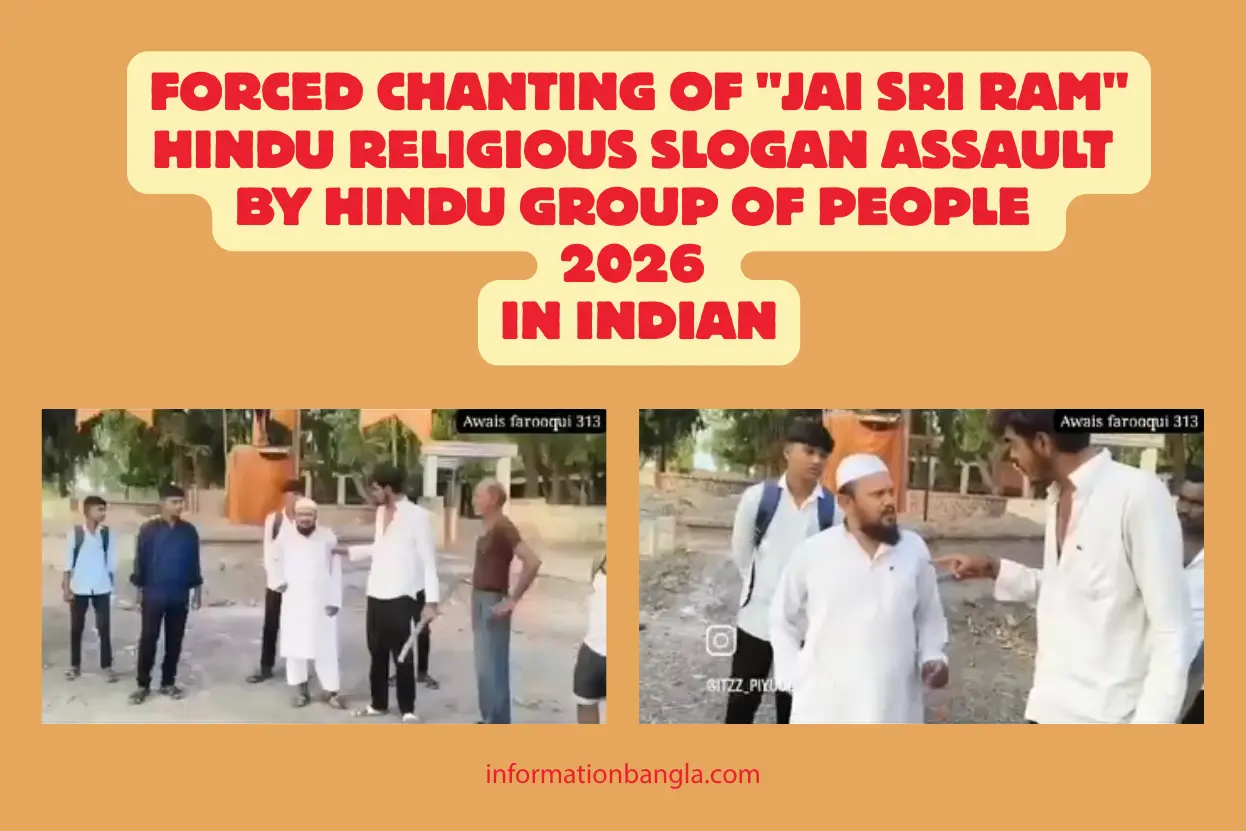
A viral video circulating across social media platforms has ignited widespread outrage after it appeared to show a Muslim cleric being pressured by a group of men to chant the Hindu religious slogan “Jai Shri Ram” in India.
The footage, which has been widely shared on Facebook and other social media networks, allegedly shows a mosque imam and Quran memorizer, identified in accompanying posts as Hafiz Qasem, surrounded by several men during what appears to be a tense public confrontation. According to claims made alongside the video, the cleric was forced to repeat the slogan against his will.
The exact location, date, and circumstances of the incident have not yet been independently verified. However, the clip has rapidly gained attention online, with many viewers describing the alleged act as a troubling example of religious intimidation and public humiliation.
Video Sparks Strong Reactions
In the footage, a man dressed in traditional Islamic attire can be seen standing among a group of individuals while at least one person appears to address him in an aggressive manner. The interaction unfolds in a public setting, with several bystanders present.
Although the video is relatively short and does not provide full context, social media users have widely interpreted the exchange as an attempt to coerce the cleric into chanting a slogan associated with Hindu religious and political identity.
The video has triggered strong reactions from activists, religious leaders, and ordinary users online. Many have condemned the incident and called for authorities to investigate the circumstances surrounding the confrontation.
Critics argue that if the allegations are confirmed, the episode would represent a serious violation of religious freedom and personal dignity.
Questions Remain Over Full Context
Despite the widespread circulation of the footage, important questions remain unanswered.
The available video does not clearly establish what occurred before the recording began, whether any dispute preceded the confrontation, or whether local authorities have responded to the incident. As a result, the claims accompanying the video remain allegations pending independent verification.
Media experts have repeatedly warned that viral videos involving religious or communal issues can spread rapidly before facts are fully established, increasing the risk of misinformation and heightened tensions.
Nevertheless, observers note that the visible interaction appears confrontational and has understandably generated concern among viewers.
Religious Slogans and Communal Sensitivities
The controversy surrounding the video stems in part from the symbolic significance of the slogan at its center.
“Jai Shri Ram,” which translates to “Victory to Lord Ram,” is a widely used Hindu devotional expression. While many Hindus use the phrase purely in a religious context, critics have argued that it has, in some instances, also been employed as a political slogan amid India’s increasingly polarized communal landscape.
Over the past decade, allegations involving individuals being pressured to chant religious slogans have periodically surfaced in different parts of the country, often generating national debate and attracting significant media attention.
For many members of India’s Muslim community, such allegations raise concerns about growing social pressure and religious intolerance. Supporters of Hindu nationalist movements, however, frequently reject broad generalizations and caution against drawing conclusions before incidents are fully investigated.
The reported identity of the man in the video has added to public concern.
According to social media claims, the individual is not merely a member of the Muslim community but a mosque imam and a hafiz—someone who has memorized the Quran in its entirety. Such figures typically hold positions of religious leadership and respect within their communities.
If the allegations are proven accurate, analysts say the incident could be viewed not only as an act directed at an individual but also as a symbolic affront to a respected religious institution.
This perception has contributed significantly to the emotional response seen across social media platforms since the video’s emergence.
Growing Debate Online
As the footage continues to spread, users across social media remain divided.
Many have expressed solidarity with the cleric and demanded accountability for those involved. Others have urged caution, arguing that conclusions should not be drawn until the video’s authenticity, location, and broader context have been independently confirmed.
The debate reflects broader concerns about the role of social media in shaping public opinion during sensitive communal incidents. Viral content often reaches millions of viewers long before investigators, journalists, or authorities can establish the facts.
Calls for Verification and Accountability
Rights advocates and community leaders have increasingly emphasized the need for a transparent investigation whenever allegations involving religious coercion arise.
They argue that establishing the truth is essential not only for accountability but also for preventing misinformation from further inflaming tensions between communities.
Whether the incident proves to be exactly as described in social media posts or whether additional context alters public understanding, the video has already become part of a larger conversation about religious freedom, communal relations, and the responsibilities of both authorities and social media users in an era of instant information sharing.
For now, the allegations remain unverified. Yet the strong public reaction demonstrates how deeply issues of faith, identity, and dignity continue to resonate across South Asia’s diverse and often sensitive social landscape.
As of publication, no official statement regarding the incident had been identified, and the circumstances shown in the video remain subject to independent verification.
Sagar Soren is a Staff Reporter for InformationBangla.com, specializing in ground-level investigative journalism and human rights. He is committed to delivering accurate, unbiased, and fact-based news.