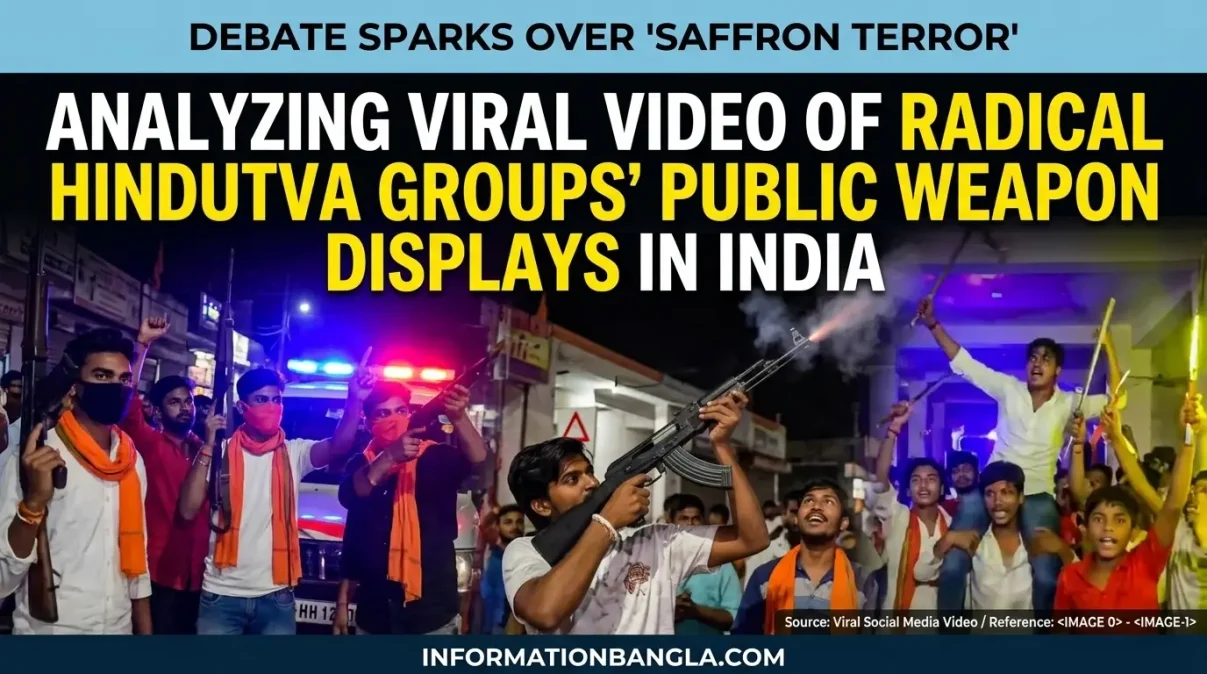
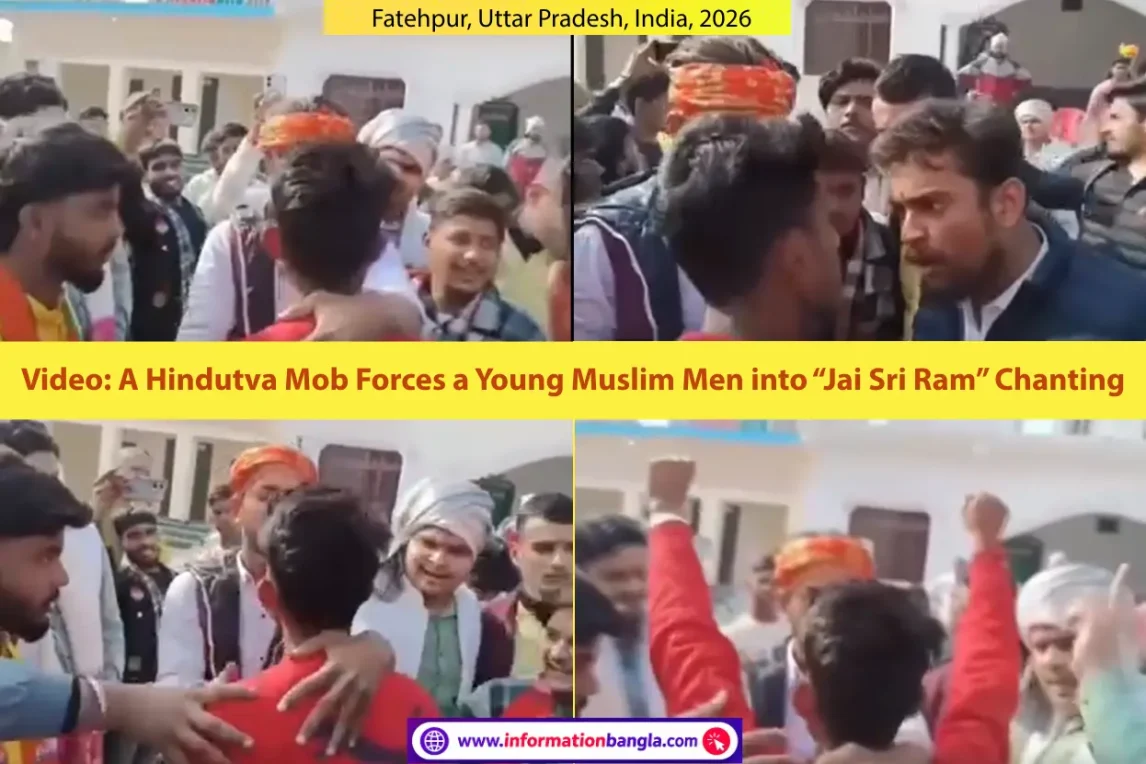
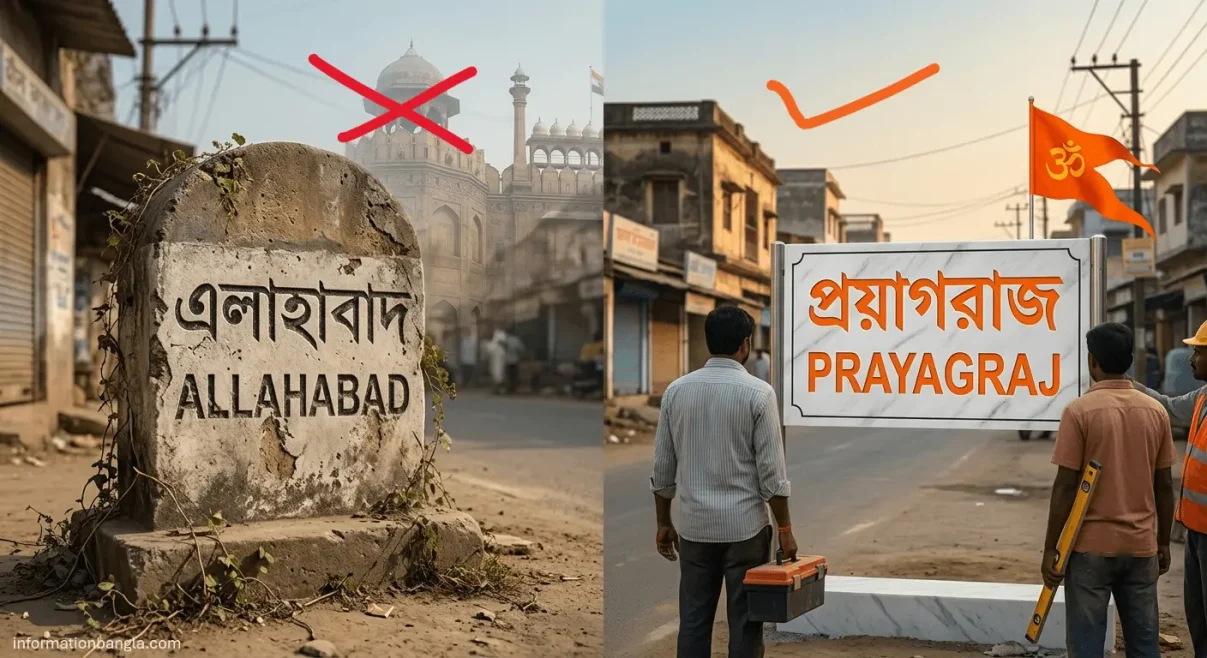
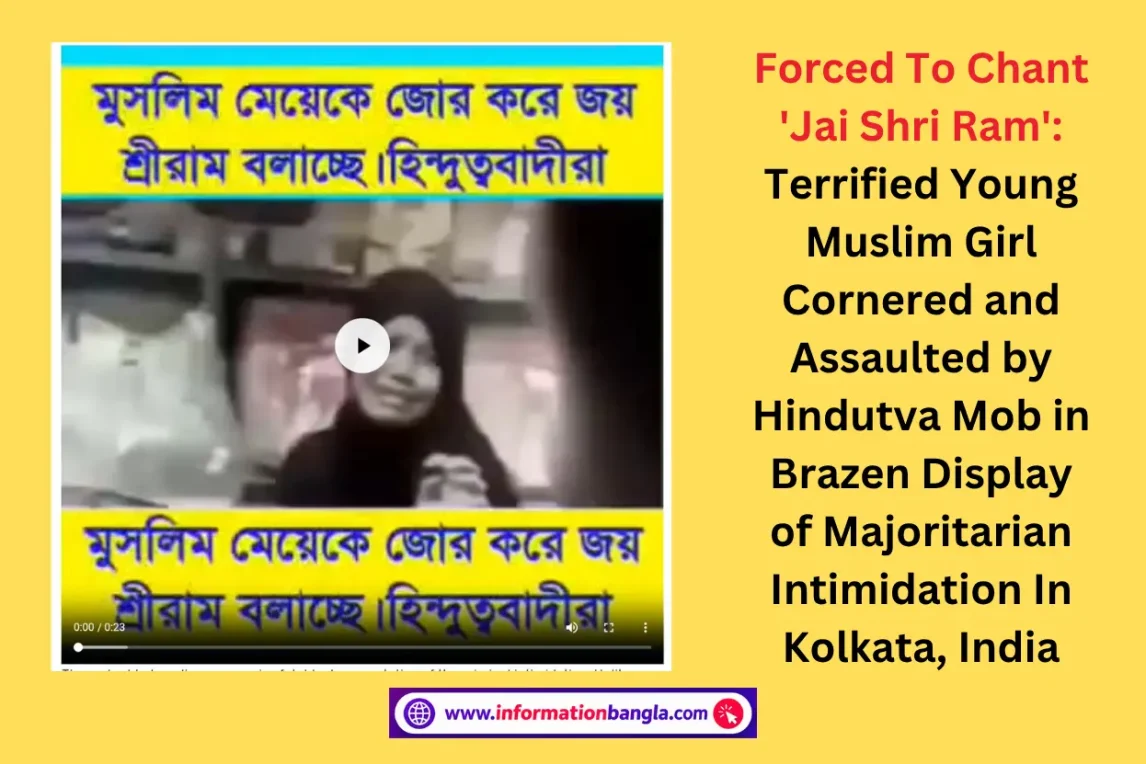
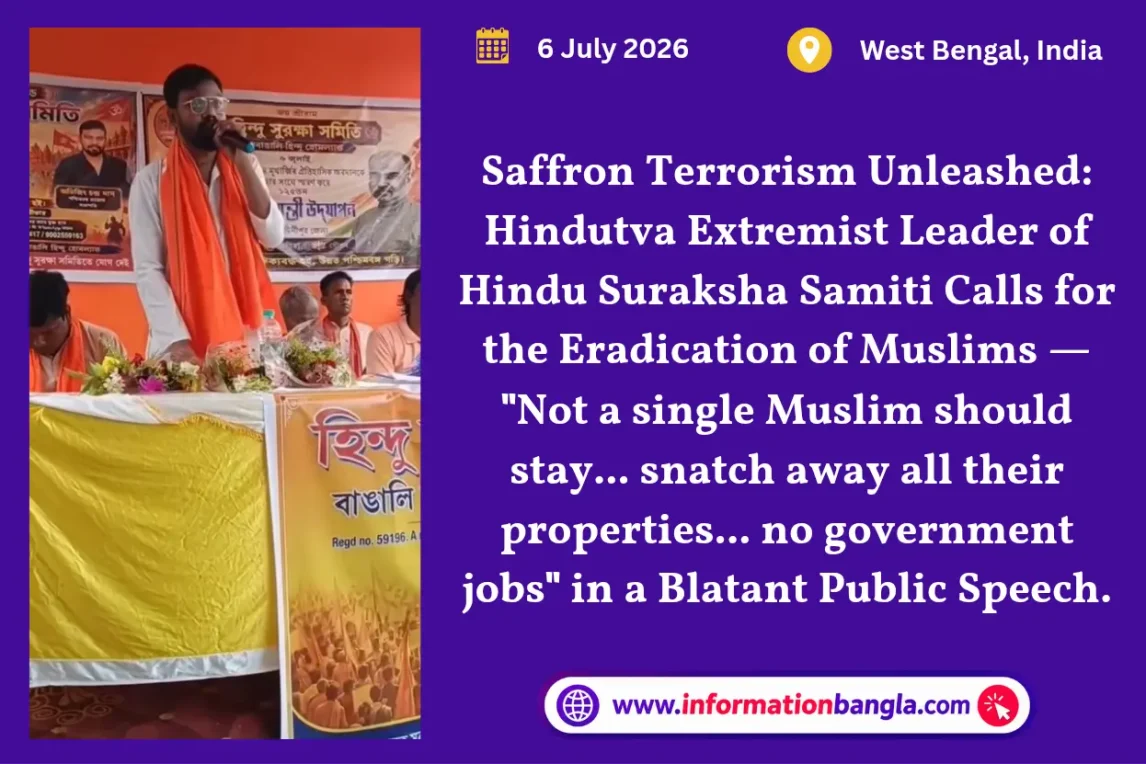
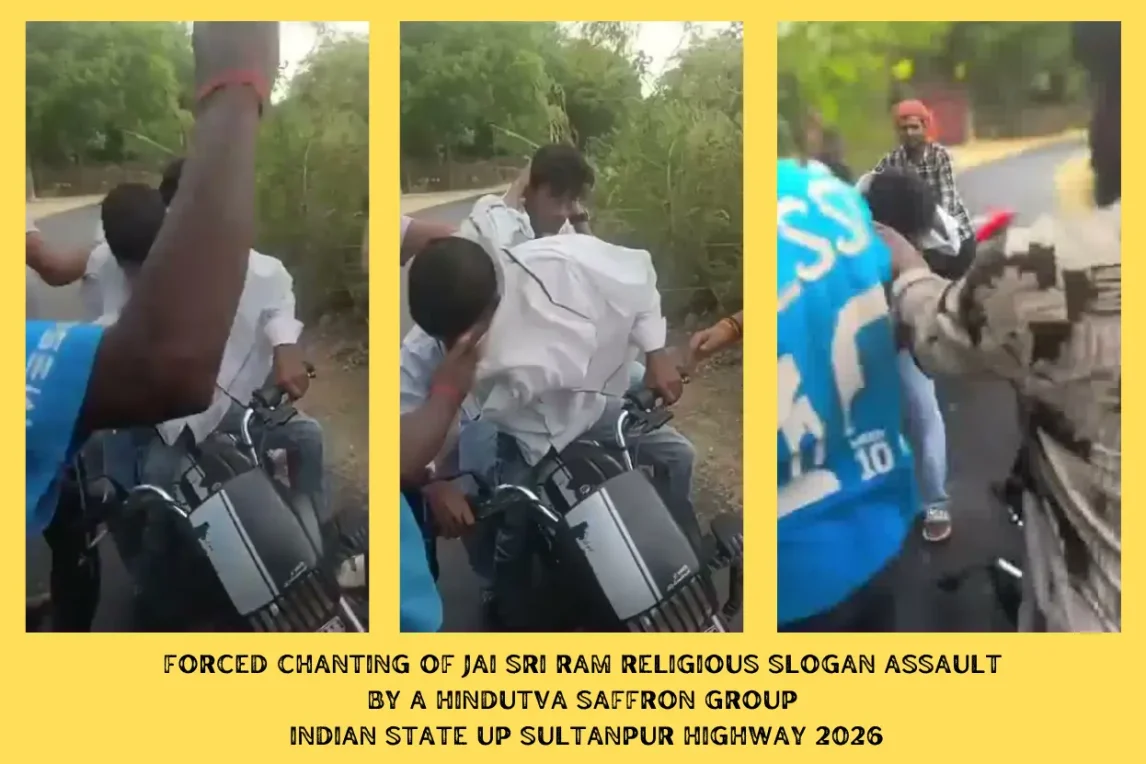
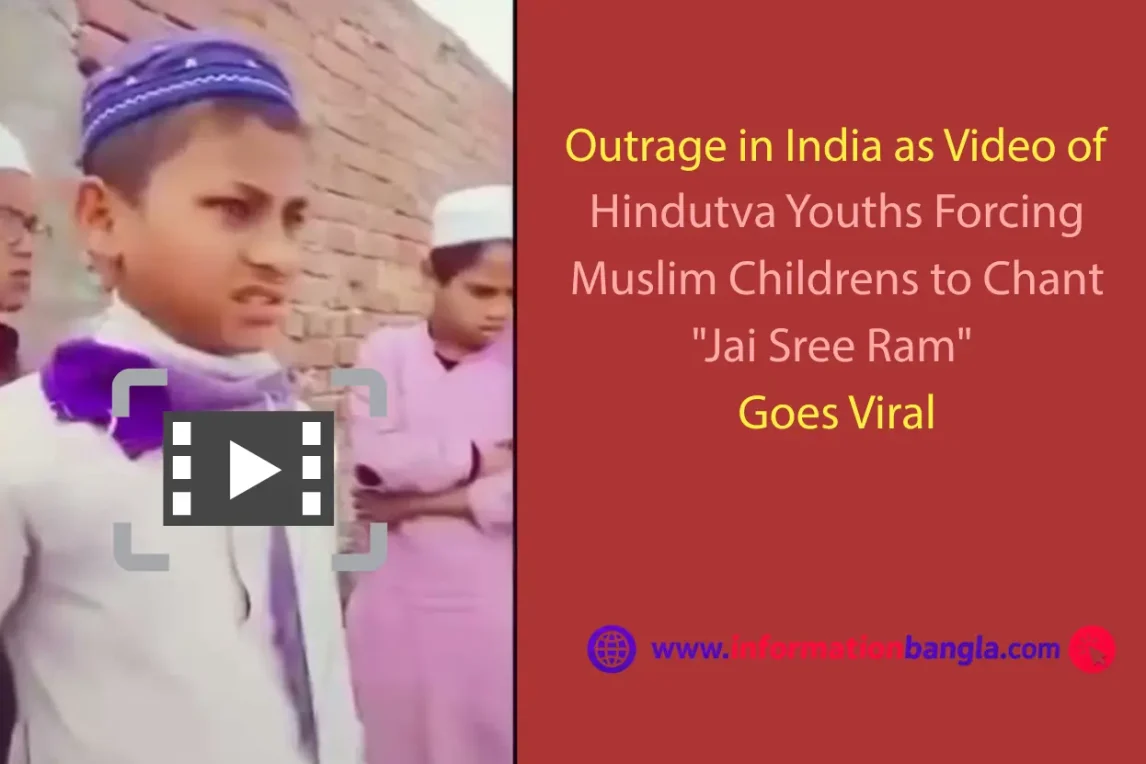
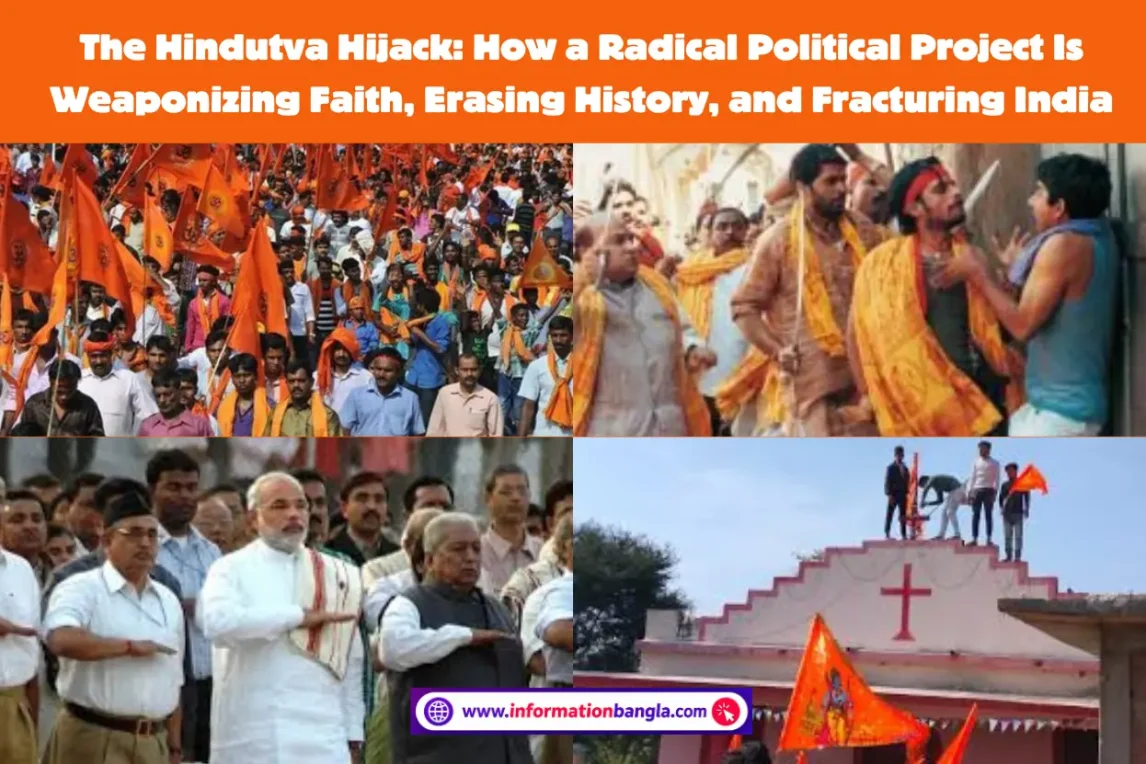
In recent years, localized disputes over neighborhood demographics, property sales, and commercial spaces in India have evolved from isolated civic friction into structural manifestations of systemic polarization. Recent events—ranging from a residential property blockade in Muzaffarnagar to the targeted harassment of an elderly Muslim shop owner in Mumbai—highlight an escalating environment of majoritarian radicalization. Independent watchdogs, global commentators, and civil society groups increasingly argue that these grassroots incidents are fueled by massive digital hate ecosystems and implicitly sanctioned by state structures, shifting the crisis from a political issue into a deep-seated societal transformation.
Enforcing Residential Segregation By The Radical Hindus
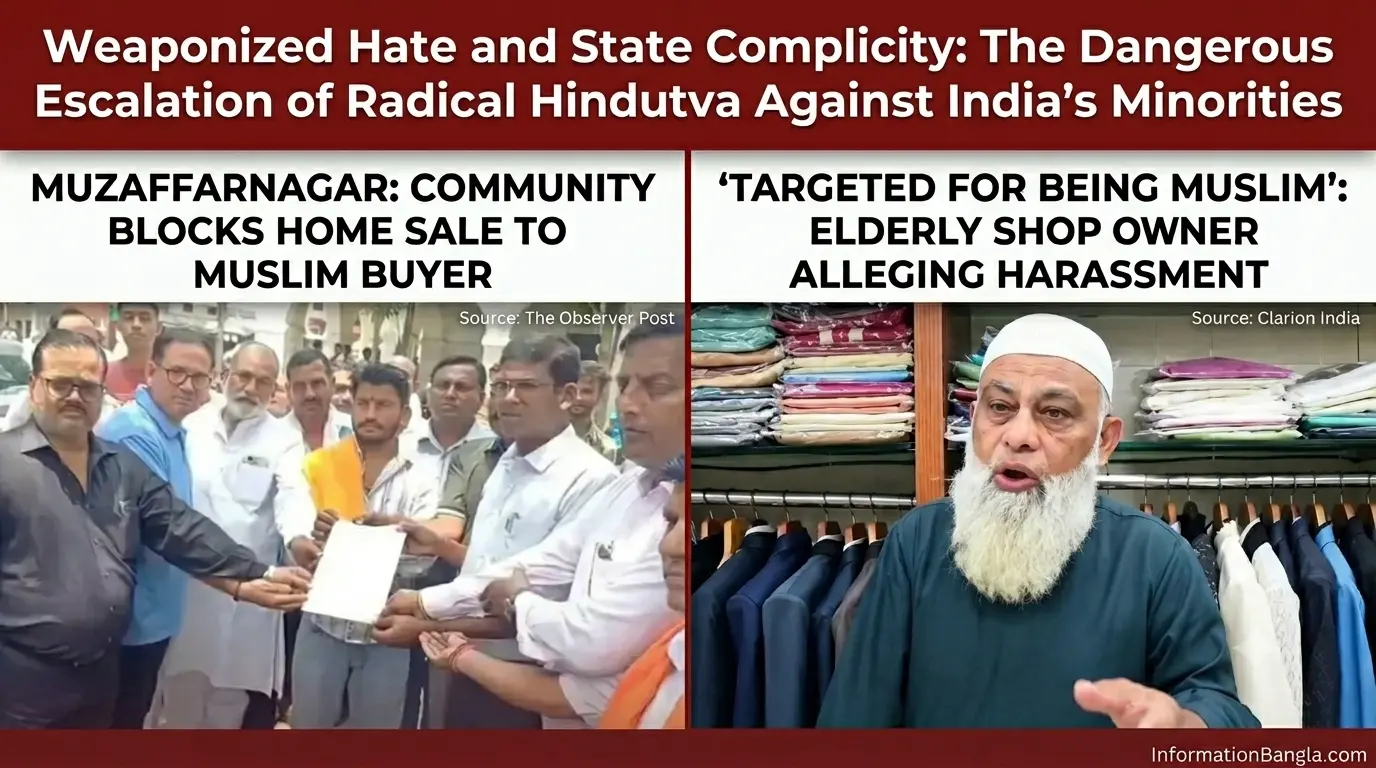
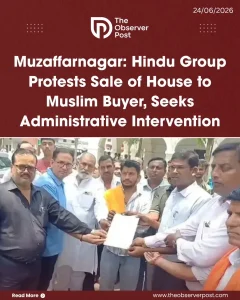
According to a news report published by The Observer Post, communal tension gripped the Dakshini Krishnapuri locality in Muzaffarnagar, Uttar Pradesh, following localized demonstrations against a private real estate transaction. A large gathering of residents from the Hindu-majority locality marched to the local Collectorate to raise slogans and submit a formal memorandum to the District Magistrate, demanding immediate administrative intervention to block the sale of a house to a Muslim buyer.
The protest was organized and led by a local ward councillor named Raju. Raju asserted that two brothers, identified as Arpit Jain and Ankit Jain, had legally sold their residential property within the Dakshini Krishnapuri Colony to a buyer belonging to the Muslim community. Defending the neighborhood’s intervention, Raju argued that because the colony is predominantly Hindu, the entry of a Muslim buyer would disrupt the “social balance” and general atmosphere of the locality, claiming the agitation was driven by a desire to maintain regional peace.
Public reactions to the Muzaffarnagar incident on social media platform Facebook exposed deep ideological rifts, showcasing how majoritarian rhetoric manifests openly online:
Endorsement of Housing Exclusion: Most of the radical Hindu Commentators strongly supported the efforts to prevent religious integration. User Kusum Berlia labeled the protest as a “V good decisions” that “Should have taken long long time back”, while Nanjundeshwara Hethappa advocated following hardline political templates, writing, “Learn from Himantji”. User Sudipto Mukherjee placed the onus on homeowners, commenting that “Hindus should understand whom to sell”.
Targeted Hostility and Intimidation: Explicitly discriminatory rhetoric emerged from user Rajat Banerjee, who applauded the crowd, stating, “Good job hindu group, no circumsized should be allowed”. Direct calls for aggressive intimidation were voiced by user Hema Sinha, who urged residents to deliberately target minority occupants: “Start harassing new buyers play loud bhajans honk cars loudly when passing that house think of ways to make them uncomfortable”.
Justification of Aggression: Some tried to rationalize the hostile stance by shifting blame onto minority behavior. User Soumen Ghosh argued, “One thing should be realised, it’s adamant attitude of muslims that the hindus have become belligerent, please ponder”.
Appeals to Constitutional Equality: Conversely, counter-voices criticized the demonstration as a violation of basic civil rights. Highlighting global migration patterns, user Ranjeet Desai questioned the rationale behind the hostility: “Why this hatred. Lakhs of hindus enjoying life in arab muslim gulf? You cannot bar on basis of religion. Its unconstitutional and anti national”.
Targeted Workplace Harassment By The Radical Hindus
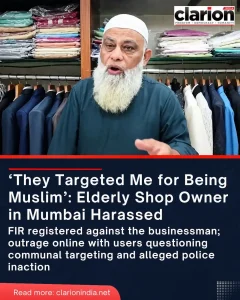
The anxieties regarding physical segregation in residential areas like Muzaffarnagar are echoed in commercial spheres. As highlighted by a report from Clarion India titled “‘They Targeted Me for Being Muslim’: Elderly Shop Owner in Mumbai Claims Harassment”, an elderly Muslim trader in Mumbai alleged that he was subjected to systematic intimidation, verbal abuse, and targeted harassment within his workplace explicitly due to his religious identity. Minorities rights advocates point out that individual disputes over civic or commercial issues are rapidly communalized by majoritarian groups, resulting in the economic isolation and insecurity of minority business owners.
The targeted harassment of the elderly Muslim shop owner in Mumbai serves as a grim, real-world case study of how law enforcement machinery is pressured to favor majoritarian aggressors over minority victims. When the elderly trader was subjected to severe verbal abuse, religious slurs, and attempts at commercial fraud by radical Hindutva elements at his shop, he sought refuge under the law and went to the local police station for protection. In a chilling display of lawlessness, radical Hindutva groups quickly mobilized a mob and stormed the police station itself, demanding action against the trader. While the shopkeeper’s life was temporarily spared simply because he was physically inside the police station at the time, his ordeal intensified after he returned to his shop.
Instead of initiating criminal proceedings against the extremist trespassers who insulted the victim’s faith and harassed him, the police succumbed to the intense pressure exerted by the right-wing mob. In a complete inversion of justice, the administration weaponized the legal process against the victim, registering a First Information Report (FIR) against the oppressed Muslim businessman rather than his abusers. This incident highlights a systemic pathology within the current administrative framework, where the state apparatus routinely shifts from a protector of the vulnerable to an active accomplice of the oppressor—effectively criminalizing the aggrieved (mazloom) while granting absolute immunity and institutional support to the oppressor (zalim).
The Scale of Digital Radicalization
The normalization of grassroots harassment is heavily reinforced by a vast, monetized digital ecosystem designed to spread majoritarian radicalization.
According to a study conducted by the Washington-based nonprofit think tank, the Center for the Study of Organized Hate (CSOH), a vast network of dehumanizing content has been weaponized across mainstream digital ecosystems:
The real estate friction in Muzaffarnagar, the commercial harassment in Mumbai, and the data-backed findings of the CSOH report illustrate the severe challenges facing India’s secular foundations. When local majorities are permitted to dictate who can purchase property or operate businesses, fundamental constitutional rights—specifically the right to reside and practice any trade freely across the country without discrimination—are actively undermined. With international observers now warning that the crisis has penetrated the “systemic and societal” layers of the country, the tension between majoritarian grassroots movements and statutory democratic protections remains a critical crisis point for India’s social cohesion.
“Over 500 Hindutva Hate Songs Targeting Muslims, Christians Found Across Major Platforms: CSOH Report”
Analysts argue that these hate songs act as a psychological catalyst, lowering the threshold for real-world violence and harassment by embedding anti-minority vitriol into popular culture, directly inspiring actions like the neighborhood blockades seen in Muzaffarnagar.
Systemic Aggression and International Alarm
Independent analysts argue that grassroots developments cannot be viewed as isolated neighborhood disputes. Instead, they represent a state-backed majoritarian project. Social commentator Ghousulwara Khan offered a critical assessment of how deeply embedded this bias has become in the contemporary Indian socio-political landscape, noting the wider danger it poses to the country’s collective fabric: “Muslims in India are like canaries in the coalmine of hatred. They are the first victims of it but the toxic air of this hatred is going to harm others as well.”
Critics contend that open demands for housing segregation and commercial intimidation are normalized because perpetrators operate with political impunity under modern political dynamics—a sentiment echoed by Khan: “Hate-mongering and dogwhistling against Muslims have been New India’s Zeitgeist under Modi.”
This environment has successfully alienated and minimized the political agency of the minority community, a dynamic Khan summarizes as: “To give the devil his due, this can be rightly said now that the feral Modi regime has been successful in invisiblizing Indian Muslims and also somewhat making them politically-radioactive.”
Global Repercussions and International Criticism
This structural shift has transcended domestic borders, drawing severe condemnation from international human rights bodies and global lawmakers.
US Congresswoman Ilhan Omar explicitly raised the alarm over the escalating situation in India, characterizing it not merely as a policy issue, but as a deep-seated crisis: “Reports coming out of India place it at the eighth stage of genocide. It is important that we continue to raise the alarm because what is happening is not limited to the policies of the Modi administration. In my view, it is becoming systemic and societal. We cannot remain silent when the rights and freedoms of religious minorities are under threat”
The real estate friction in Muzaffarnagar, the commercial harassment in Mumbai, and the data-backed findings of the CSOH report illustrate the severe challenges facing India’s secular foundations. When local majorities are permitted to dictate who can purchase property or operate businesses, fundamental constitutional rights—specifically the right to reside and practice any trade freely across the country without discrimination—are actively undermined. With international observers now warning that the crisis has penetrated the “systemic and societal” layers of the country, the tension between majoritarian grassroots movements and statutory democratic protections remains a critical crisis point for India’s social cohesion.
Sharing accurate and reliable information is the job of the Information Bangla editorial desk. The editorial team thoroughly verifies the sources of each article so that you, as the reader, get accurate information. We don't just provide information, we ensure its authenticity and reliability. This team has been doing its job faithfully for five long years.