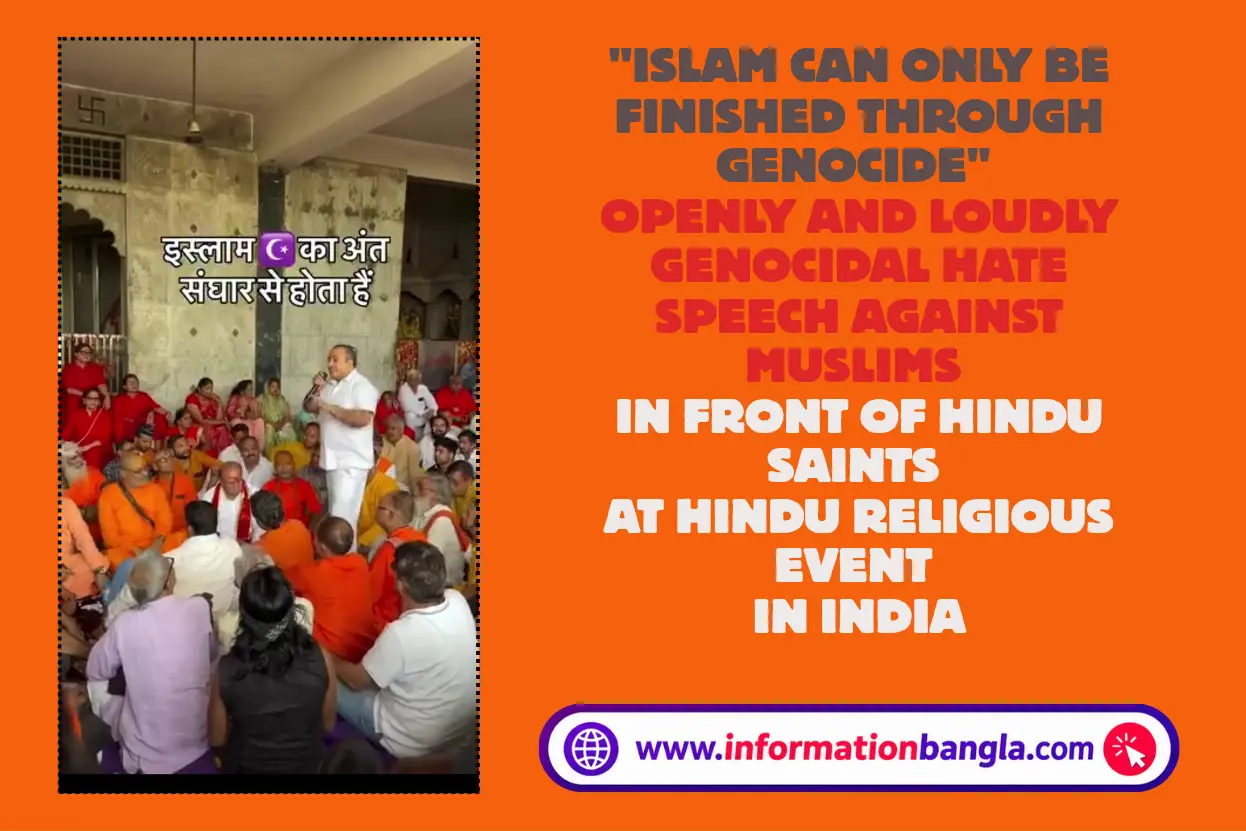
“Islam Can Only Be Finished Through Genocide” Openly and Loudly Genocidal Hate Speech against Muslims in Front of Hindu Saints at Hindu Religious Event in India
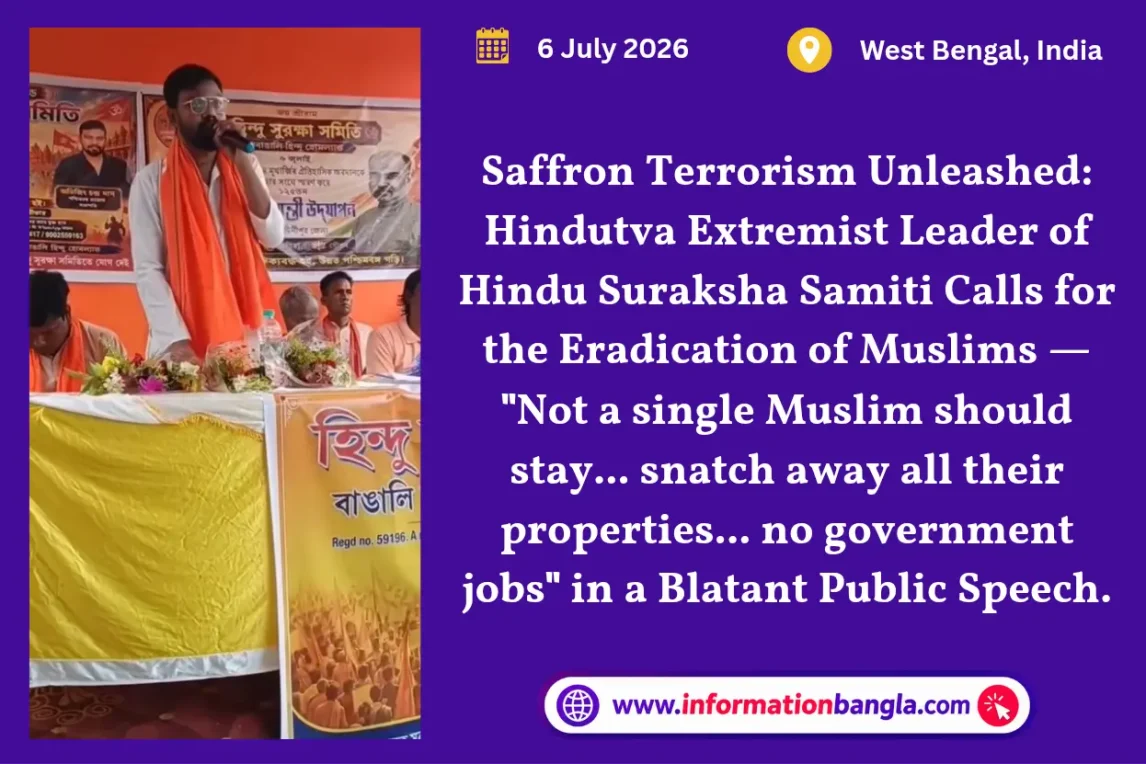
This article provides a rigorous socio-political and linguistic deconstruction of a highly visible public assembly captured in recent audio-visual records. Set within a sacred space before an audience of religious ascetics and laypersons, the orator delivers an explicit, eliminationist speech targeting a religious minority especially Muslims.
By analyzing the structural patterns of this rhetoric, the paper maps the weaponization of classical theological metaphors, the manipulation of intergenerational historical trauma (specifically the 1947 Partition), and the strategic transformation of religious spaces into platforms for political polarization. Finally, the analysis explores the broader sociological implications: evaluating whether these spectacles indicate a totalizing grassroots radicalization or a highly engineered political project designed to simulate a majoritarian consensus while suppressing domestic democratic pluralism.
Viral Video of Hindu Religious Sabha Where Hinduva leader Open Call for Genocide Against Muslims to Eliminate Islam
The Sacred Space as a Political Theater
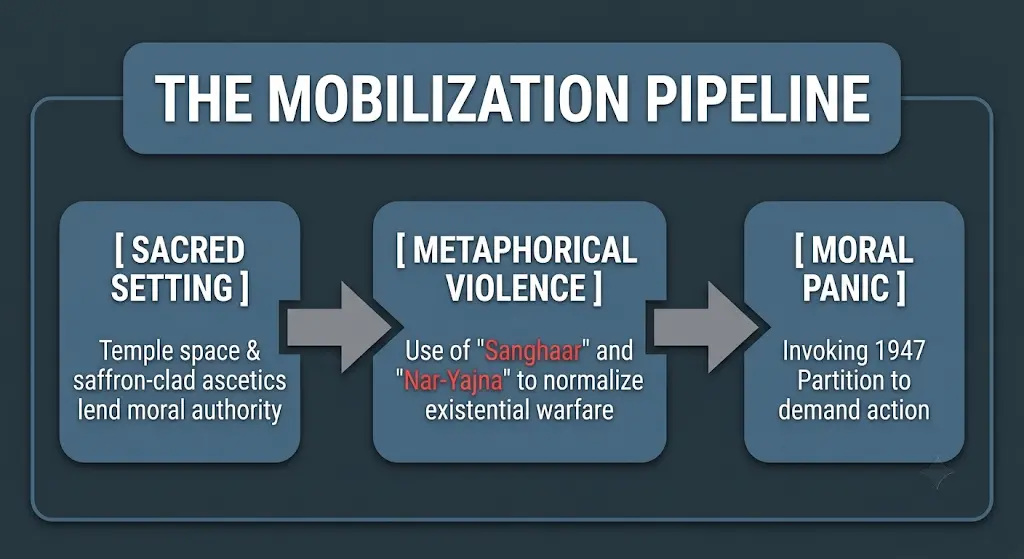
In contemporary discourses on democratic backsliding and populist majoritarianism, polarization is frequently studied through institutional metrics, electoral manifestos, or legislative shifts. However, the operational core of ideological radicalization functions at a more visceral level—relying on public spectacles where political enmity is sanctified through religious imagery. The audio-visual event analyzed in this study captures a stark manifestation of this pipeline. The setting is highly symbolic: a religious hall or temple courtyard decorated with sacred iconography, filled with an audience of citizens and distinct religious ascetics (sadhus) clad in traditional saffron robes. Standing at the epicenter, an orator addresses the gathering through a microphone, systematically shifting a religious gathering into an explicit political mobilization based on existential anxiety and eliminationist rhetoric.
The primary structural characteristic of the address is its deliberate departure from standard political or electoral opposition, moving rapidly into the realm of existential, zero-sum conflict. The speaker explicitly frames the presence of the minority faith in eliminationist terms:
“Islam ka jo ant hai na, wo sanghaar ke roop mein hota hai… Jo pehle sanghaar karega, wo jeetega.” (The end of Islam occurs through annihilation… Whoever annihilates first, wins.)
The Mythological Resonance of Absolute Destruction
The linguistic choice of the word sanghaar (संहार) is a critical semantic tool. In classical Sanskritized Hindi, sanghaar does not denote a mere political defeat, legal restriction, or social marginalization. It signifies cosmic, absolute annihilation—historically reserved in mythological epics for the total eradication of demonic forces (asuras) by divine entities to restore cosmic order. By employing this specific terminology, the speaker achieves two primary psychological objectives:
The Dehumanization of the Adversary: The targeted minority is stripped of its status as a community of fellow citizens or human beings possessing constitutional protections. Instead, they are reframed as a metaphysical, existential evil whose existence is incompatible with the majority’s survival.
The Imperative of Preemption: By stating that “whoever annihilates first wins,” the orator bypasses rational democratic debate and replaces it with acute survival anxiety. The audience is conditioned to believe that defensive, pre-emptive aggression is the only path to self-preservation.
Poetic Sanitization and the Normalization of Ritualized Violence
As the address progresses, the speaker transitions from prose into a rhythmic, poetic cadence. This stylistic shift is a well-documented propaganda technique designed to bypass cognitive resistance and lower moral barriers against violence. The orator chants: “Ab nar-yajna karna hoga, gaddaron ko marna hoga, khooni khappar bharna hoga, khooni saagar karna hoga…” (Now a human sacrifice ritual must be done, traitors must die, a bloody skull cup must be filled, a bloody ocean must be made…)
The terms used here are deeply embedded in the aesthetics of fierce tantric or mythological warfare. A Nar-Yajna (human sacrifice or human war-ritual), a khooni khappar (the blood-filled skull bowl traditionally associated with destructive deities like Kali or Bhairava), and a khooni saagar (an ocean of blood) serve to sanitize raw, physical violence by elevating it to a sacred duty.
Frames political conflict as a sacred, sacrificial duty.
Khooni Khappar (खूनी खप्पर)
Blood-filled skull cup
Invokes fierce mythological imagery to normalize bloodshed.
Khooni Saagar (खूनी सागर)
Ocean of blood
Conditions the audience to accept mass violence as an inevitable outcome.
The speaker concludes this poetic sequence by demanding an absolute rejection of empathy: “Rone dhone ka waqt gaya, har aansu ko angaar karo… sanghaar karo, sanghaar karo!” (The time for weeping is gone, turn every tear into an ember… annihilate, annihilate!)
This command seeks to actively suppress feelings of compassion, sympathy, or shared humanity. Weeping or sorrow is framed as a sign of weakness or cowardice, while anger (angaar) and destruction (sanghaar) are elevated as the only acceptable expressions of religious and political identity.
Weaponizing Historical Grievance and the Trauma of Partition
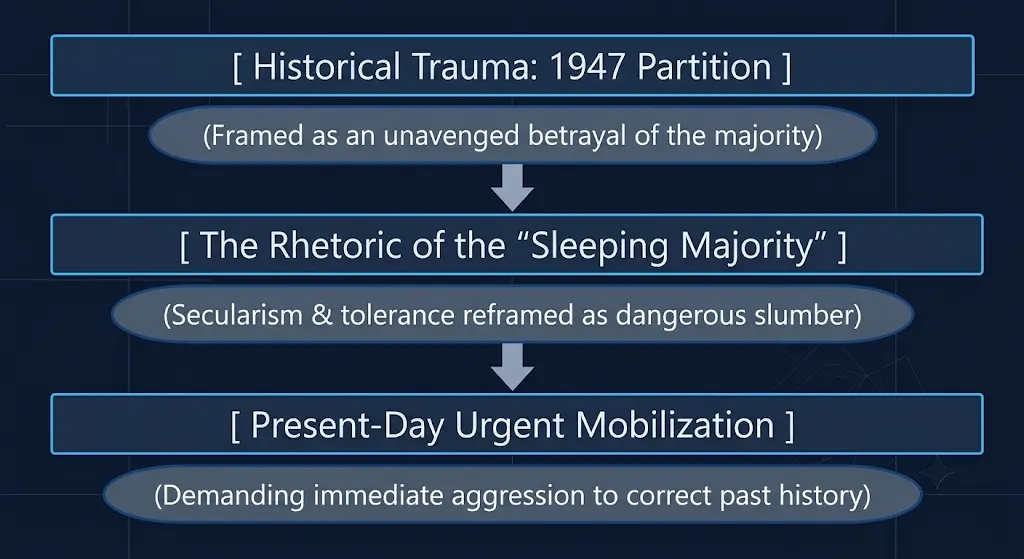
A fundamental pillar of majoritarian mobilization is the systematic weaponization of historical memory to inflame present-day anxieties. In this video, the orator directly taps into the unresolved intergenerational trauma of the 1947 Partition of the Indian subcontinent: “Hum 47 mein jo khoye… baant gaye bahut par hum soye… jaate na ghaav apne meht hue…” (What we lost in ’47… we were divided significantly because we slept… our wounds have not healed…)
The Rhetoric of the “Sleeping Majority”
By referencing 1947, the speaker strips history of its complex geopolitical, colonial, and social realities. Instead, he reduces it to a simplistic moral fable of majoritarian passivity (“we slept”) and minority betrayal.
This narrative serves a distinct political purpose: it frames modern constitutional secularism, civic tolerance, and minority rights not as democratic achievements, but as dangerous signs of weakness—a continuation of the “slumber” that supposedly led to the division of the land. The audience is told that they live in an unresolved historical crisis, and that the only way to heal the wounds of the past is to abandon democratic coexistence in favor of absolute dominance.
Institutional Validation and the Mechanics of Silent Consent
While the orator’s words are explicitly aggressive, the sociological impact of the event is deeply tied to the visual and auditory environment. The video shows a diverse assembly: men, women, and a significant block of sadhus (ascetics) sitting calmly in a semi-circle around the speaker.
Throughout the delivery of highly volatile and eliminationist phrases, the camera captures an atmosphere of calm acceptance. Members of the audience nod in agreement, applaud periodically, and chant religious refrains (Har Har Mahadev) on command.
In religious sociology, the presence of sacred figures (monks, saints, and ascetics) acts as a powerful source of moral validation. When these traditional custodians of ethics and spirituality sit in silent approval of calls for a Nar-Yajna or Sanghaar, they provide an implicit religious sanction to extremism. For the layperson in the audience, the boundaries between spiritual devotion and political violence are completely erased, transforming an act of communal hostility into an apparent act of faith.
Here is the completely rewritten Section 5, incorporating your core argument that this radicalization is no longer just a top-down political illusion, but a deeply internalized, widespread grassroots reality across all demographics.
From Engineered Project to Deep-Rooted Mass Radicalization
When observing public spectacles featuring intense communal rhetoric and collective applause, external analysts frequently fall into a dangerous trap of minimization. They often conclude that this extremism is merely an “engineered political project”—a temporary, top-down illusion manufactured by a ruling elite that does not reflect the true organic consensus of the grassroots population.
However, an honest sociological assessment of contemporary India requires confronting a far more alarming reality: the line between state-sponsored engineering and genuine mass radicalization has completely dissolved.
The assumption that violent Hindutva ideology is confined to an uneducated or marginal fringe is a critical analytical failure. Field observations and shifting social dynamics indicate that a massive, overwhelming segment of the majority population—cutting cleanly across all barriers of age, literacy, economic class, and geographic location—has actively internalized this majoritarian consciousness. From elite, highly educated urban professionals to illiterate rural communities, the ideological saturation is virtually uniform.
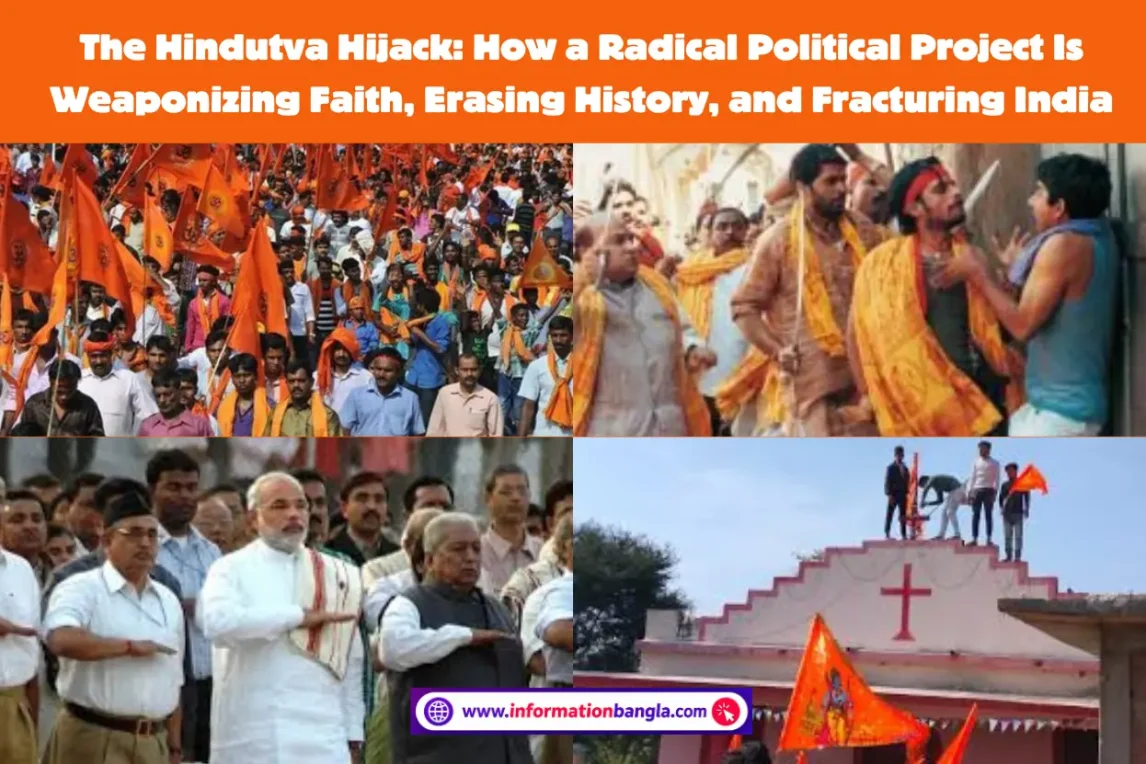
This widespread radicalization is anchored in a collective, uncompromising desire to realize a monocultural Hindu Rashtra (Hindu Nation) and an absolute Ram Rajya. Within this framework, coexistence is no longer the objective; instead, the primary goal has shifted toward the systematic erasure of Islamic cultural, religious, and physical visibility from the public square.
This deep-rooted transformation manifests not as passive political support, but as an active, majoritarian endorsement of existential erasure, characterized by three distinct structural demands:
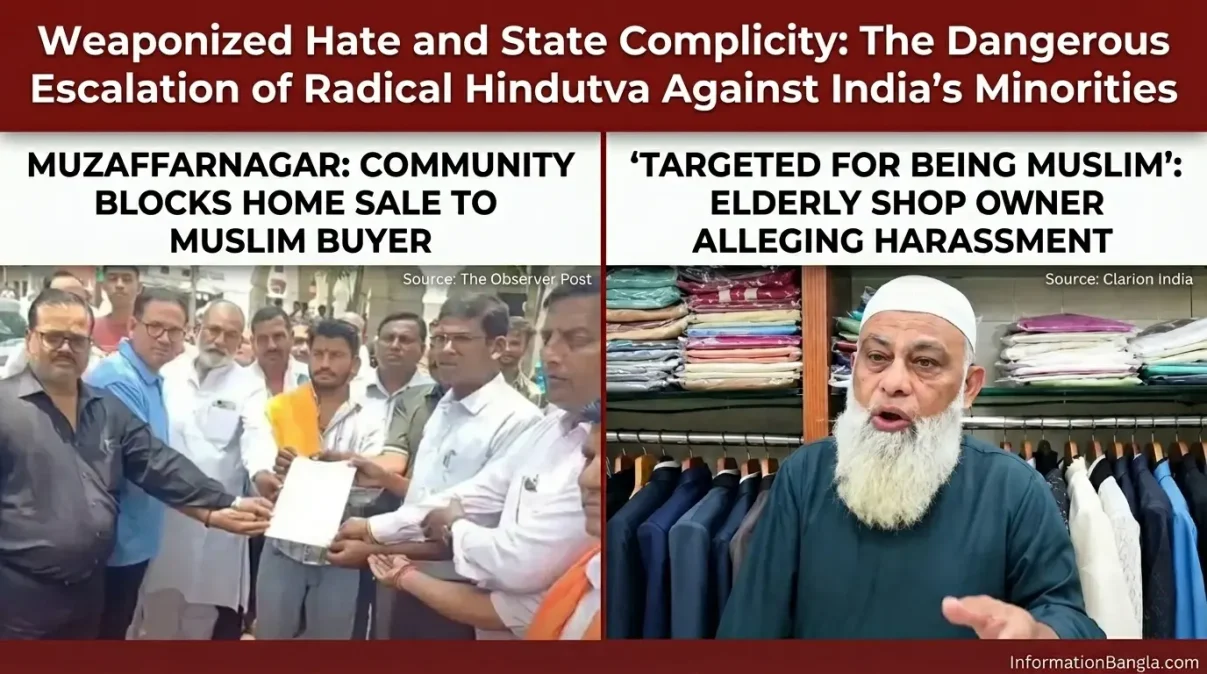
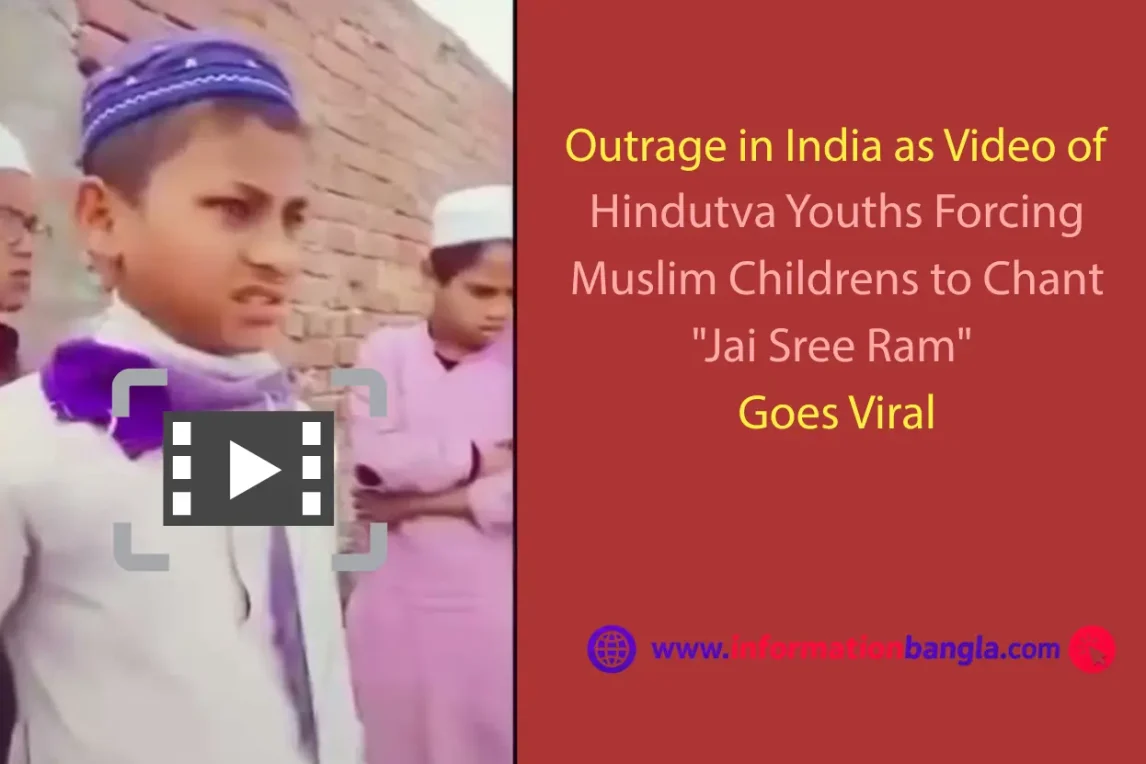
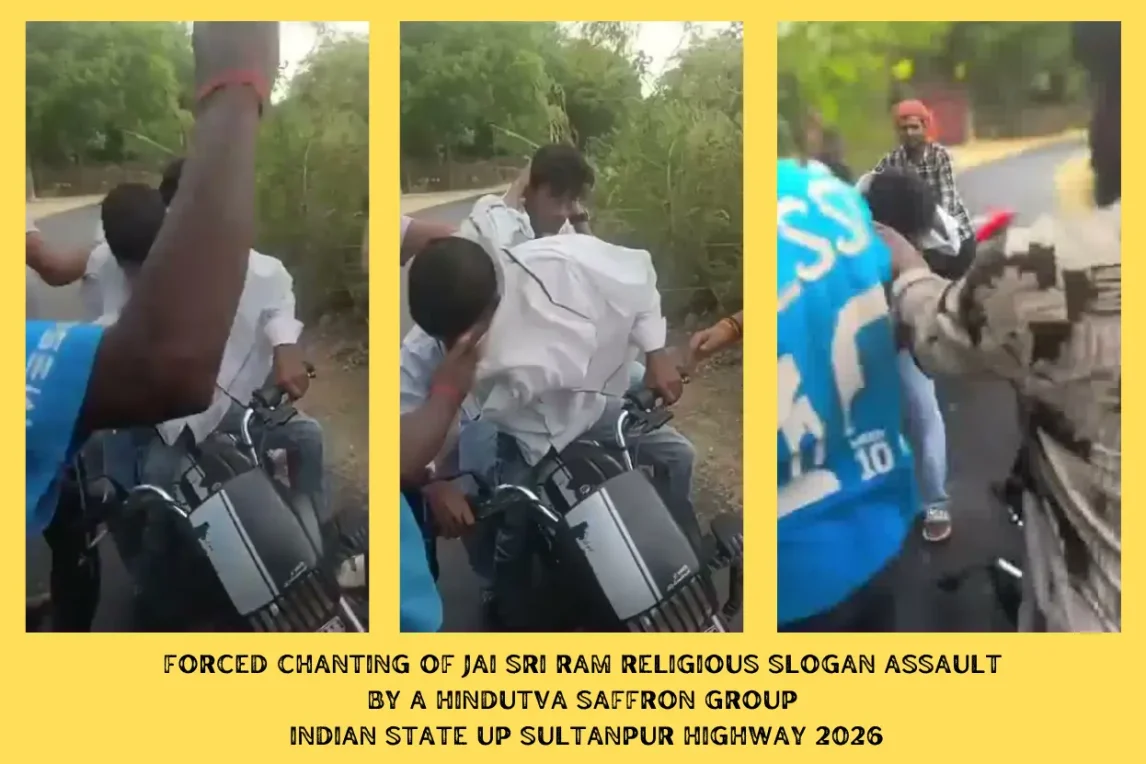
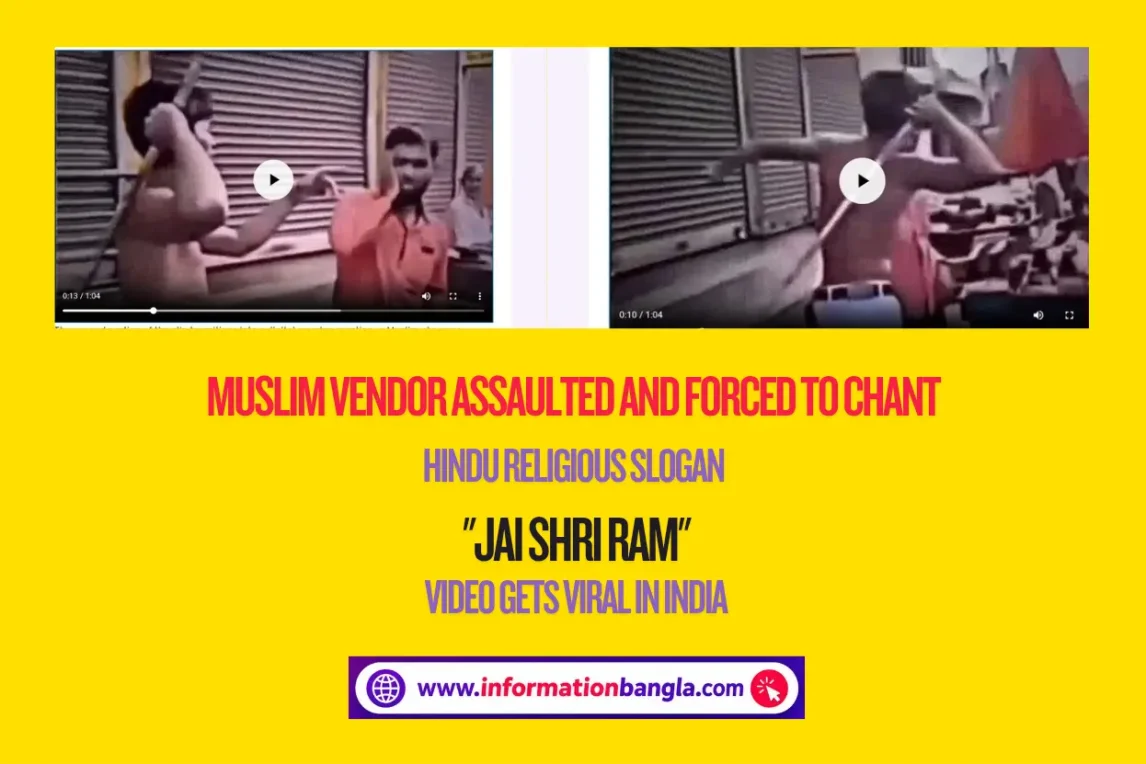
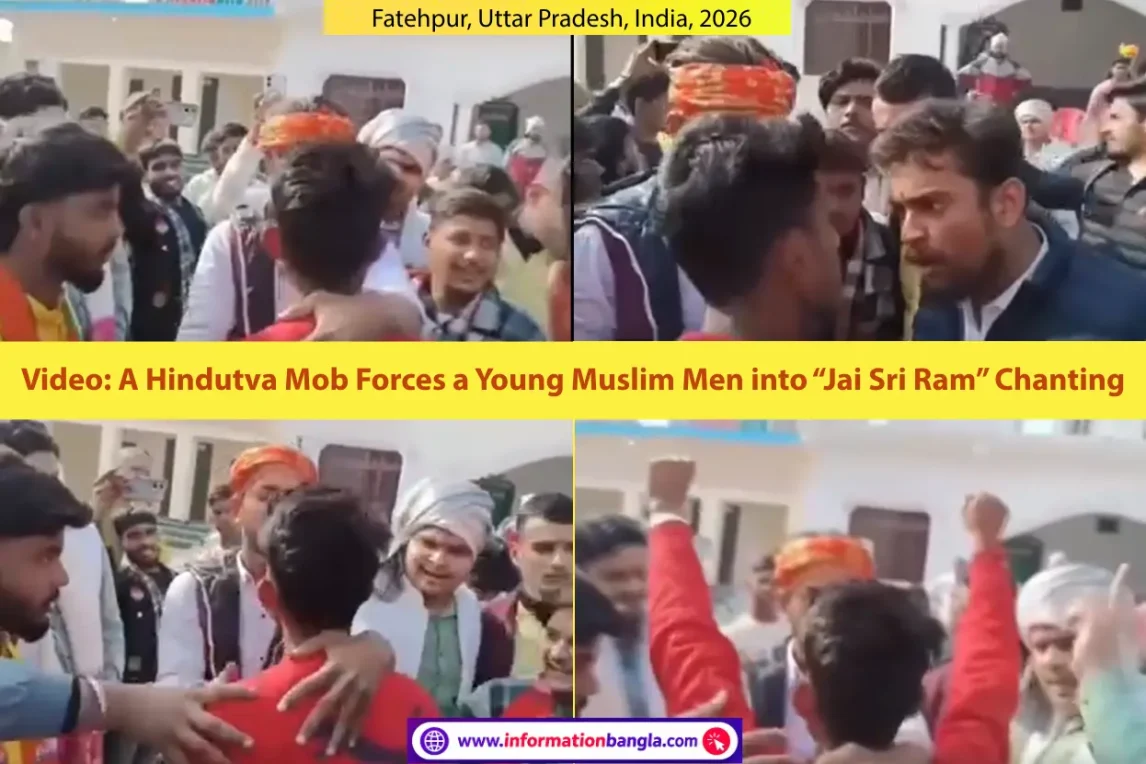
Cultural Homogeneity & Forced Compliance: The aggressive enforcement of majoritarian slogans like “Jai Shri Ram” has evolved from a religious chant into an open declaration of political dominance, requiring absolute submission from minority populations.
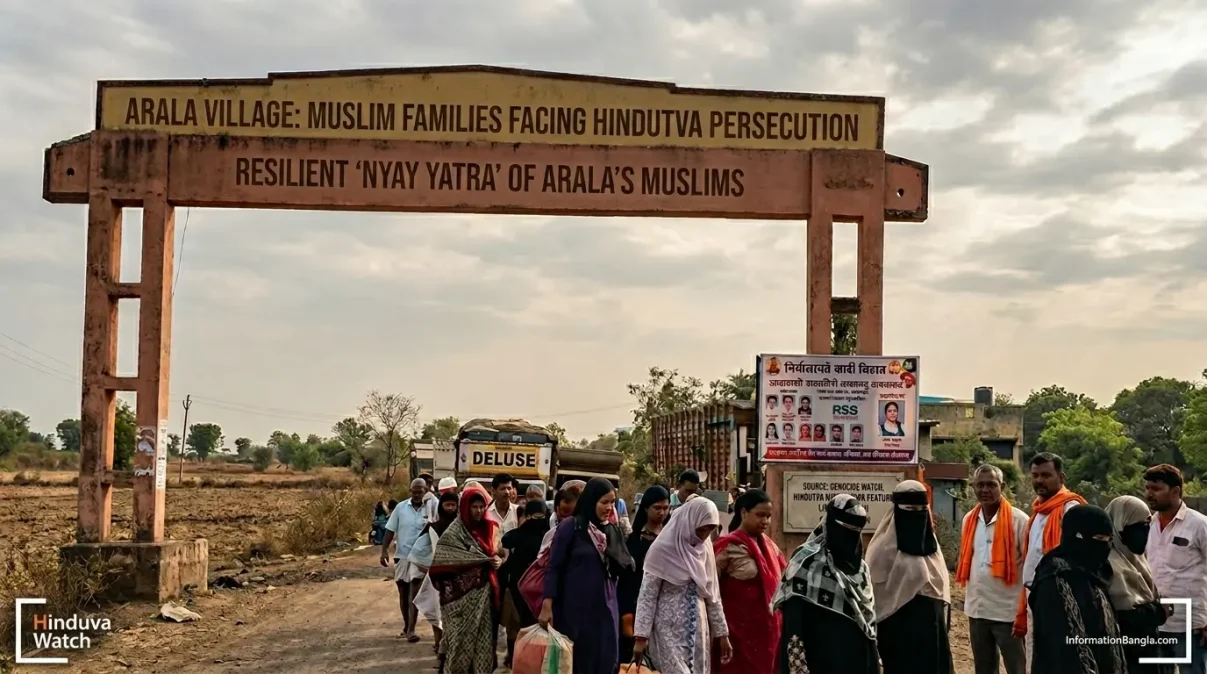
The Erasure of Islamic Visibility: There is widespread, popular support for the systematic removal of Islamic markers—ranging from the legal and physical dismantling of historic masjids to the outright public prohibition of namaz.
The Normalization of Eliminationist Intent: What external observers classify as “extreme hate speech” is increasingly viewed by a vast majority of the public as a necessary, long-overdue cultural correction. The desire to neutralize or eliminate competing cultures is no longer a hidden agenda; it has become a normalized, celebrated component of mainstream majoritarian identity. Ultimately, treating this phenomenon as a mere “engineered consensus” dangerously miscalculates the depth of the crisis. The reality is much more grim: the majoritarian public has not merely been manipulated—they have been fundamentally transformed, creating an organic, violent consensus that operates with complete societal legitimacy.
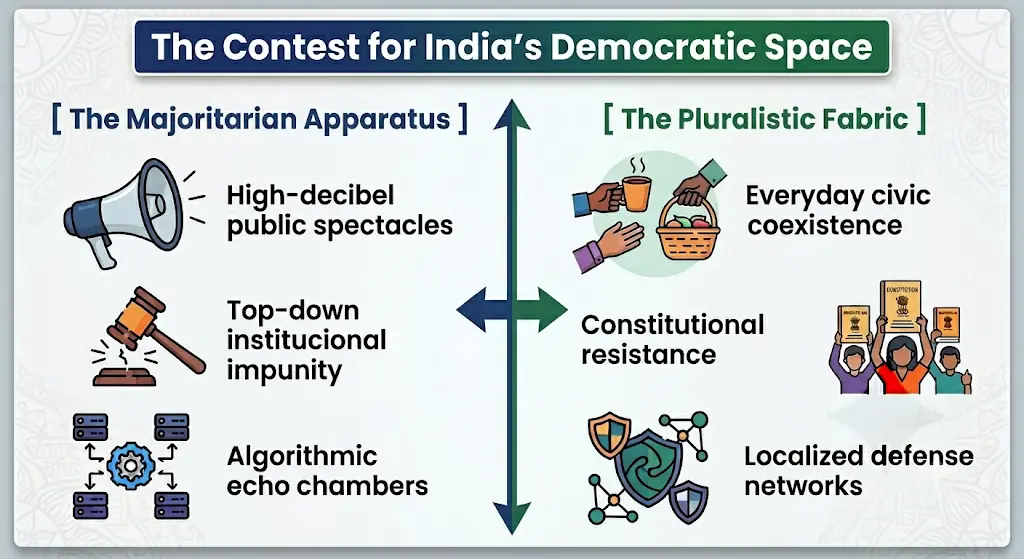
The radicalization observed in these public spectacles is rarely a spontaneous, bottom-up movement representing the entire populace. Rather, it operates as a top-down political strategy backed by varying degrees of institutional impunity.
The proliferation of high-decibel hate speech persists primarily because the state machinery frequently declines to enforce constitutional provisions against incitement to violence. When local law enforcement fails to swiftly prosecute calls for physical destruction, it creates a permissive environment that empowers extremist groups to occupy the public square, creating a loud illusion of absolute consensus while the moderate majority remains quiet or intimidated.
The Path Forward for Pluralistic Governance
The video and audio analyzed in this study present a clear look at the mechanics of exclusionary polarization: an ideological discourse that weaponizes religious vocabulary, exploits historical trauma, and utilizes sacred spaces to normalize political extremism. This phenomenon poses a real challenge to the constitutional fabric of a diverse society.
Yet, in current India after 2014 when Hinduva govt. took power this crisis as an engineered political strategy converted to a total societal breakdown reveals critical avenues for democratic recovery.
Reclaiming a peaceful public square requires a firm re-establishment of legal accountability—where the state enforces its laws uniformly against hate speech regardless of the perpetrator’s political or religious affiliation.
Concurrently, it demands active support for the domestic civil society networks, independent journalists, and legal defenders who continue to uphold the pluralistic foundations of the constitution. The future of democratic coexistence depends not on denying the reality of majoritarian rhetoric, but on strengthening the institutional and civic guardrails that prevent polarization from shattering a shared social fabric.
Sharing accurate and reliable information is the job of the Information Bangla editorial desk. The editorial team thoroughly verifies the sources of each article so that you, as the reader, get accurate information. We don't just provide information, we ensure its authenticity and reliability. This team has been doing its job faithfully for five long years.