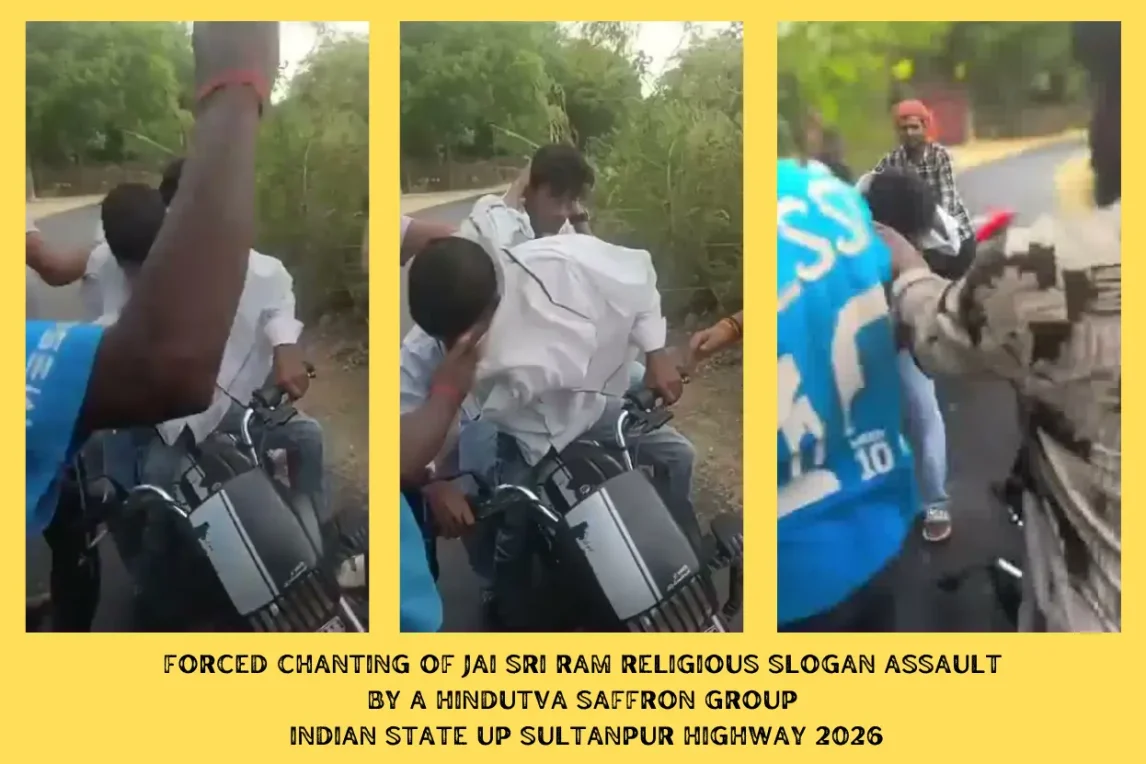
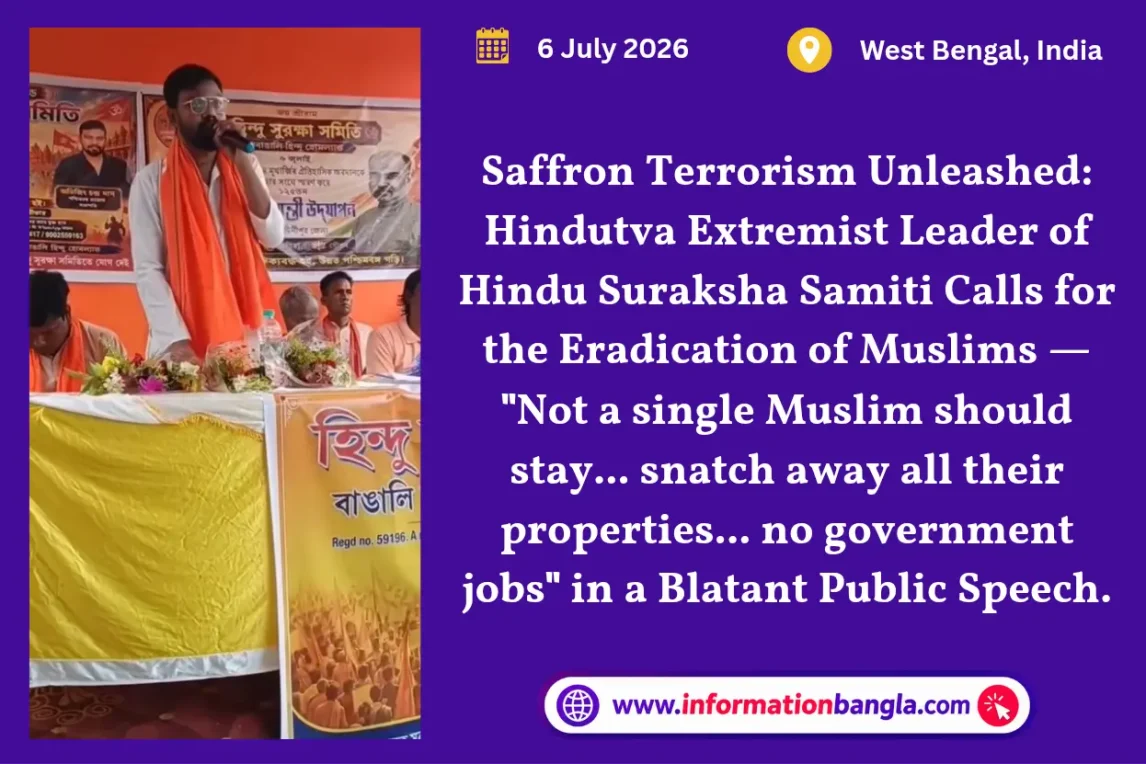
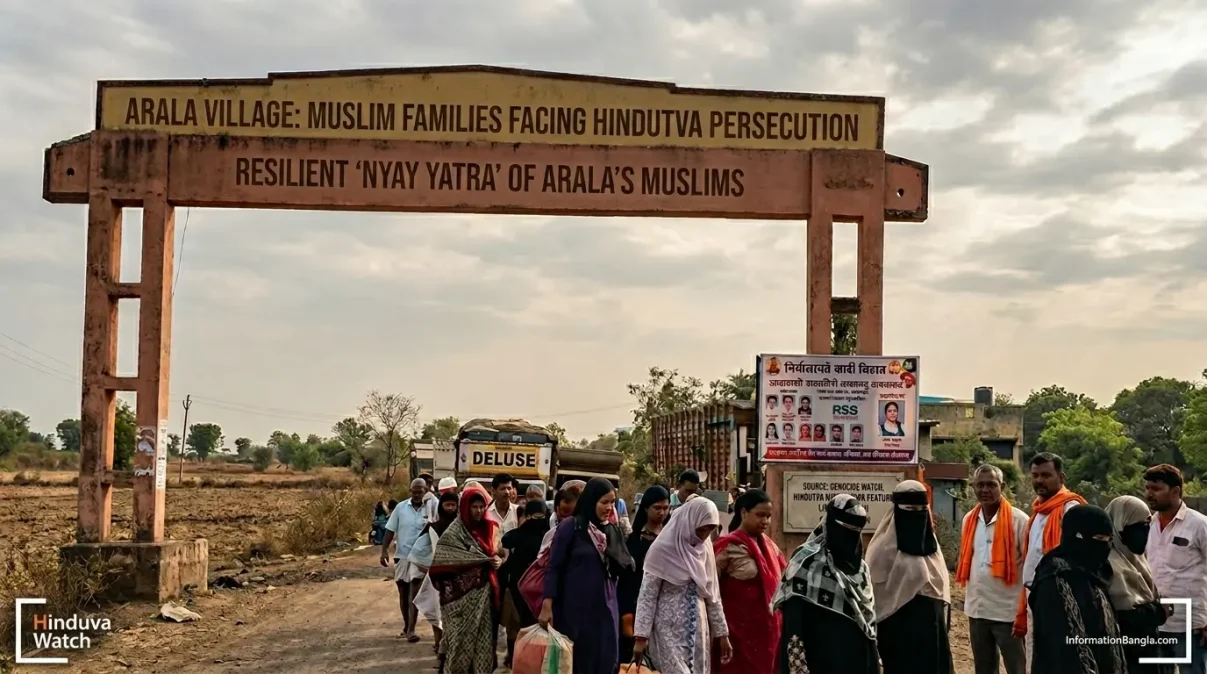
Ram Terror Grips West Bengal: “Unless They Chant ‘Jai Shri Ram’, We Won’t Let Any Muslim Exist Here” Hindutva extremists assault and threaten a Muslim woman and her daughter in WB, India
West Bengal, India – For decades, the phrase “Jai Shri Ram” (Victory to Lord Ram) belonged to the quiet, spiritual realm of domestic devotion. It was a serene greeting exchanged in courtyards, a gentle invocation uttered in times of grief, and a cornerstone of personal faith across millions of Indian homes. Today, however, that same phrase frequently echoes through the streets of urban centers and rural hinterlands with a vastly altered cadence. Stripped of its traditional quietude, it has been repurposed by assertive political forces into a boundary-marking slogan—a litmus test of national belonging and, in far too many instances, a prelude to targeted intimidation.
This transformation is not an accidental byproduct of cultural pride. It is the visible edge of a systematic, decades-long ideological project that has successfully migrated from the fringes of Indian politics straight into the heart of its state machinery. To understand what critics and victims frequently term “Ram Santras” (or the terrorizing deployment of majoritarian identity), one must look past the chaotic street violence and examine the sophisticated ecosystem that sustains, rationalizes, and amplifies it.
The Linguistic Metamorphosis From Devotion to Assertion
The political instrumentalization of religious symbols in India reached a critical turning point during the Ram Janmabhoomi movement of the late 1980s and early 1990s. Led by the Vishva Hindu Parishad (VHP) and the Bharatiya Janata Party (BJP)—the political affiliate of the Rashtrition Swayamsevak Sangh (RSS)—this movement fundamentally altered the vocabulary of Indian public life.
“The shift was deliberate. It replaced the pluralistic, inclusive imagery of Hinduism with a muscular, standardized, and deeply politicized identity that required an immediate, visible adversary.”
In this new paradigm, the minority community—primarily India’s 200 million Muslims—was cast not merely as a demographic group, but as a historic obstacle to civilizational revival. Over the last decade, this rhetoric has trickled down to the grassroots level, manifesting in a culture of everyday vigilantism.
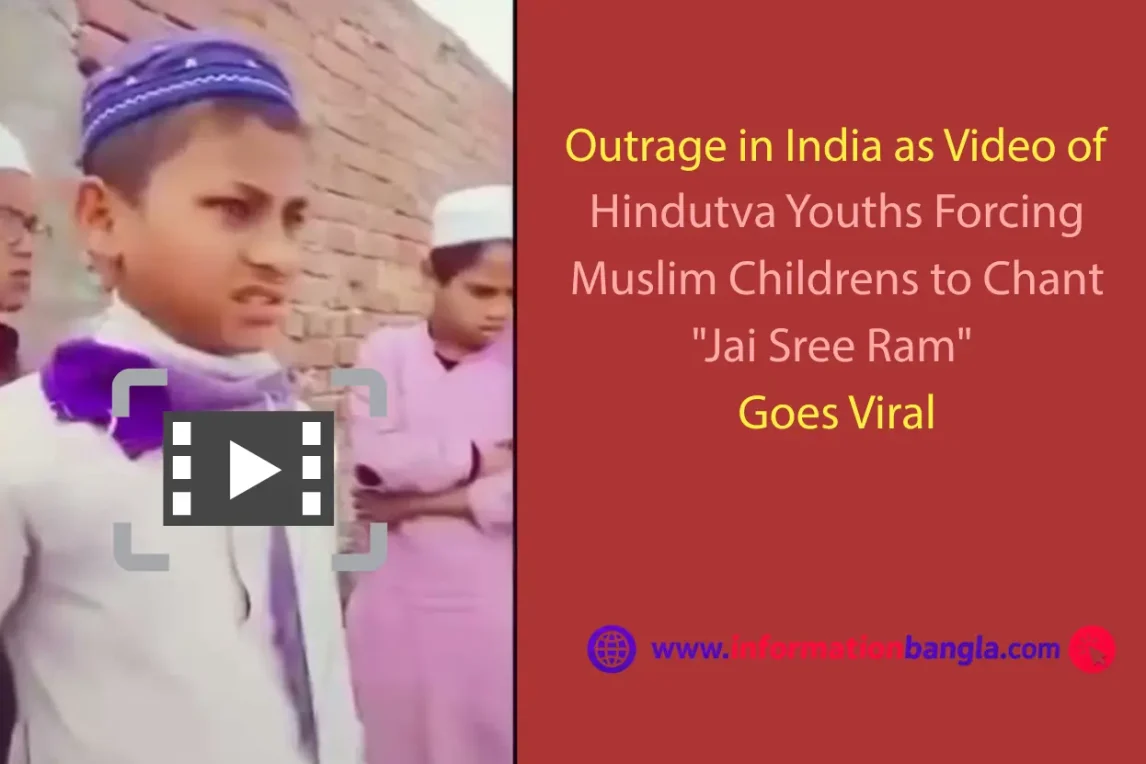
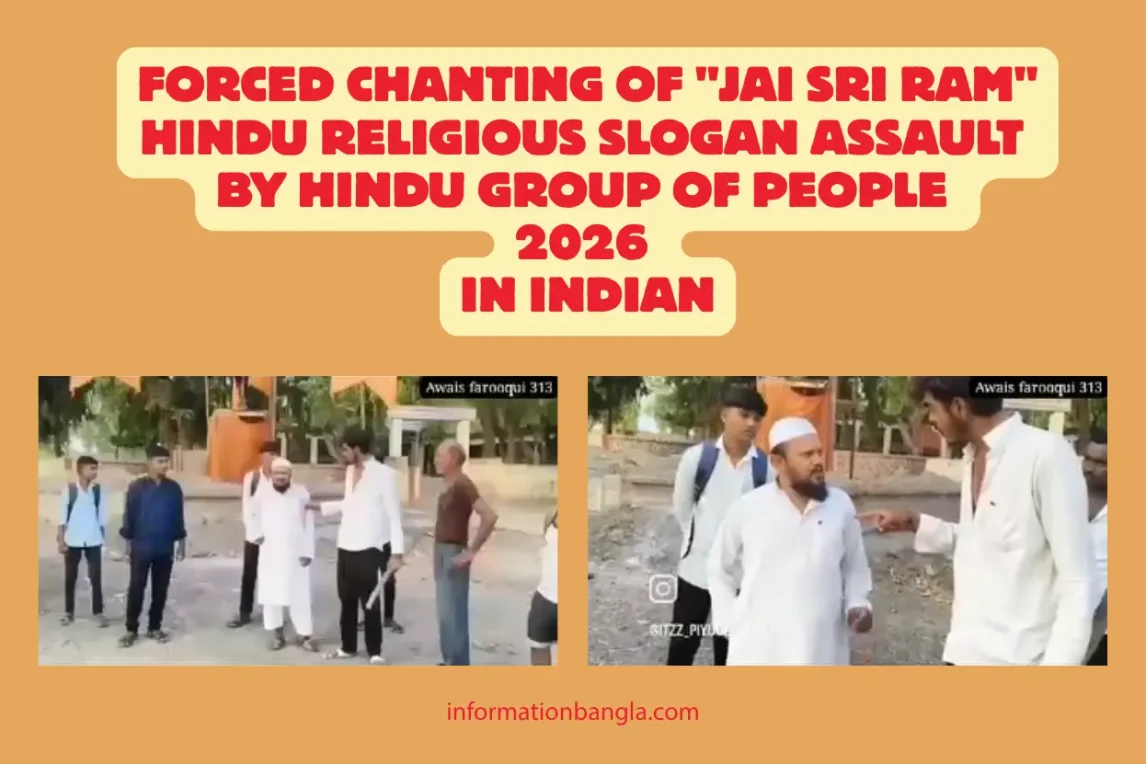
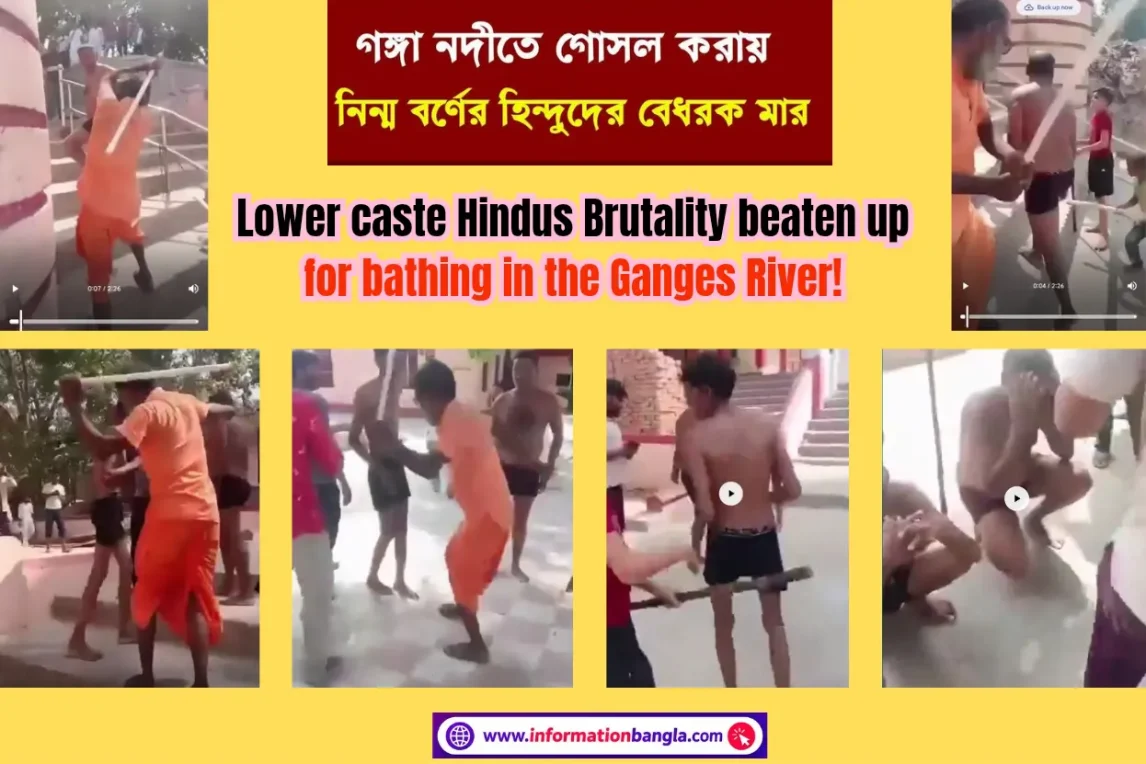
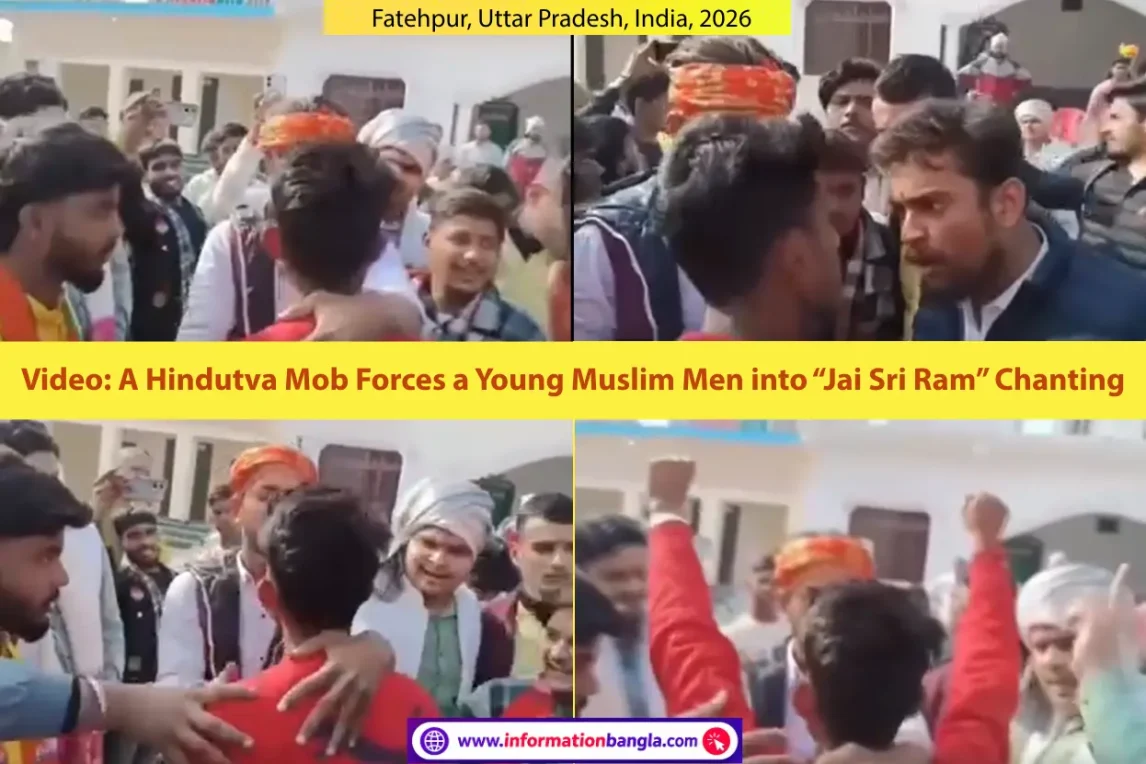
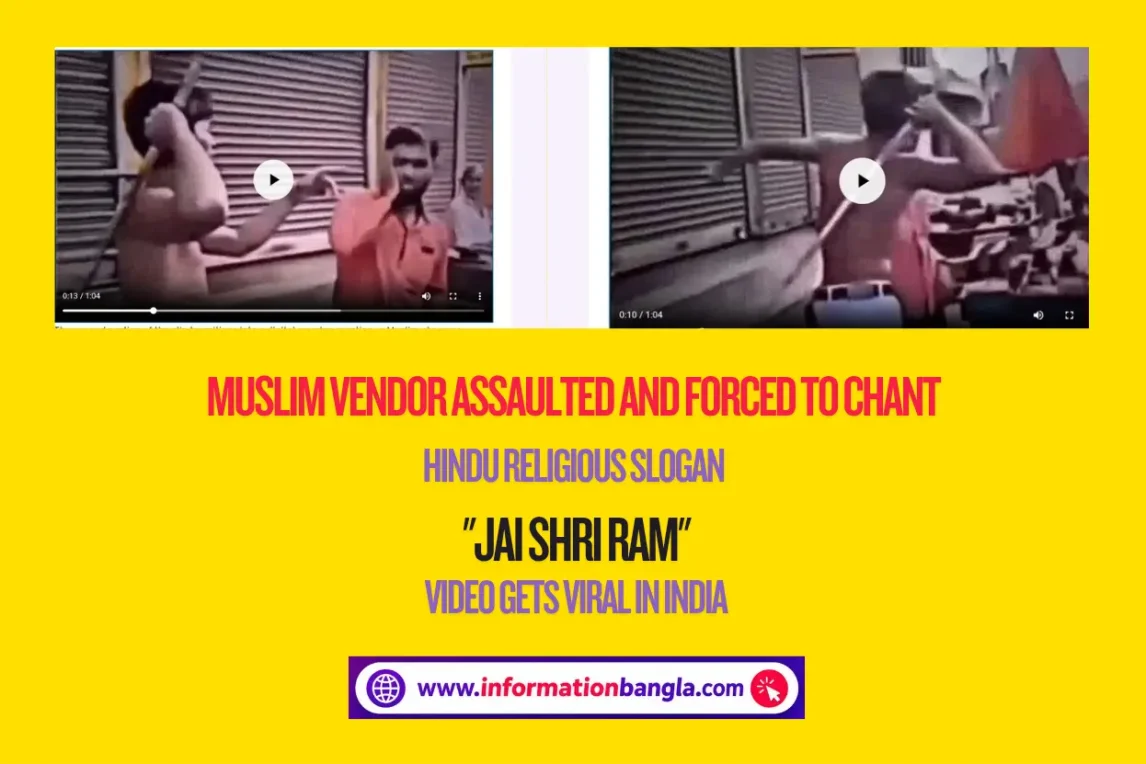
Mob Lynchings: Vigilante groups, operating under the guise of cow protection (Gau Raksha) or preventing inter-faith marriages (Love Jihad), frequently force victims to chant religious slogans as a form of submission.
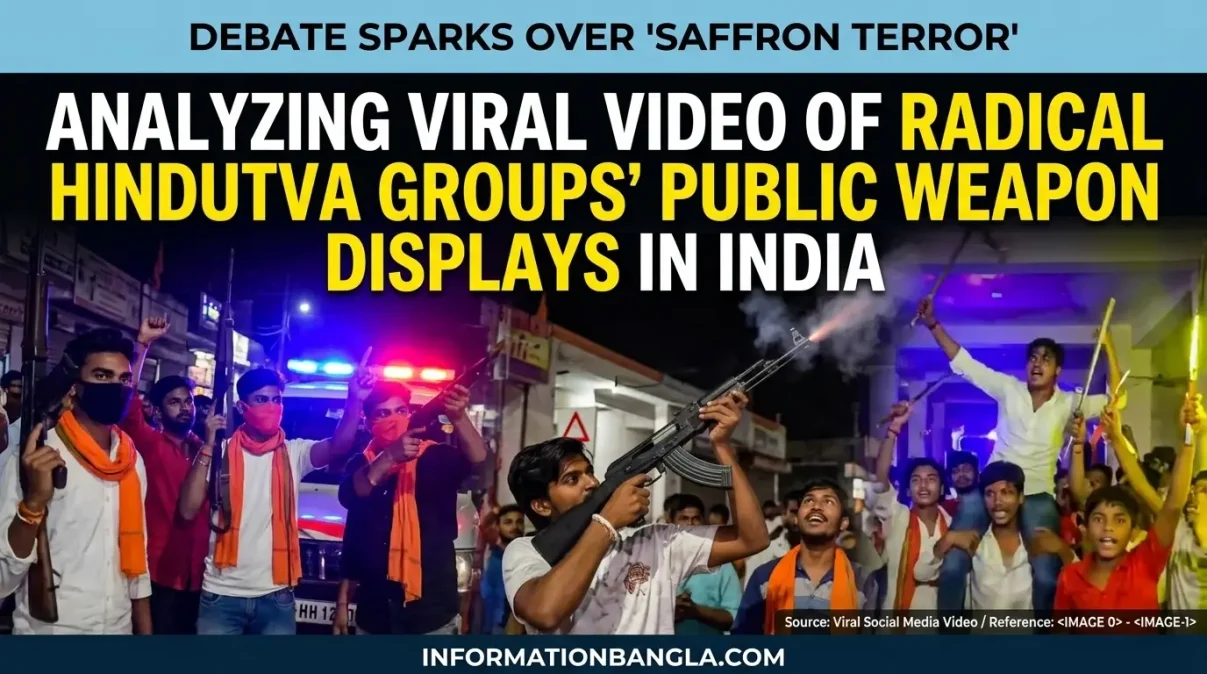
Festive Polarization: Religious processions, particularly during festivals like Ram Navami, are increasingly routed through minority-dominated neighborhoods, accompanied by high-decibel incendiary music designed to provoke confrontation.
Economic Boycotts: Calculated campaigns urging the majority community to avoid purchasing goods from Muslim vendors have frayed local economic interdependencies that once kept communal peace.
Ground Evidence of Coercion
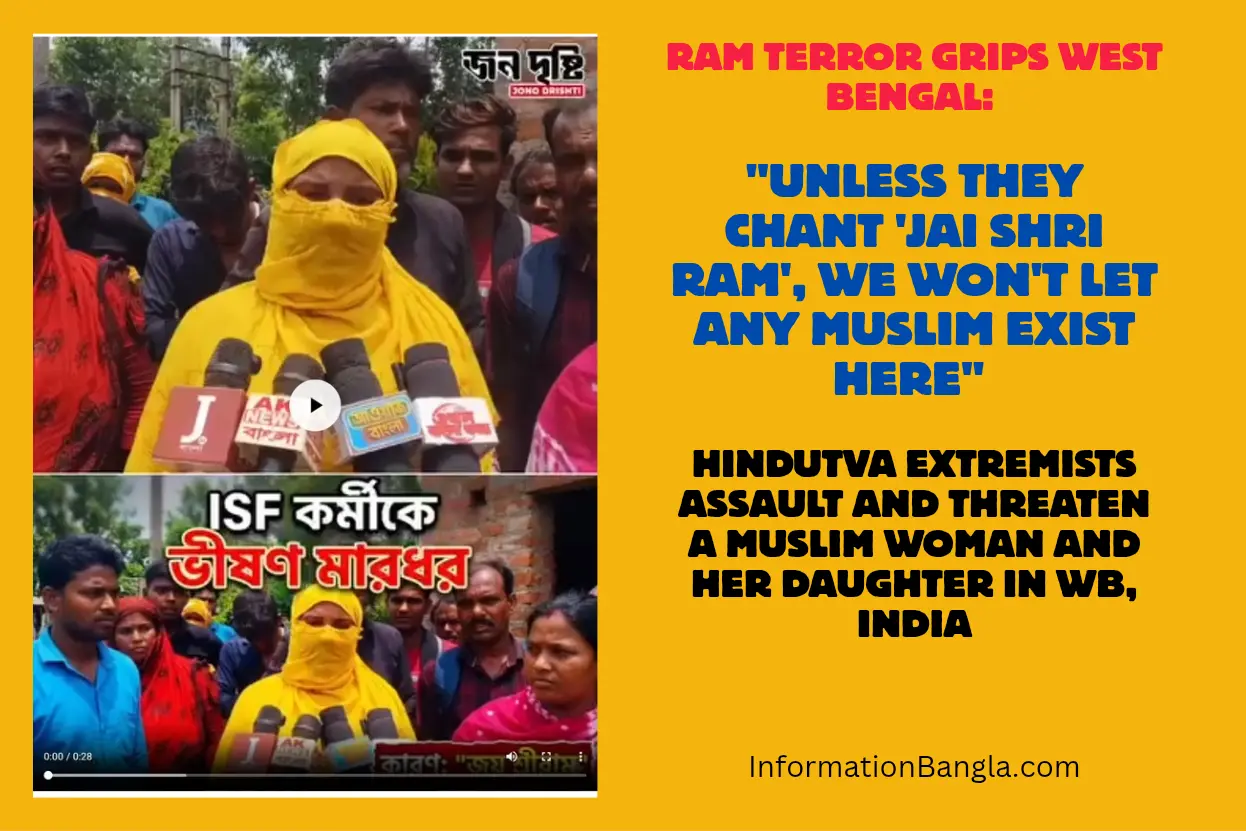
The abstract metrics of political radicalization find their most devastating expression in the lived experiences of individuals at the grassroots level. A stark, unedited glimpse into this reality is captured in the investigative field footage embedded below:
Original Bangla Transcription of Victims Voice:
”‘জয় শ্রীরাম’ না বলিয়া এখানে কোনো মুসলমানের কোনো অস্তিত্ব রাখবো না আমরা। আমরা দাঁড়ায়ে আছি, আমার ১২ বছরের বাচ্চার গালে চড় মেরে বলছে, ‘এই! তোর বাপ কোথায় বল? না তো তোর মুণ্ডুটা আগে কাটবো।’ বলে গোবিন্দ ওকরম উল্টাপাল্টা কথা বলছে। আমি দাঁড়ায়ে রয়েছি, বলছে, ‘এই মুখ ছিঁড়ে দেবো, ভয় পাচ্ছিস কেন? কোথায় বল?’ বলে আমি দাঁড়ায়ে রয়েছি, ও রাজা এসে আমার গালে চড় মেরেছে। রাজা এসে আমার গালে চড় মেরেছে, সঙ্গে সঙ্গে আমি আমার ভাসুরকে জানিয়েছি। জানানোর পরে, ফের দেখি না ফের ওরা এখান থেকে রিটার্ন করতে যাচ্ছে। আমরা এখানে এসেছি ফের আমাদের পিছন পিছন এই নামগুলো বলো— তিনজনে এসেছে আমাদের সঙ্গে সঙ্গে।”
Exact English Translation of Victims Voice:
”They are saying, ‘Without chanting “Jai Shri Ram”, we won’t let any Muslim exist here.’ We were just standing there, and they slapped my 12-year-old child on the cheek and said, ‘Hey! Tell us where your father is? Otherwise, we will chop off your head first.’ Saying this, Govinda and others were shouting all kinds of abusive things. As I stood there, they threatened, ‘Hey, we will rip your mouth apart! Why are you scared? Tell us where he is!’ While I was standing there, Raja came and slapped me across my face. Raja slapped me on my cheek. I immediately informed my brother-in-law (husband’s elder brother). After informing him, I saw them returning again. We came over here, and they followed us right behind—name those people—three of them followed us immediately.”
In this field report from West Bengal, a Muslim woman—identified as a local political worker for the Indian Secular Front (ISF)—recounts a harrowing encounter before a scrum of local journalists. Her testimony outlines the exact mechanics of majoritarian enforcement: an ultimatum delivered by local youth stating that unless Muslims chant “Jai Shri Ram,” they will lose their right to exist in the locality. The account turns deeply visceral as she describes physical violence and slaps inflicted not just upon herself, but on her twelve-year-old child, coupled with death threats.
This specific incident, documented in the video, underscores two critical realities: first, that political identity and religious intimidation have become inextricably linked in local turf wars; and second, that the slogan has transformed from a profession of faith into a tool of spatial domination, used to signal to minorities that their presence is conditional upon absolute submission.
Here is a powerful, alternative headline and a structured body paragraph based entirely on the raw transcription of the victim’s testimony. This is formatted to fit seamlessly into an investigative report or a separate section of your article.
“Without ‘Jai Shri Ram’, No Muslim Exists Here”: The Visceral Reality of Grassy-Roots Ram Terror in West Bengal
A victim’s harrowing testimony exposes how majoritarian intimidation targets the most vulnerable, fracturing lives in real-time.
The raw brutality of modern majoritarian militancy is laid bare not in abstract political theories, but in the unedited, terrifying testimonies of those living on the front lines of identity-based coercion. In a chilling field account documented on video, a local Muslim woman recounts a harrowing confrontation where a simple profession of faith was weaponized into an existential ultimatum.
“Without chanting ‘Jai Shri Ram’, we won’t let any Muslim exist here,” she recalls her aggressors shouting. The violence quickly escalated from verbal threats to physical trauma, bypassing all boundaries of human decency as the right-wing extremists targeted her child. “They slapped my 12-year-old child on the cheek and said, ‘Hey! Tell us where your father is? Otherwise, we will chop off your head first.'”
The systematic intimidation continued as men identified as Govinda and Raja subjected her to abusive language and physical assault, with Raja openly slapping her across the face. Even as she sought refuge and attempted to report the incident to her family, the perpetrators pursued her, demonstrating a brazen, unchecked confidence. This local flashpoint serves as a devastating microcosm of a larger, systemic crisis—proving that the political weaponization of religious slogans has transformed routine spaces into zones of absolute fear and conditional survival for India’s minorities.
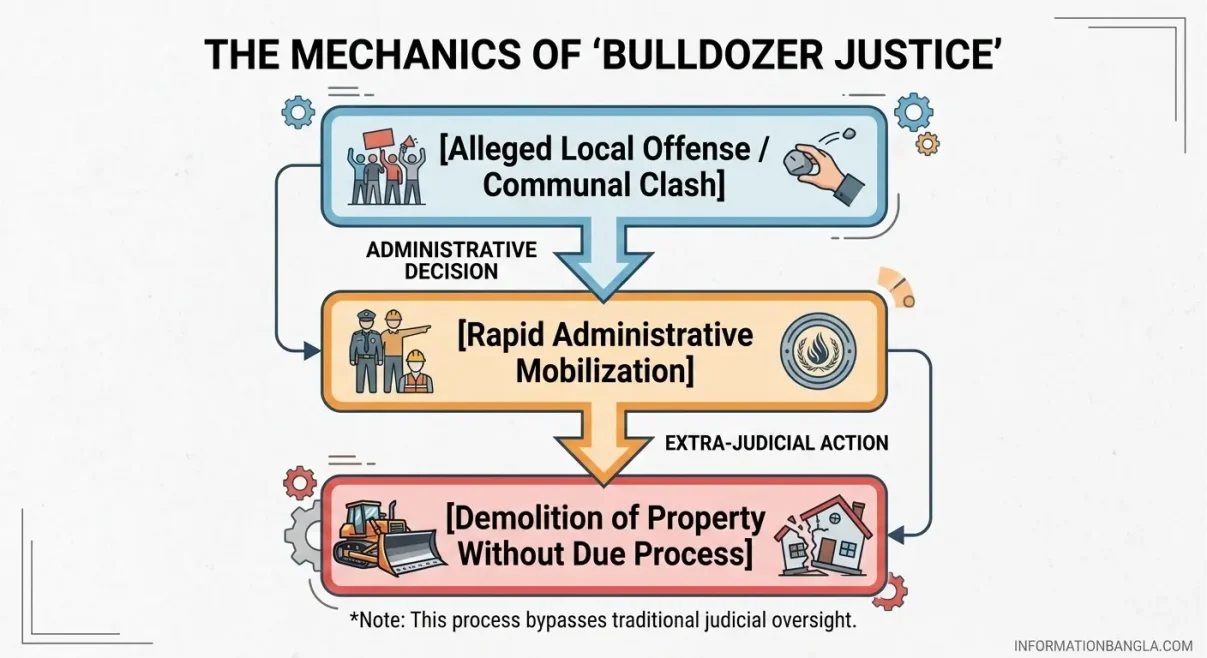
What separates the contemporary wave of majoritarian friction from historical instances of communal rioting is the perceived alignment between street-level actors and state institutions. Historically, the state was viewed as a flawed but necessary arbiter of peace. Today, that neutrality faces an existential crisis. The most potent manifestation of this alignment is the phenomenon popularly termed “Bulldozer Justice.”
This extra-judicial practice—where local administrations bypass traditional courts to demolish the homes and shops of individuals accused of rioting or minor offenses—has disproportionately targeted minority neighborhoods. It serves a dual purpose: it inflicts immediate, catastrophic economic ruin on the targeted families, and it provides a highly visual, satisfying spectacle of dominance for a radicalized political base.
Furthermore, legislative frameworks have been steadily adapted to mirror majoritarian anxieties. Stringent laws regulating cattle slaughter, inter-faith marriage, and religious conversion have effectively criminalized routine aspects of minority life, providing local police forces with broad discretionary powers to harass and detain citizens under the color of law.
The Manufacturing of Consent
This deep societal fracturing could not have been achieved without the active complicity of India’s mainstream media. A significant portion of the country’s corporate television networks—derisively termed “Godi Media” (lapdog media) by domestic critics—functions as an ideological amplifier for the ruling establishment.
The Noise Manufacturing Loop: 1. Primetime Sensationalism: Framing routine disputes as vast plots. 2. Dehumanizing Rhetoric: Using coded language to describe minorities. 3. Erasure of State Accountability: Deflecting economic failures.
By constantly running prime-time debates that frame ordinary civic disputes as existential civilizational threats, these channels have effectively normalized hate speech. The language used on these platforms frequently borders on dehumanization, depicting minorities as demographic threats or internal security liabilities.
Simultaneously, the digital landscape is saturated with hyper-localized disinformation campaigns. WhatsApp groups, right-wing YouTube channels, and tailored social media algorithms create insular echo chambers where historical grievances are weaponized, and false narratives about minority aggression are manufactured daily. For the average consumer of this media, the continuous bombardment of fear-inducing narratives completely alters their perception of reality, making them highly susceptible to majoritarian radicalization.
Is Total Hegemony Achieved?
Given the scale of this ideological capture, foreign observers frequently raise the specter of impending mass expulsion or systemic ethnic cleansing. While the warning signs noted by global watchdogs are genuinely alarming, an objective journalistic analysis must also recognize the profound internal contradictions and counter-forces that define contemporary India. India is not a monolith, and the majoritarian project is experiencing significant, structural resistance along multiple fault lines:
1. The Regional and Cultural Counter-Weight
The political ideology of Hindutva, while dominant in the northern and western Hindi-speaking heartlands, faces steep resistance in the southern and eastern parts of the country. States like Kerala, Tamil Nadu, and West Bengal possess distinct linguistic, cultural, and political identities that reject the centralized, monochromatic cultural nationalism pushed by New Delhi. In these regions, local administrations heavily suppress right-wing vigilantism, preserving a different social contract.
2. The Resilience of the Judiciary
While the lower judiciary has occasionally succumbed to political pressure, the higher judiciary—specifically the Supreme Court of India—has repeatedly acted as a constitutional handbrake. In a landmark ruling against extra-judicial demolitions, the Supreme Court explicitly condemned “Bulldozer Justice,” laying down strict nationwide guidelines and reminding the state that executive overreach cannot replace due process.
The outcomes of recent democratic exercises, including the 2024 general elections, demonstrate that the Indian voter’s appetite for perpetual religious polarization has distinct structural limits. When confronted with crushing economic realities—such as severe youth unemployment, agrarian distress, and unchecked inflation—large segments of the majority community, particularly marginalized caste groups like Dalits and OBCs, have consistently broken ranks with majoritarian coalitions to vote on material interests.
The Micro-Impact Fragmented Social Fabric
Despite these institutional guardrails, the damage to India’s everyday social fabric remains severe. The primary triumph of majoritarian militancy is not necessarily found in large-scale violence, but in the enforcement of a pervasive, quiet anxiety among minorities.
Sphere of Life
The Historical Norm
The Contemporary Reality
Housing
Segregated but fluid urban neighborhoods.
Deepening ghettoization; systemic denial of rentals to Muslims.
Employment
Mixed informal and formal workspaces.
Casual discrimination; avoidance of visible identity markers.
Public Spaces
Shared cultural and civic interactions.
Heightened vigilance; fear of traveling on long-distance trains.
This quiet alienation eats away at the concept of common citizenship. When an entire community begins to feel that their safety depends entirely on their invisibility, the democratic promise of equality becomes hollow.
The Enduring Battle for the Republic
India stands at a critical historical crossroads. The aggressive invocation of religious identity to achieve political hegemony has deeply compromised its foundational commitment to secularism and pluralism. The machinery of state, the complacency of the corporate press, and the radicalization of a vocal segment of the population present a formidable challenge to the survival of minority rights.
Yet, to declare the death of Indian democracy is to ignore the millions of citizens—lawyers, independent journalists, student activists, and ordinary voters—who continue to use every available constitutional tool to push back against the tide of hate. The battle for India’s soul is not over; it is being fought daily in courtroom arguments, at village councils, inside independent digital newsrooms, and within the privacy of the ballot box. The ultimate outcome will determine whether India remains a vibrant, multi-faith republic or devolves into an exclusionary majoritarian state.
Sharing accurate and reliable information is the job of the Information Bangla editorial desk. The editorial team thoroughly verifies the sources of each article so that you, as the reader, get accurate information. We don't just provide information, we ensure its authenticity and reliability. This team has been doing its job faithfully for five long years.