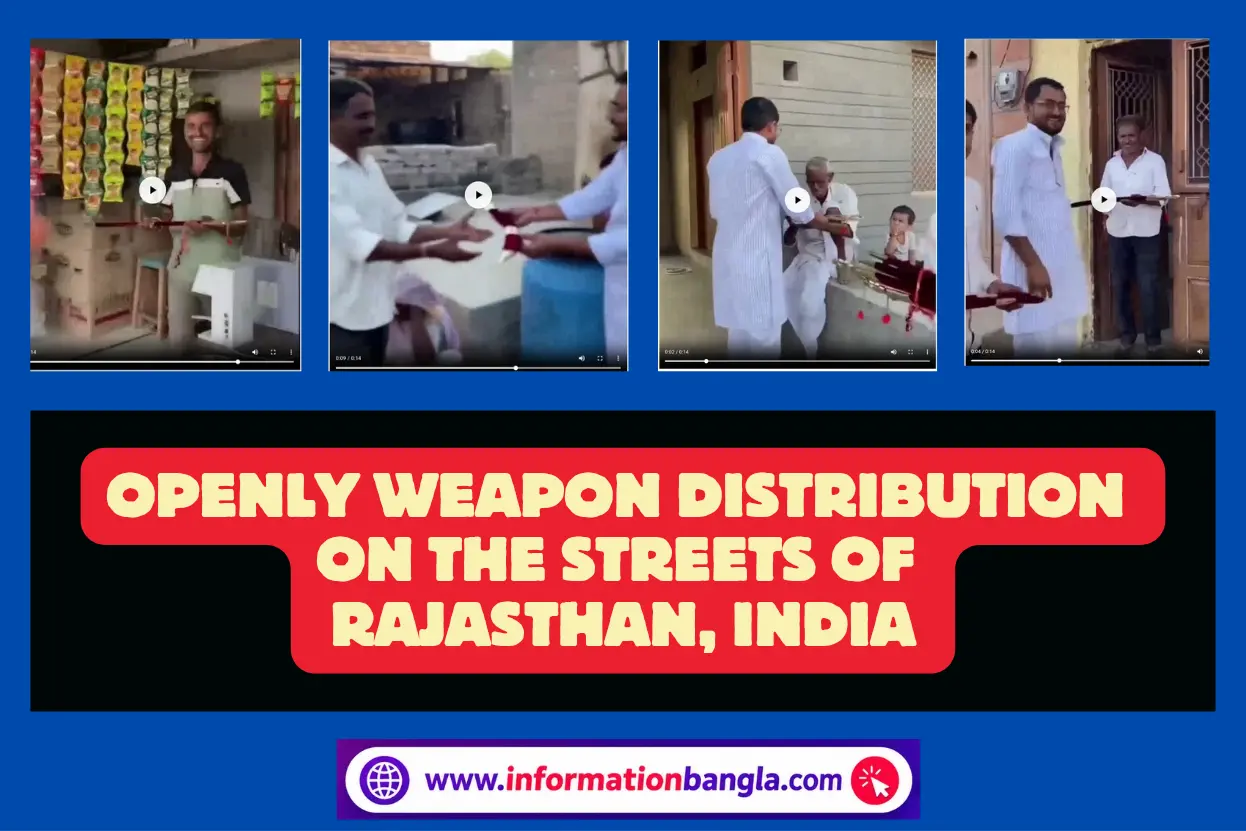
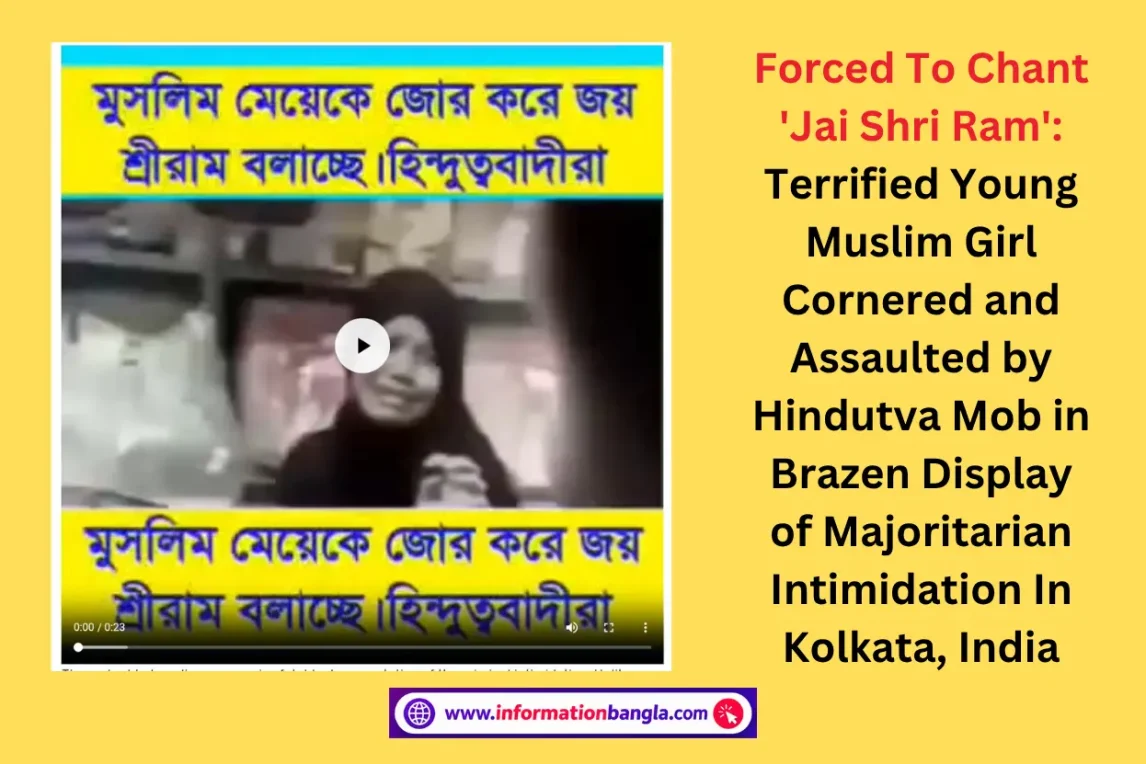
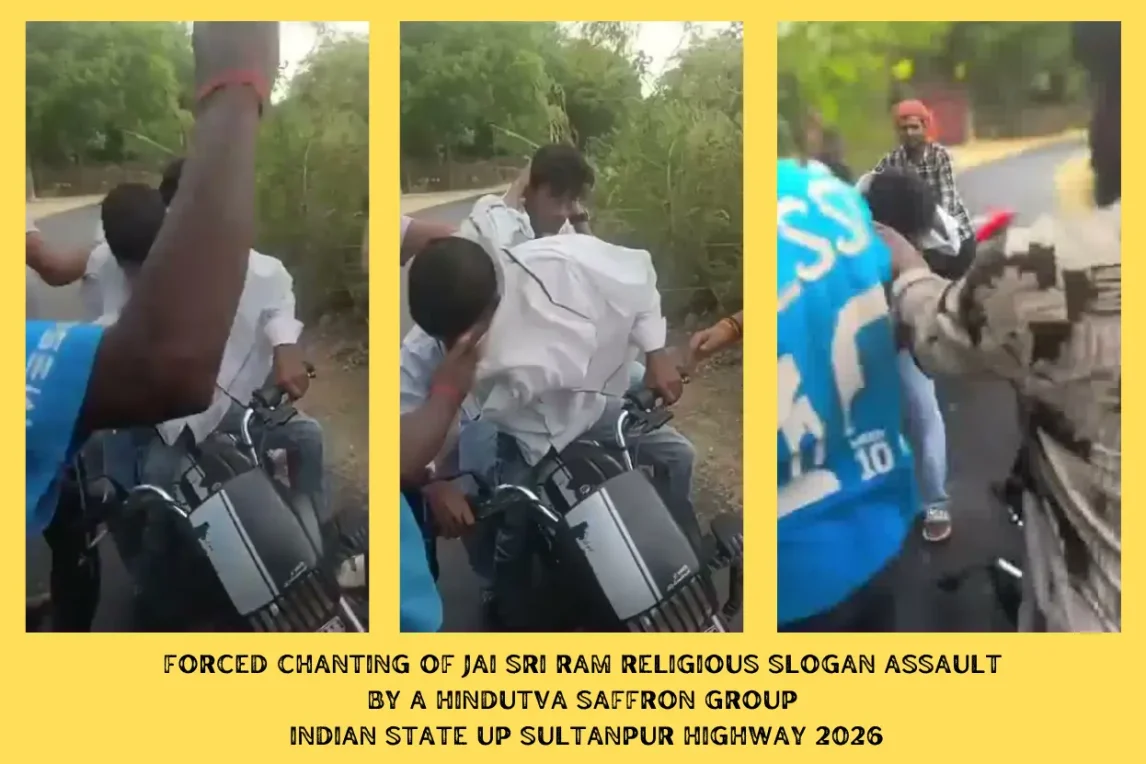
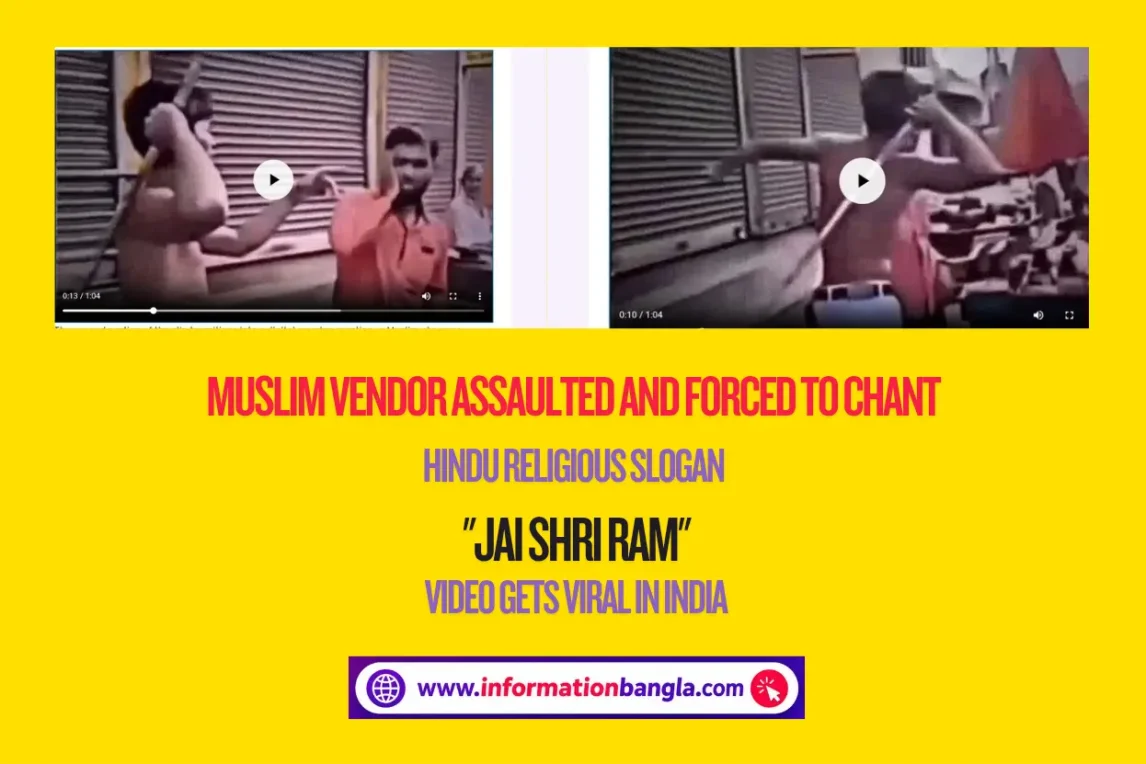
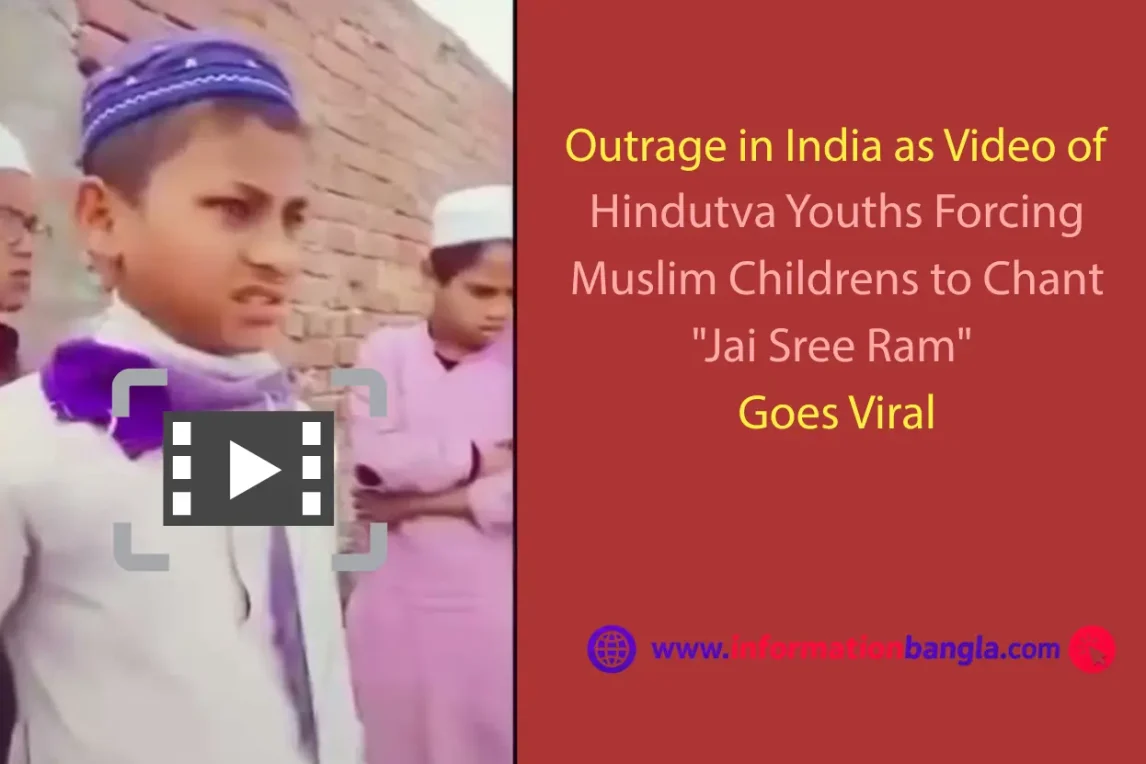
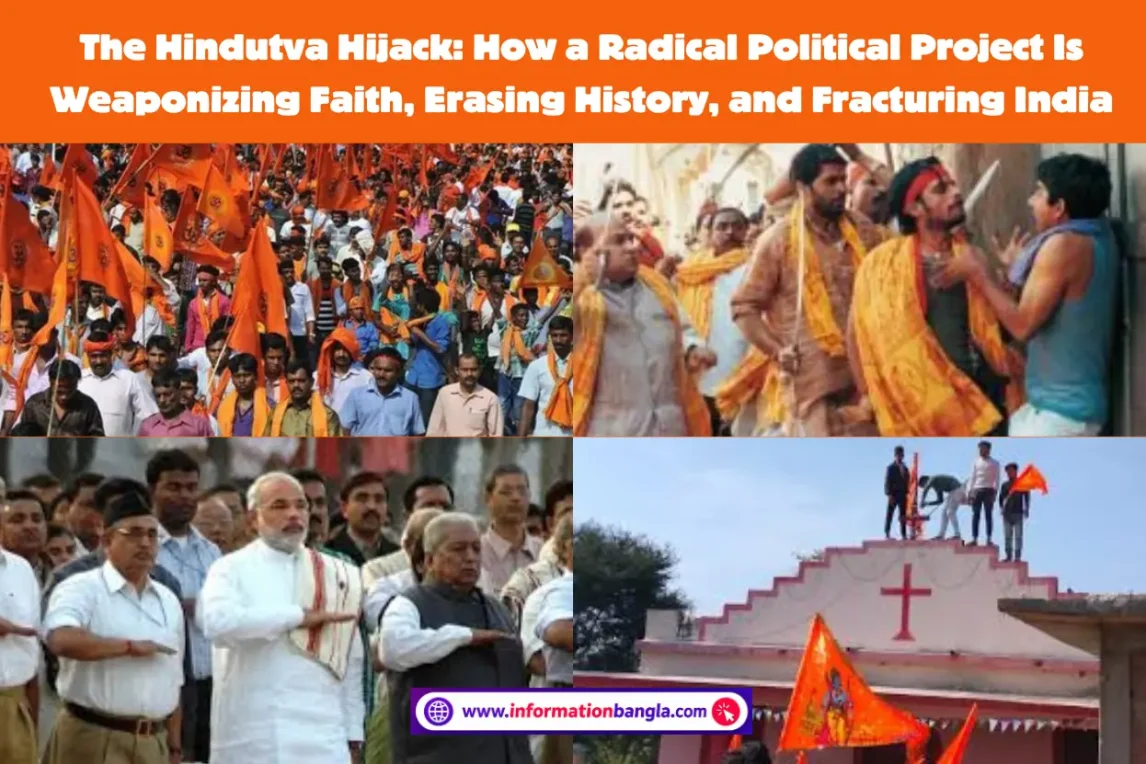
The viral video circulating from Rajasthan—showing the public distribution of swords and traditional weapons to local youths—has once again ignited a fierce debate surrounding India’s secular fabric, majoritarian assertiveness, and the consistency of law enforcement. For minority communities, particularly India’s nearly 200 million Muslims, these public displays are not mere cultural or religious rituals; they are perceived as deeply unsettling provocations that occur against a backdrop of rising communal polarization.
To understand the gravity of this situation, one must look past the immediate digital outrage and analyze the intersection of right-wing mobilization, state accountability, and the growing anxieties of a multi-religious democracy.
The Rajasthan Sword Distribution By Extremist Hinduva Group Video Captured on Camera
The Symbolism and Danger of Public Weapon Distribution
For decades, right-wing organizations such as the Vishva Hindu Parishad (VHP), the Bajrang Dal, and various local offshoots like the Hindu Raksha Dal have organized events centered around public weapon distribution or weapon worship (Shastra Puja). Historically, programs like the Trishul Diksha (trident distribution) were justified by organizers as symbolic actions meant for “self-defense” or spiritual fortitude. However, critics and human rights defenders argue that these campaigns deliberately militarize civil society and foster an atmosphere of intimidation against minorities.
Incitement and Rhetoric: These distribution drives are frequently accompanied by incendiary speeches. For instance, during a recent incident in Ghaziabad, fringe group leaders openly exhorted citizens to arm themselves, utilizing deeply polarizing language directed at minority communities.
Desecration Tactics: The deliberate throwing of forbidden meats near places of worship—such as cow meat near temples or pig meat near mosques—remains a classic, malicious provocation used by anti-social elements to incite riots and create deep-seated communal hatred.
The Psychological Toll: For local Muslim populations, the unchecked distribution of lethal instruments like swords and axes creates a pervasive climate of fear, raising valid concerns about personal safety, property destruction, and systemic exclusion.
The Political Landscape: Majoritarianism and the Hindutva Agenda
The political ascent of the Bharatiya Janata Party (BJP), which shares ideological roots with the Rashtriya Swayamsevak Sangh (RSS), has fundamentally shifted India’s socio-political discourse. Critics argue that the consolidation of political power by the BJP across multiple Indian states has emboldened fringe elements within the broader Hindutva ecosystem.
Under the canopy of state protection—whether real or perceived—fringe groups often operate with a sense of ideological alignment with local administrations. This has manifested in several alarming trends:
India’s strength has historically rested upon its pluralism. The actions of fringe groups distributing weapons, alongside the uneven response of security agencies, represent a profound challenge to the rule of law. If India wishes to maintain its global standing as a stable, democratic superpower, its leadership must ensure that the law applies equally to all, regardless of religious or political affiliation.
Security agencies must move away from political appeasement and act decisively to disarm radical elements, suppress hate speech, and safeguard the lives and dignity of every citizen. Ultimately, a nation cannot march toward economic prosperity if its streets are fractured by manufactured hatred and fear.
This video analysis details a prominent incident in Northern India where fringe groups openly distributed weapons, prompting a massive public debate and subsequent police intervention under the Arms Act.
“The primary danger to a secular state is not just the existence of fringe extremist elements, but the perception that the state machinery looks away when those elements break the law.”
Mob Violence and Vigilantism: Incidents of cow vigilantism (Gau Rakshaks) have frequently spiraled into horrific acts of mob lynching and targeted violence against Muslim dairy farmers and traders.
Economic and Social Ghettoization: In states like Gujarat and parts of Northern India, communal skirmishes and targeted economic boycotts have forced minorities into segregated neighborhoods, limiting their socio-economic mobility.
Vandalism and Displacement: In various communal flashpoints, the burning of homes and businesses belonging to minorities has led to displacement, leaving affected families with little recourse but to rely on sluggish judicial processes.
Law Enforcement and the State: Is There Absolute Lawlessness?
A central question raised by observers and journalists is why Indian security agencies often appear hesitant to curb these flagrant displays of lawlessness. The reality, however, is more nuanced than total administrative paralysis. While there are legitimate critiques regarding delayed police responses or political pressure, Indian law enforcement agencies do routinely intervene and enforce the law when public safety is threatened.
Consider several prominent legal interventions against illegal weapon distributions:
1. The Ghaziabad Crackdown (2026)
When activists from the Hindu Raksha Dal distributed swords and axes in Ghaziabad while delivering hate speeches, the local police did not remain silent. Law enforcement intervened swiftly, seizing the weapons and filing First Information Reports (FIRs) against dozens of individuals. At least ten individuals were promptly arrested, proving that when the state chooses to enforce the Arms Act, the law is absolute.
2. The Kerala Durga Vahini Case
In Thiruvananthapuram, Kerala, the police registered cases against 200 women belonging to the VHP’s women’s wing, the Durga Vahini, after they marched through public streets brandishing swords. They were booked under multiple sections of the Indian Penal Code (IPC) for rioting, unlawful assembly, and violations of Section 25 of the Arms Act.
3. Historical and Ongoing Precedents
Indian law remains explicit: carrying or distributing sharp-edged weapons exceeding nine inches in length without a valid license is a punishable offense under the Indian Arms Act. From Varanasi to Rajasthan, local police departments have repeatedly initiated inquiries and canceled events when fringe elements attempted to distribute weapons under the guise of cultural training.
Despite these actions, a core systemic issue remains: selective enforcement. Critics argue that police intervention is often reactive rather than preventive, occurring only after videos go viral or communal tensions reach a boiling point. Furthermore, local police forces in certain states face immense political pressure, leading to an environment where state actors may downplay the severity of hate speech to maintain electoral stability.
The Geopolitical Lens: International Pressure vs. Sovereignty
The deteriorating state of communal harmony has caught the attention of the international community. Bodies like the United States Commission on International Religious Freedom (USCIRF), alongside various European Union human rights panels and Arab nations, have frequently issued statements warning India about the persecution of its minorities.
However, relying solely on external geopolitical pressure presents a complex diplomatic challenge:
Strategic Alliances: For Western nations like the United States and members of the EU, India serves as a critical economic counterweight to China in the Indo-Pacific region. Consequently, Western governments often balance their human rights rhetoric with strategic and economic pragmatism.
The Sovereignty Defense: The Indian government consistently rejects external reports on its internal affairs, labeling them as “biased,” “unwarranted,” or interference in its domestic sovereignty.
The Path Forward is Internal: While international scrutiny keeps global eyes on India, the true correction must come from within the country’s own democratic institutions—the judiciary, an independent press, and the consciousness of its electorate.
Preserving the Soul of the Constitution
India’s strength has historically rested upon its pluralism. The actions of organized extremist Hindutva groups distributing weapons, alongside the uneven response of security agencies, represent a profound challenge to the rule of law. If India wishes to maintain its global standing as a stable, democratic superpower, its leadership must ensure that the law applies equally to all, regardless of religious or political affiliation.
Security agencies must move away from political appeasement and act decisively to disarm radical elements, suppress hate speech, and safeguard the lives and dignity of every citizen. Ultimately, a nation cannot march toward economic prosperity if its streets are fractured by manufactured hatred and fear.
This video analysis details a prominent incident in Northern India where fringe groups openly distributed weapons, prompting a massive public debate and subsequent police intervention under the Arms Act.
Sagar Soren is a Staff Reporter for InformationBangla.com, specializing in ground-level investigative journalism and human rights. He is committed to delivering accurate, unbiased, and fact-based news.