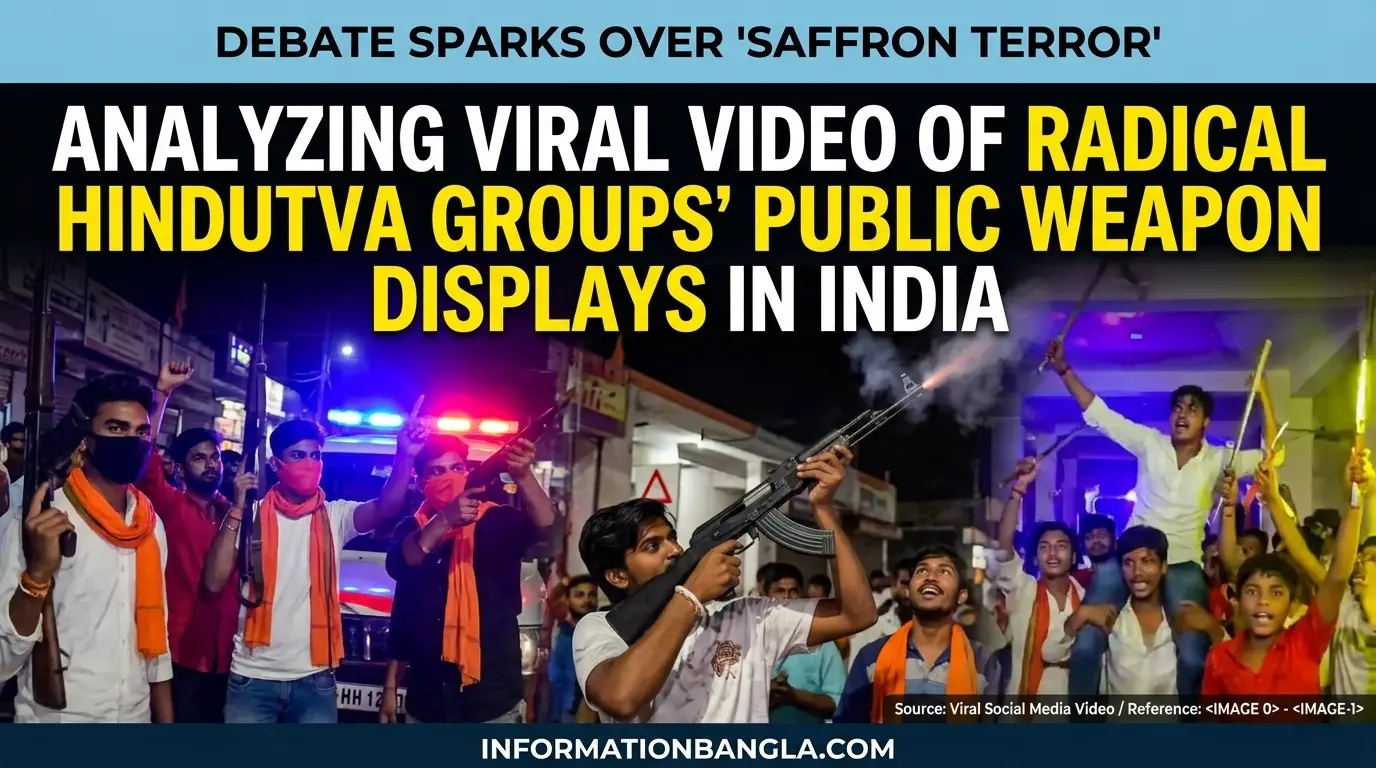
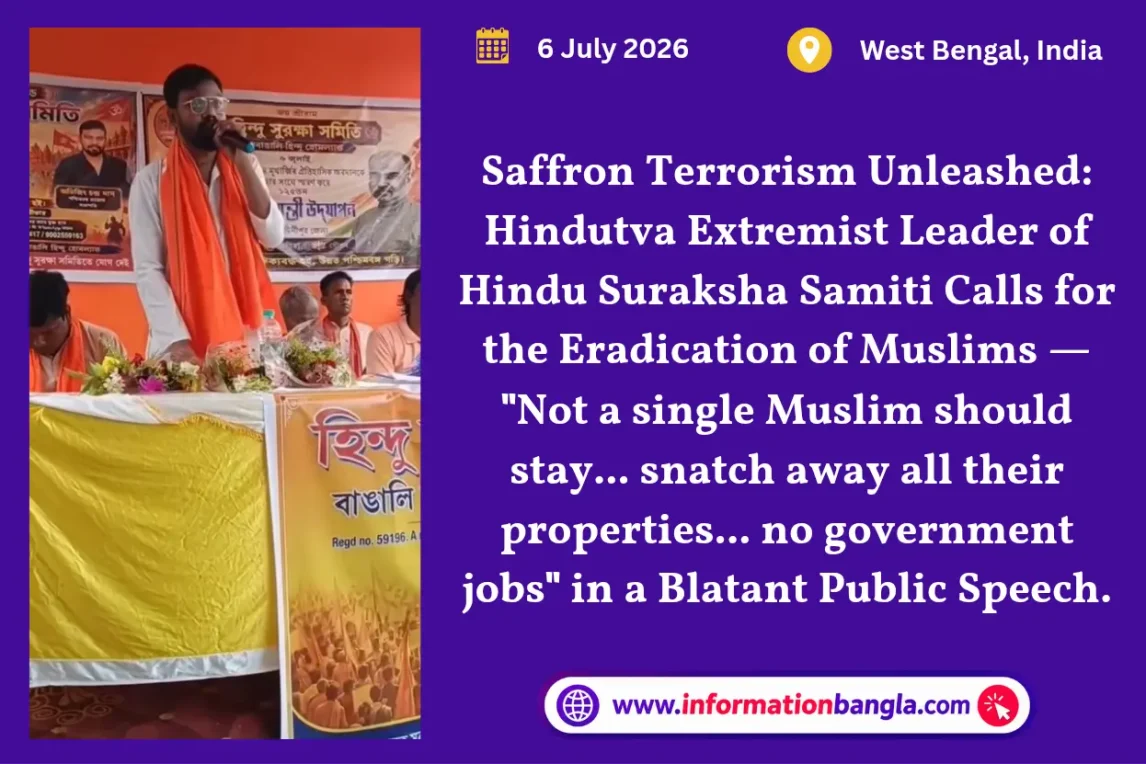
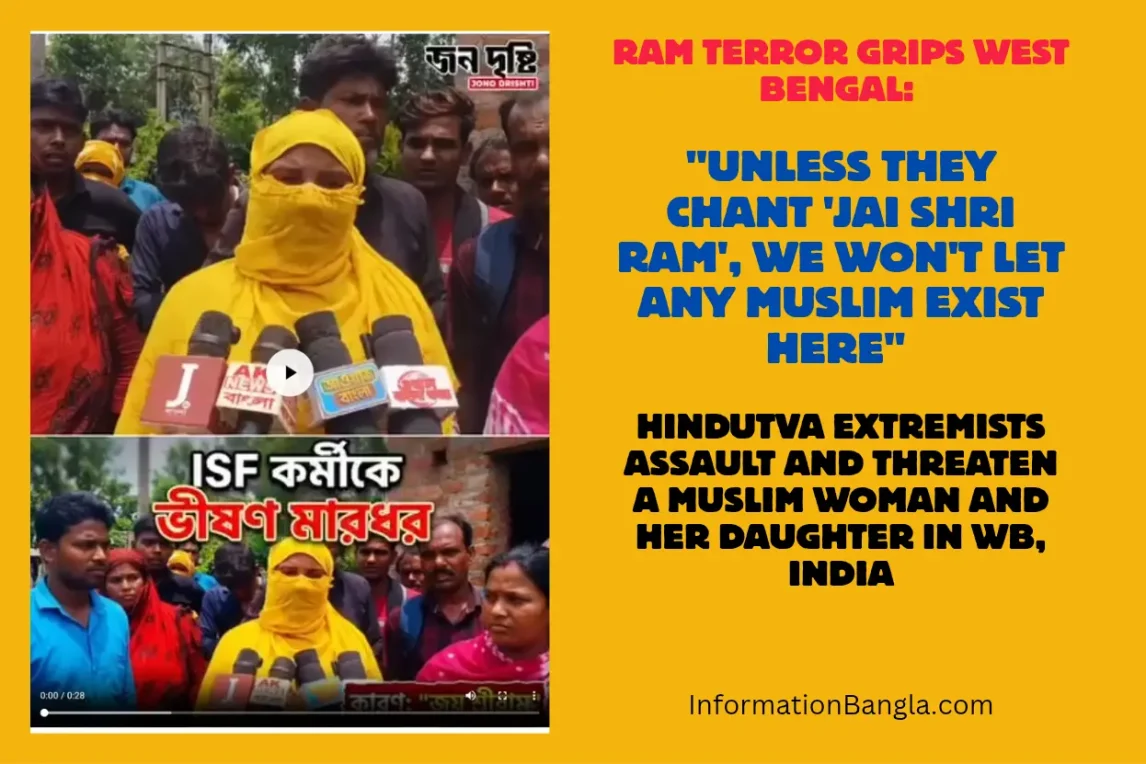
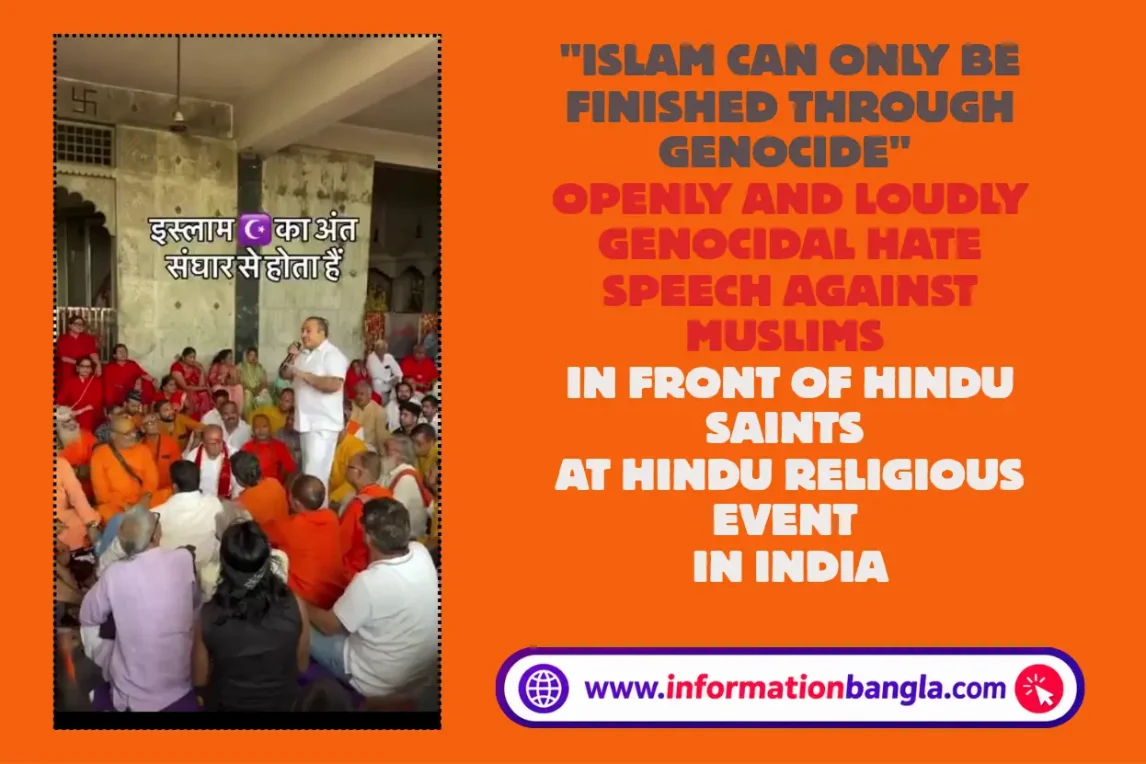
A video circulating widely on social media platforms captures a scene that has become a flashpoint for intense national debate in India: a nocturnal procession where a group of young men, draped in saffron scarves (bhagwa gamchas), openly brandish and discharge firearms into the air against a backdrop of flashing strobe lights and high-decibel music.
The accompanying voiceover in the video directly addresses the political leadership, asking a question that cuts to the heart of contemporary India’s governance challenges: Is this legal under Indian law, or is it understood that wearing a saffron scarf grants immunity from the rules that govern ordinary citizens?
The Viral Video Record
For a seasoned observer of Indian politics, this footage is not an isolated incident of reckless behavior; it is a symptom of a deeper, more complex intersection of religious assertion, political majoritarianism, and the perceived selective application of the rule of law. To understand the gravity of these images, one must unpack the legal, social, and institutional frameworks that dictate how public spaces are shared, policed, and contested in modern India.
The Legal Framework
On paper, India possesses some of the most stringent firearm regulations in the world. The Arms Act of 1959, along with its subsequent amendments, strictly regulates the acquisition, possession, and display of weapons. The legal machinery is designed to prevent exactly the kind of public display witnessed in recent viral footage. In 2019, the Indian Parliament passed the Arms (Amendment) Act, which specifically targeted the culture of “celebratory firing”—the practice of discharging firearms during weddings, religious festivals, or public gatherings. The law recognizes that firing weapons in a public space, regardless of intent, poses a severe risk to human life and public safety.
Key Statutory Provisions vs. Observed Public Reality
Legal Provision (Arms Act & IPC)
Prescribed Penalty / Restriction
Observed Public Practice
Section 25(1AA) of the Arms Act
Manufacturing, selling, or possessing prohibited arms without a valid license carries severe imprisonment terms.
Frequent appearance of both licensed and unlicensed country-made firearms (kattas) in public processions.
Section 27 of the Arms Act (2019 Amendment)
Celebratory firing that endangers human life is a criminal offense punishable by up to two years in prison, a fine of up to ₹1,00,000, or both.
Widespread use of firearms during festivals, weddings, and political rallies as a tool for showmanship.
Section 188 of the Indian Penal Code (IPC)
Disobedience to an order duly promulgated by a public servant (such as prohibitory orders on carrying weapons).
Processions frequently bypass or violate local administrative directives regarding route maps and weapon prohibitions.
Section 153A of the IPC
Promoting enmity between different groups on grounds of religion, race, place of birth, or residence.
Weapon brandishing in front of minority neighborhoods or religious structures, accompanied by provocative sloganeering.
When individuals stand on public streets and discharge rifles into the night sky, they are not merely engaging in cultural expression; they are committing a clear, cognisable offense under Indian statutory law. The legal framework makes no exceptions for religious attire, political affiliation, or celebratory intent. Yet, the frequency with which these videos surface suggests a significant gap between legislative intent and ground-level enforcement.
The Semiotics of Saffron and the Perception of Immunity
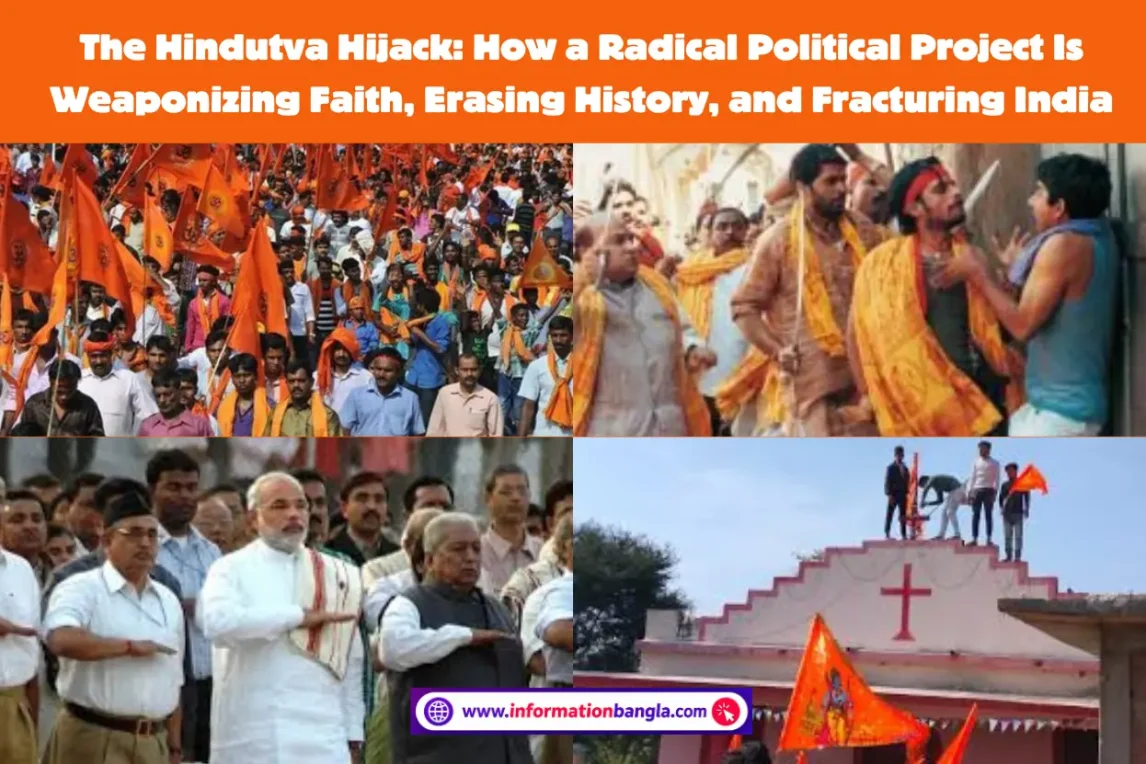
To analyze this phenomenon strictly through a legal lens is to miss the political current driving it. The color saffron (bhagwa) has deep-seated, sacred roots in Hindu tradition, representing renunciation, purity, and spiritual knowledge. However, over the past few decades, its political appropriation by right-wing organizations—including affiliates of the ruling Bharatiya Janata Party (BJP) and the Rashtriya Swayamsevak Sangh (RSS)—has transformed its street-level semiotics. When young men don the saffron scarf while carrying weapons, the garment ceases to be a symbol of spiritual renunciation; it becomes a political shield. The underlying grievance raised by critics, secular activists, and minority communities is the perception of structural immunity.
The sight of young men firing rifles on public streets is a warning sign that a democracy cannot afford to ignore. It signifies a slide away from constitutional governance toward a system where might makes right and the street becomes the primary court of law. India’s strength has always lain in its pluralism and its commitment to a constitutional order that promises equal protection under the law to all its citizens. Allowing any group—regardless of its ideological orientation—to operate above the law under the cover of religious or political symbolism undermines the foundational pillars of the republic. For India to progress as a global power, the state must reclaim its monopoly on law and order, ensuring that the streets remain safe, neutral, and equally accessible to every citizen, free from the shadow of intimidation.
“The true crisis in a democracy does not arise merely when laws are broken; it arises when citizens begin to believe that the consequences of breaking the law depend entirely on the identity, clothing, or political alignment of the perpetrator.”
This perception of immunity is fed by several factors:
Delayed Police Response: In many documented instances of weapon brandishing during religious festivals like Ram Navami or Hanuman Jayanti, law enforcement agencies have been criticized for taking a passive approach, opting to de-escalate rather than arrest perpetrators on the spot.
Political Patronage: Local leaders and elected representatives occasionally defend these displays as historical traditions or expressions of cultural pride, inadvertently legitimizing actions that violate the Arms Act.
Asymmetrical Policing: Critics point out a stark contrast in how state machinery responds to protests or gatherings by minority communities versus those aligned with majoritarian groups. While the former are often met with preventive detentions and strict counter-measures, the latter are frequently managed with a degree of administrative indulgence. However, a nuanced journalistic analysis requires correcting overly broad generalizations. While the anxieties of minority groups are deeply rooted in tangible events, claims that “most Hindus support an extremist, genocidal mindset” lack empirical basis and misread the complex sociology of India. The vast majority of India’s billion-plus Hindu population remains focused on economic mobility, everyday survival, and peaceful coexistence. The radical elements participating in aggressive street displays represent a vocal, highly mobilized fringe that leverages political polarization for local dominance, rather than a monolithic consensus of the entire community.
The Asymmetry of Fear and Impact on Minority Communities
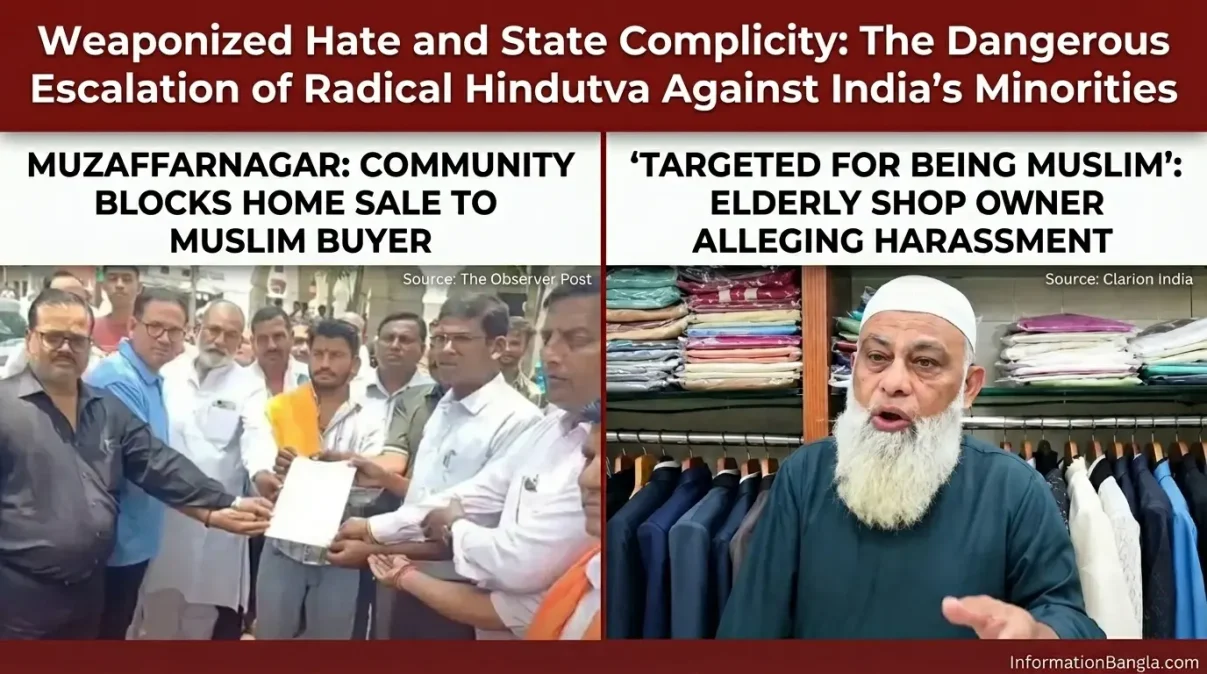
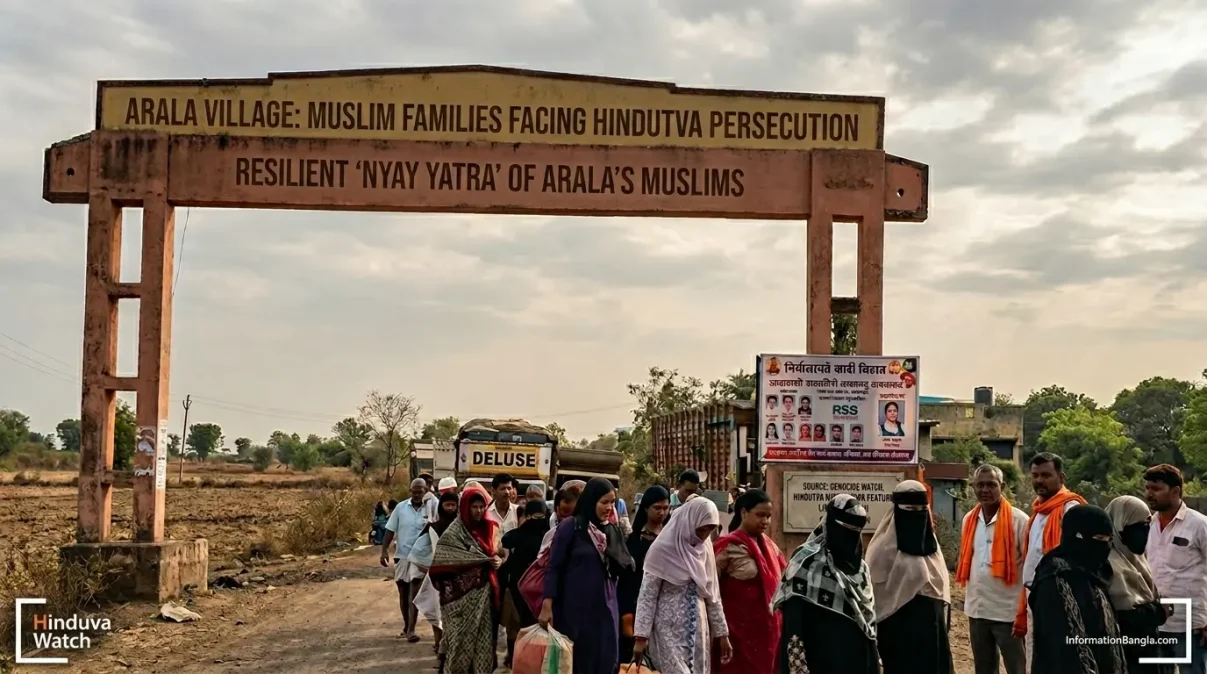
The weaponization of the public square has a psychological impact that goes far beyond the immediate danger of stray bullets. For India’s Muslim minority, comprising over 200 million citizens, these displays are interpreted as a deliberate strategy of intimidation.
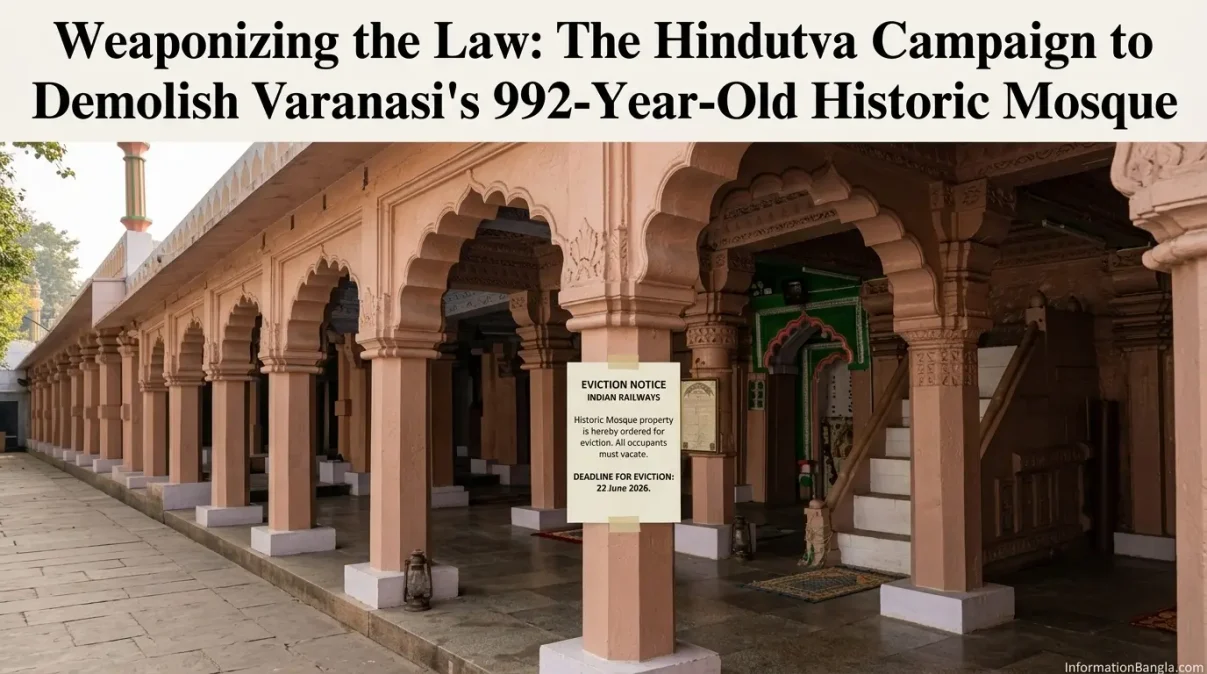
When religious or political processions intentionally chart routes through dense minority neighborhoods, stop outside mosques, and display lethal weapons while playing aggressive, politically charged music, the message is clear: it is a demonstration of territorial dominance. This dynamic fosters what sociologists call a “culture of vulnerability.” When state institutions—specifically the police—fail to act decisively against such open lawlessness, the trust between the citizen and the state fractures. The minority community is left with the impression that the state’s monopoly on the legitimate use of force has been unofficially outsourced to ideological groups on the street.
This polarization serves a distinct political purpose. It consolidates voting blocs on both sides of the religious divide, pushing moderate voices to the margins and ensuring that identity politics takes precedence over bread-and-butter issues like unemployment, inflation, and public infrastructure.
Restoring Institutional Integrity
India’s democratic resilience has historically relied on the strength and independence of its institutions. If the country is to maintain its social cohesion, its administrative and judicial systems must reassert the absolute supremacy of the rule of law, free from political interference. To curb this trend, several systemic corrections are urgently needed:
Strict Accountability for Local Administration: District Magistrates (DMs) and Superintendents of Police (SPs) must be held personally accountable for maintaining order during public processions. If weapons are openly displayed or fired under their jurisdiction, it must reflect on their professional record.
Non-Partisan Application of the Arms Act: Law enforcement must act swiftly and transparently against any individual brandishing illegal firearms, regardless of the color of their scarf or the slogans they shout. Public confidence can only be restored when arrests are seen to be blind to religious or political identities.
Judicial Oversight: The higher judiciary, which has occasionally stepped in to issue guidelines on hate speech and communal violence, must take a proactive stance on the regulation of armed public processions. Clear judicial directives are needed to ban the carrying of weapons in any public rally or religious gathering across the country.
The sight of young men firing rifles on public streets is a warning sign that a democracy cannot afford to ignore. It signifies a slide away from constitutional governance toward a system where might makes right and the street becomes the primary court of law.
India’s strength has always lain in its pluralism and its commitment to a constitutional order that promises equal protection under the law to all its citizens. Allowing any group—regardless of its ideological orientation—to operate above the law under the cover of religious or political symbolism undermines the foundational pillars of the republic. For India to progress as a global power, the state must reclaim its monopoly on law and order, ensuring that the streets remain safe, neutral, and equally accessible to every citizen, free from the shadow of intimidation.
Sagar Soren is a Staff Reporter for InformationBangla.com, specializing in ground-level investigative journalism and human rights. He is committed to delivering accurate, unbiased, and fact-based news.