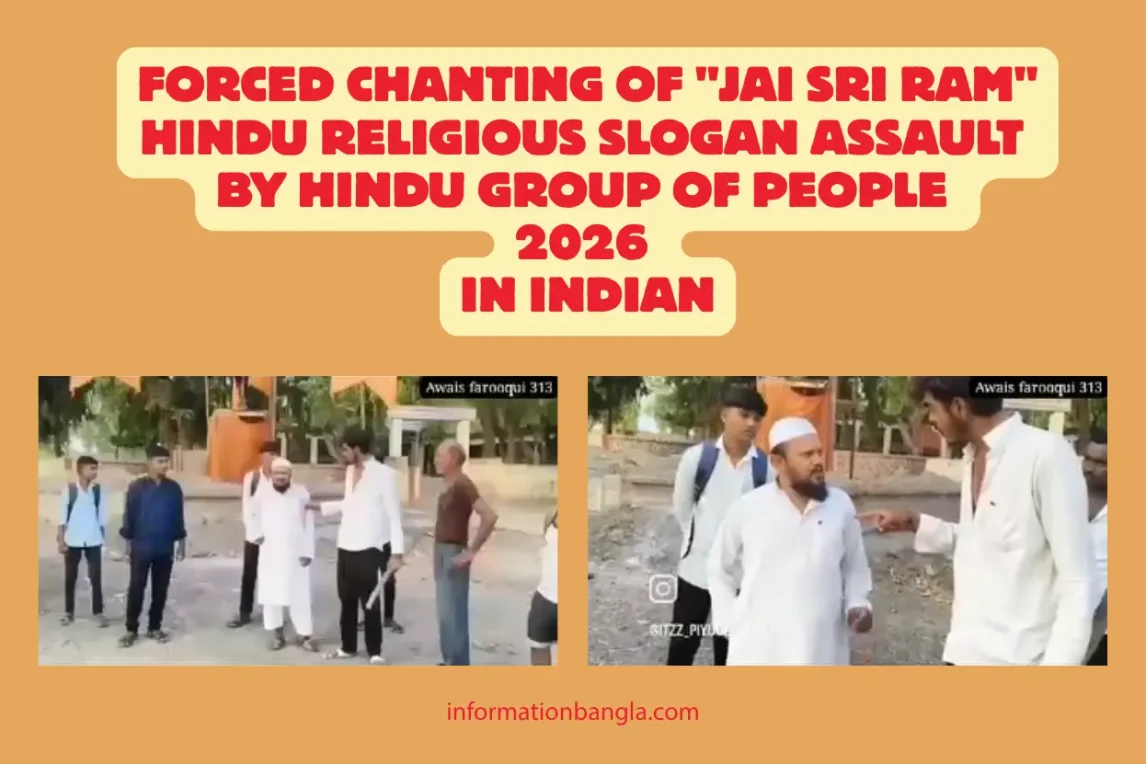
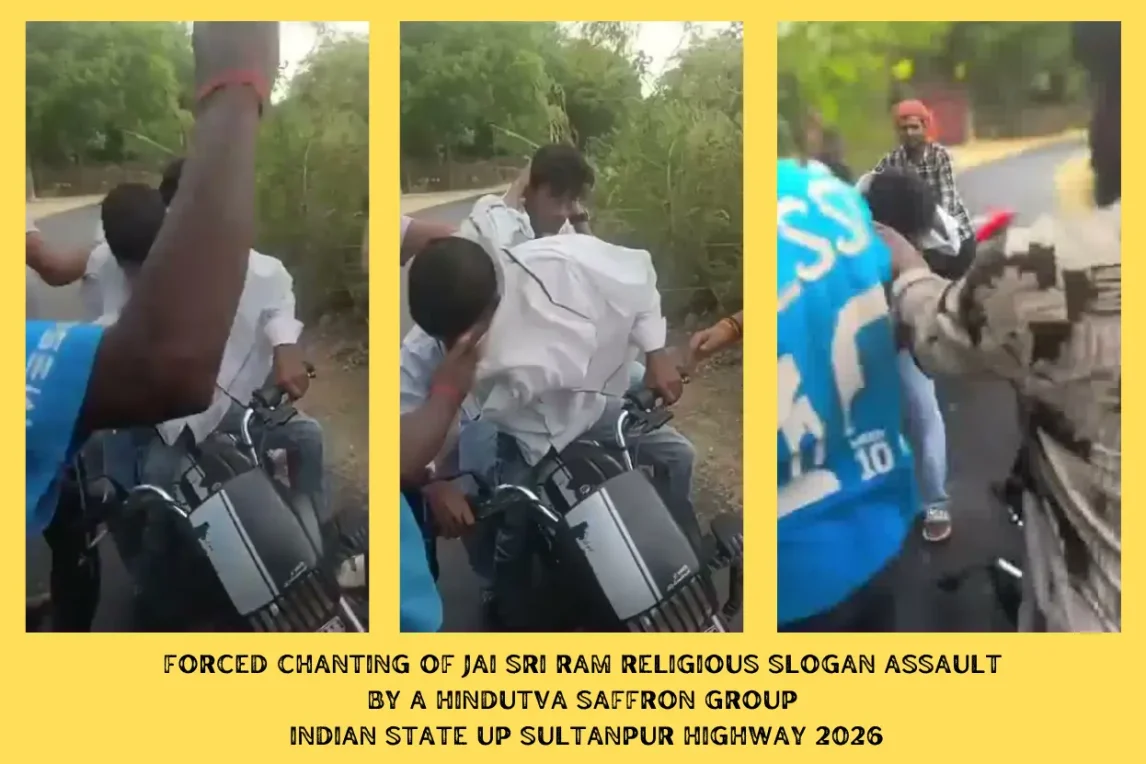
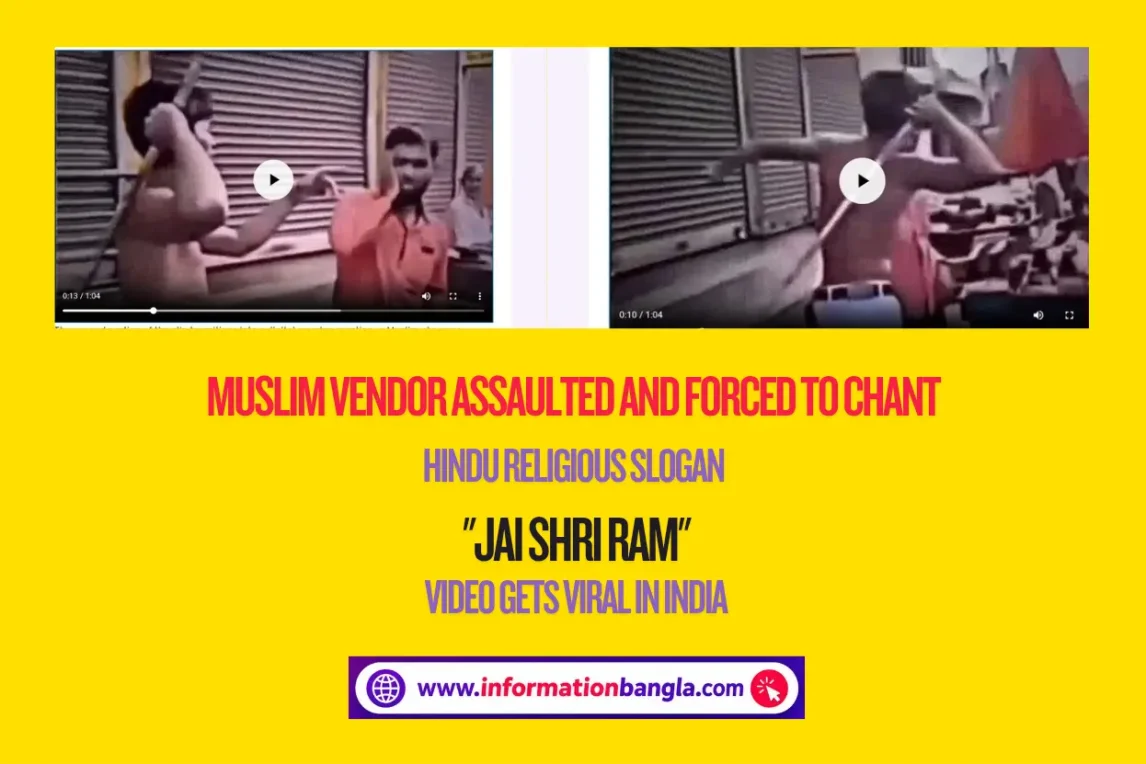
VARANASI, INDIA — The video evidence is as stomach-churning as it is undeniable. On the banks of the Ganges—a river revered by millions as the ultimate symbol of spiritual purification—the waters were defiled not by industrial waste, but by the toxic overflow of human cruelty. A group of lower-caste Hindus, seeking nothing more than their shared spiritual birthright to bathe in the holy river, were surrounded, subjected to vile casteist slurs, and brutally beaten with sticks by self-appointed custodians of upper-caste purity.
Forced onto their knees, their hands raised in helpless defense against a rain of blows, the victims’ cries for mercy were drowned out by the self-righteous fury of their attackers. Even the upper case Hindu children beating up the older mid-age lower caste Hindu man with bamboo stick. This is not an isolated incident of simple lawlessness; it is a vivid, bleeding manifestation of a systemic disease. It exposes a harrowing reality: within the traditional social order of Hinduism, human beings are not born equal. They are rigidly divided by caste (Varna) and sub-caste (Jati), a system where those at the bottom possess no institutional dignity, no guaranteed safety, and no equal rights.
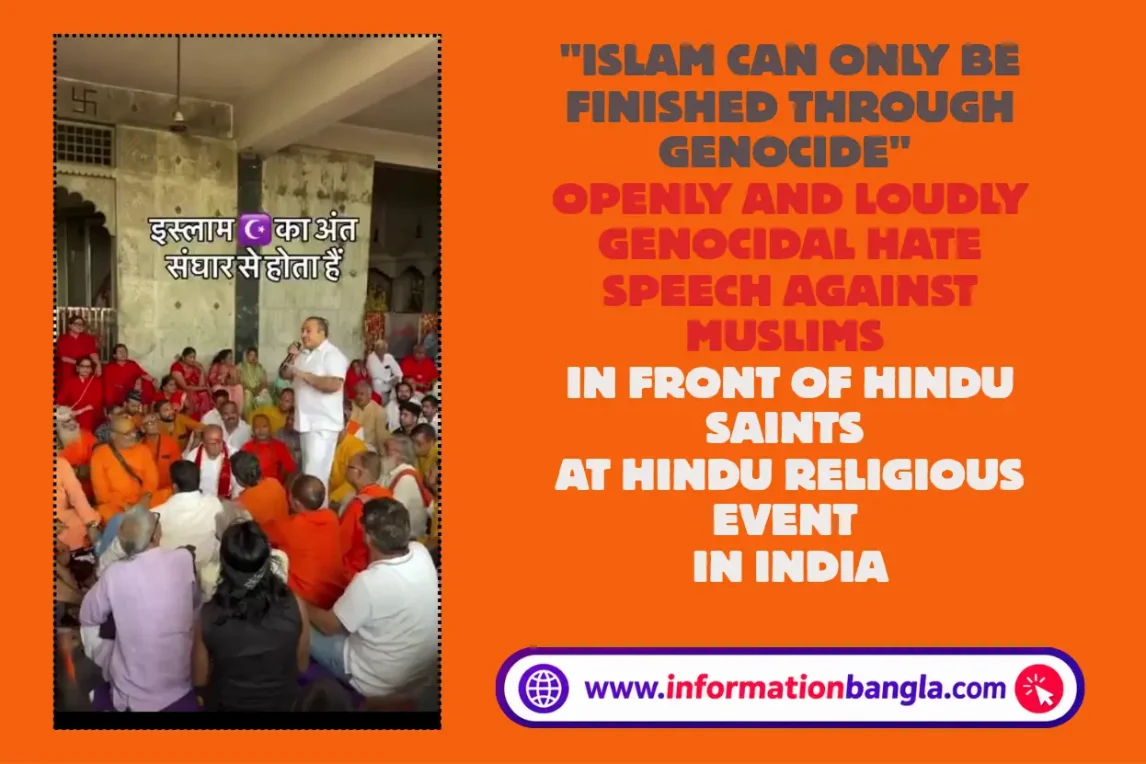
Yet, as this internal rot continues to fester and decay the social fabric from within, a profound journalistic paradox emerges. The very forces of aggressive, right-wing Hindu nationalism (Hindutva) that remain aggressively blind to this domestic brutality expend their immense energy projecting hatred outward. They weaponize media ecosystems to spread venomous Islamophobia, painting Islam as inherently intolerant.
The double standard is staggering. While right-wing majoritarians launch endless ideological campaigns against Islamic traditions, they actively enforce a domestic culture that treats its own people as subhuman based purely on the accident of birth. Conversely, an objective look at the foundational tenets of Islam reveals a radically egalitarian contrast—a faith that completely dismantled birth-based hierarchies to establish absolute human equality.
The Illusion of Sacred Waters vs. The Reality of the Lash
The hypocrisy of the assault at the Ganges lies in the fundamental contradiction of modern majoritarian rhetoric. Global audiences are routinely treated to romanticized depictions of ancient heritage, spiritual exceptionalism, and cosmic unity. However, the lived reality for Dalits (formerly “untouchables”) and lower-caste Shudras is defined by a violent enforcement of boundaries.
In this system, the concept of “pollution” is weaponized. The physical touch, the shadow, or even the presence of a lower-caste individual is viewed as a spiritual contaminant. When a lower-caste Hindu steps into a communal water source—whether it is a village well or the major banks of the Ganges—the act is treated by upper-caste supremacists as an existential transgression deserving of immediate, vigilante violence.
The Spiritual Paradox of Caste Supremacy:
Upper-Caste Theoretical Claim:
"The Ganges purifies all cosmic sins."
             VS.
Enforced Social Reality:
"A lower-caste body pollutes the water."
Human civilization, in its theoretical progression, prides itself on the concepts of universal human rights, dignity, and equality before the law. Yet, beneath the polished rhetoric of ancient cultural heritage and spiritual exceptionalism lies a deeply entrenched, violent, and inherently unequal reality. The most harrowing manifestation of this structural decay is found within the rigid matrix of the traditional Hindu caste system (Varna and Jati).
In everyday reality, millions are born into a predetermined hierarchy where human worth is not measured by character, intellect, or virtue, but by the accident of birth. While radical, right-wing Hindu nationalist groups increasingly dedicate their energies to projecting external hostility—most notably via systematic Islamophobia and the demonization of Muslim communities—they remain deliberately blind to the rot within their own social order. The severe dichotomy between preaching spiritual purity while enforcing a degrading, brutal system of human subjugation represents one of the most glaring hypocrisies of the modern era.
The Reality of the Caste System In Hinduism Is A Culture of Institutionalized Inequality
To understand the core of this socio-cultural crisis, one must dismantle the sanitized, textbook definitions of the caste system often presented to global audiences. It is frequently romanticized as a historic “division of labor.” In practice, as the pioneering social reformer Dr. B.R. Ambedkar famously noted, it is not merely a division of labor, but a division of laborers.
Unlike class systems, which, despite their severe inequities, allow for economic mobility, caste is an immutable, hereditary designation fixed at birth. The classic four-fold division—comprising Brahmins (priests and scholars), Kshatriyas (warriors and rulers), Vaishyas (traders and agriculturists), and Shudras (laborers)—deliberately excludes the Dalits, historically labeled as “untouchables,” placing them entirely outside the social pale.
For those at the bottom of this pyramid—specifically the Dalits (formerly referred to as “untouchables”) and lower Shudra communities—the reality is a continuous cycle of humiliation, exclusion, and existential vulnerability. In many rural and suburban pockets across the subcontinent, a “lower-caste” individual possesses:
No Institutional Dignity: They are systematically barred from entering places of worship, drawing water from common village wells, or sitting on equal terms with upper-caste peers.
No Right to Safety: Physical violence, public humiliation, and economic boycotts are deployed as routine enforcement mechanisms whenever a marginalized individual attempts to assert their legal rights or alter their socio-economic status.
No Spatial Freedom: Segregated housing, unequal access to education, and forced hereditary occupations (such aণ্s manual scavenging) ensure that generational mobility is actively suppressed. The institutionalized nature of this system strips human beings of their basic agency, rendering standard constitutional guarantees completely ineffective in the face of deep-seated societal prejudice.
The Double Standard: External Bigotry vs. Internal Rot
The rise of aggressive, right-wing Hindutva majoritarianism has shifted public discourse away from internal introspection toward aggressive external blame. Far-right commentators, internet trolls, and political demagogues continuously amplify anti-Islamic rhetoric, painting Islam as inherently intolerant or backward. This creates a staggering journalistic paradox: How can a socio-political movement claim moral superiority over another faith when its own foundational social structure relies on the absolute denial of human equality?
Aspect of Critique
Aggressive Majoritarian Rhetoric
Domestic Caste Reality
Human Dignity & Equality
Attacks external minority communities for their socio-religious practices.
Enforces rigid, hereditary social hierarchies where low-caste humans are treated as inherently impure.
Social Cohesion
Claims to defend national and cultural unity from external threats.
Fractures its own society into thousands of endogamous, mutually suspicious, and unequal sub-castes.
Justice & Accountability
Demands absolute conformity to majoritarian laws and cultural norms.
Routinely bypasses the rule of law to protect upper-caste perpetrators of violence against Dalits.
This dynamic functions as a classic psychological projection. By manufacturing an external enemy, extremist elements divert attention away from the severe moral failures, internal violence, and systemic injustices embedded within traditional caste practices.
The Egalitarian Counter-Perspective: The Universalism of Islam
They always criticize Islam, want to make Islam look bad, want to make Islam look low, make excuses about Islam, always spread hatred against Muslims.
However,
In stark contrast to a system predicated on birth-based stratification, the foundational theological and social framework of Islam presents a radically egalitarian vision of humanity. Islam explicitly rejects any form of systemic aristocracy, racial supremacy, or hereditary hierarchy.
“All mankind is from Adam and Eve, an Arab has no superiority over a non-Arab nor a non-Arab has any superiority over an Arab; also a white has no superiority over a black nor a black has any superiority over a white except by piety and good action.” — The Prophet Muhammad (PBUH), The Farewell Sermon
This theological declaration translates into concrete, daily social practices that directly challenge the concept of caste:
In the Islamic congregation, the prince and the laborer stand shoulder-to-shoulder in the same row, prostrating to the same Creator. There are no segregated mosques, no “untouchable” sectors, and no spiritual monopolies reserved for a priestly class based on lineage.
2. Elimination of Birth-Based Purity
The Islamic concept of Taqwa (godliness/righteousness) shifts the metric of human worth entirely. Purity is an internal, moral, and spiritual variable achieved through conscious, ethical action, rather than an unalterable biological status inherited from one’s parents.
3. Historical and Global Inclusivity
From its inception, Islam actively dismantled tribal and racial stratification. The appointment of Bilal ibn Rabah, a freed African slave, as the first Muezzin (the caller to prayer) serves as a historical testament to a system that explicitly valued spiritual devotion over ancestry or racial background.
The Urgent Need for Moral Honest Assessment
As journalists, our duty is to hold power accountable and expose the profound contradictions that destabilize human societies. The modern resurgence of aggressive religious nationalism cannot hide the systemic violence inflicted upon millions of lower-caste citizens under the banner of tradition.
The double standard is unsustainable: one cannot credibly criticize foreign systems of belief while defending a domestic cultural framework that treats fellow human beings as subhuman based purely on their lineage. Until majoritarian movements confront the internal horrors of caste discrimination, their critique of external faiths remains a hollow exercise in political distraction. True civilizational progress requires a commitment to universal human dignity—a principle that recognizes that no human being is inherently superior to another by virtue of birth.
Sagar Soren is a Staff Reporter for InformationBangla.com, specializing in ground-level investigative journalism and human rights. He is committed to delivering accurate, unbiased, and fact-based news.