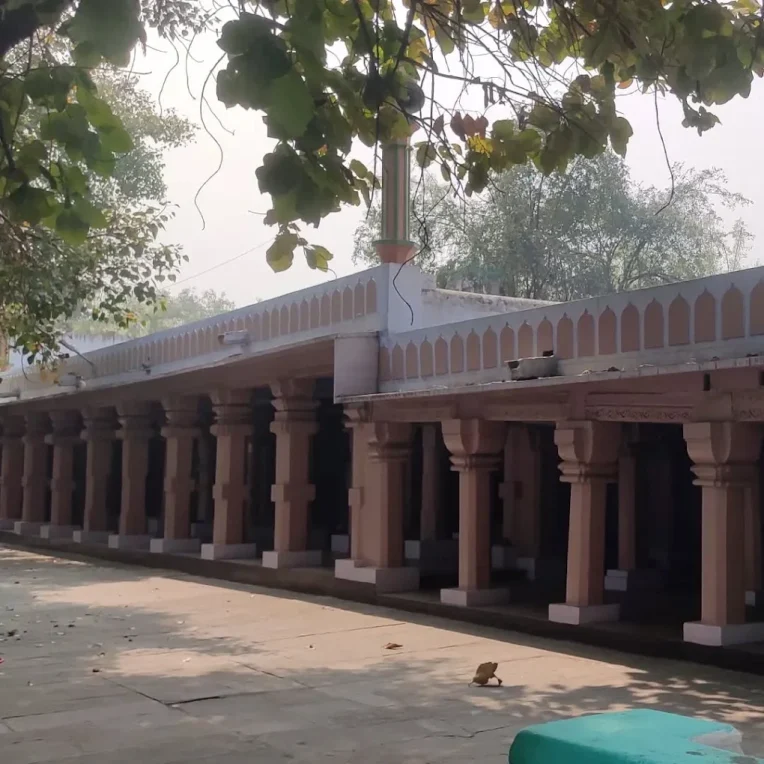
The Hindutva Campaign to Demolish Varanasi’s 992-Year-Old Historic Mosque by Weaponizing the Law
If someone told you that a building constructed in the year 1034 was “illegally encroaching” on a railway line built in the late 1800s, you would probably think it is a bad joke. Common sense dictates that the older structure cannot trespass on the newer one.
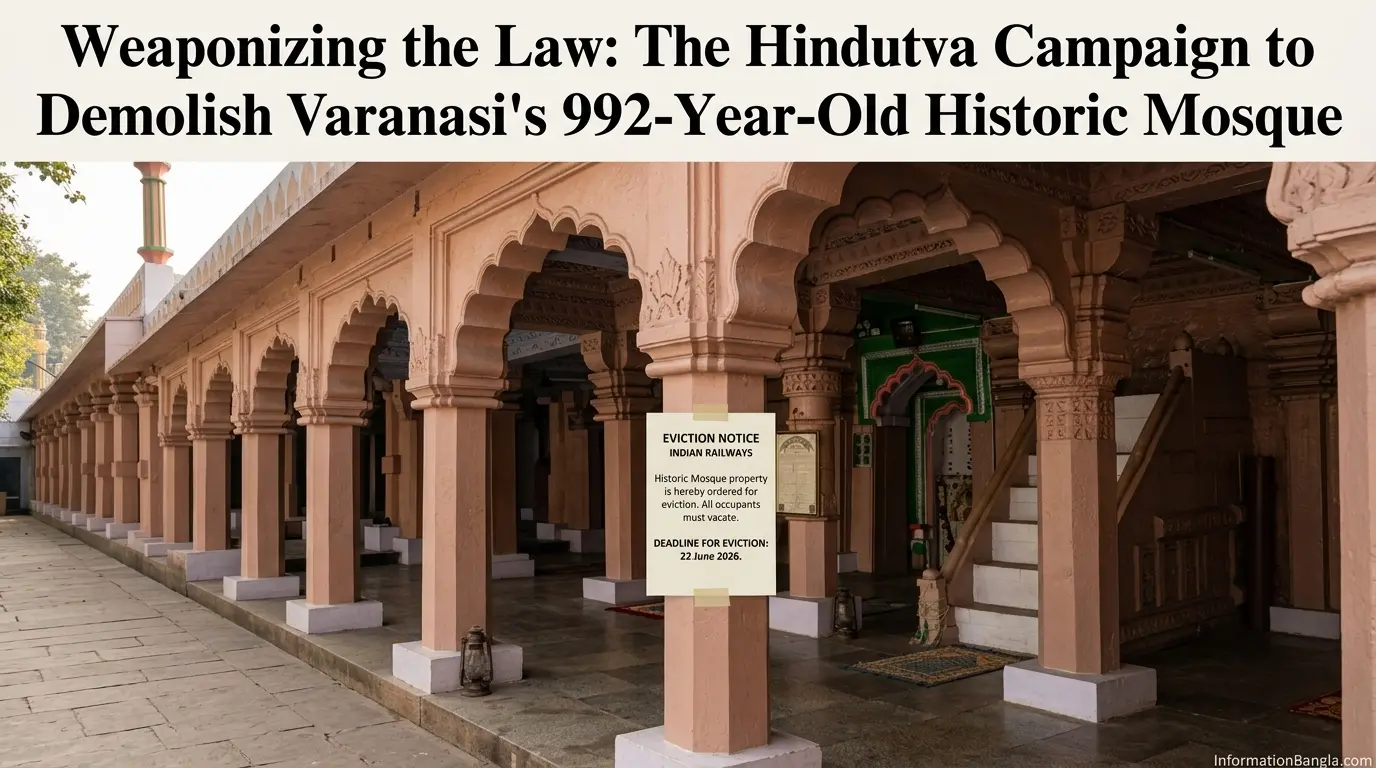
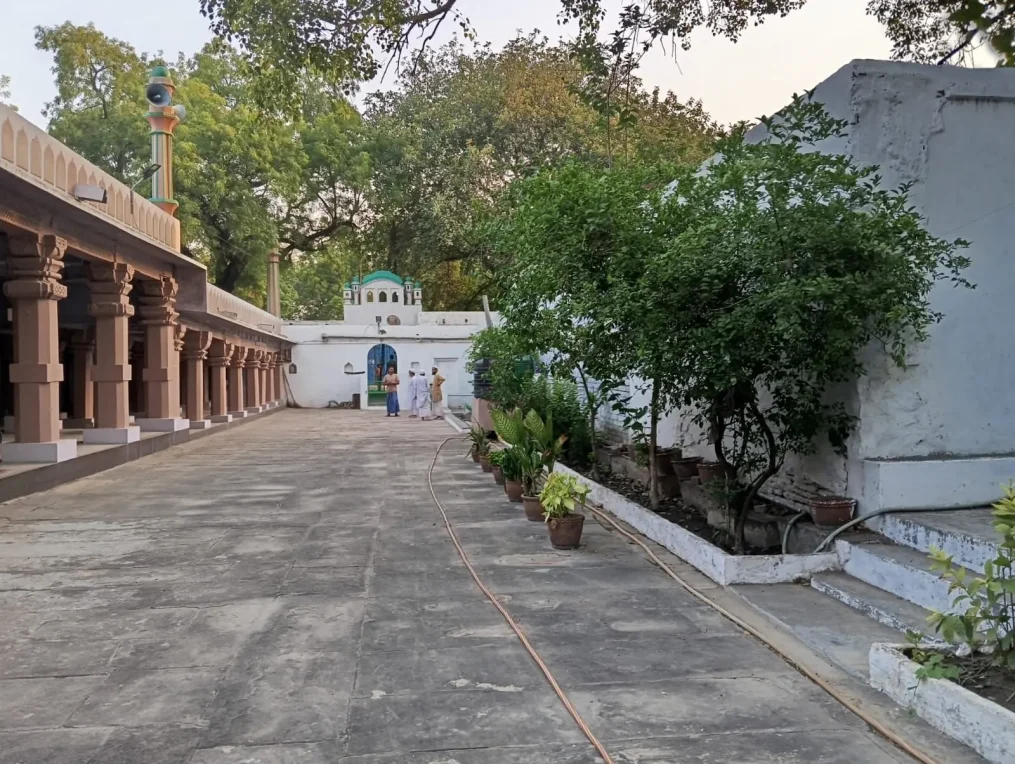
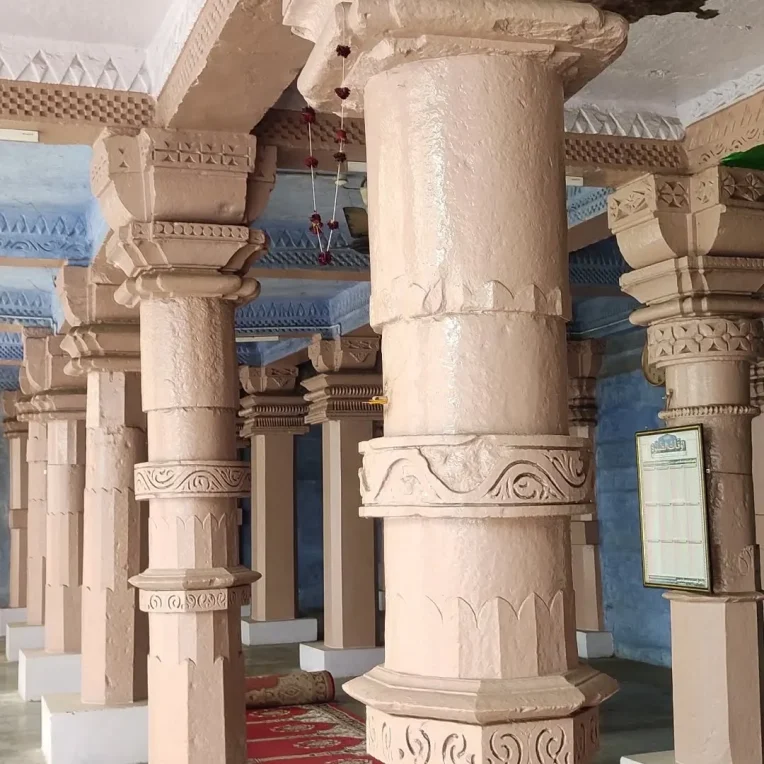
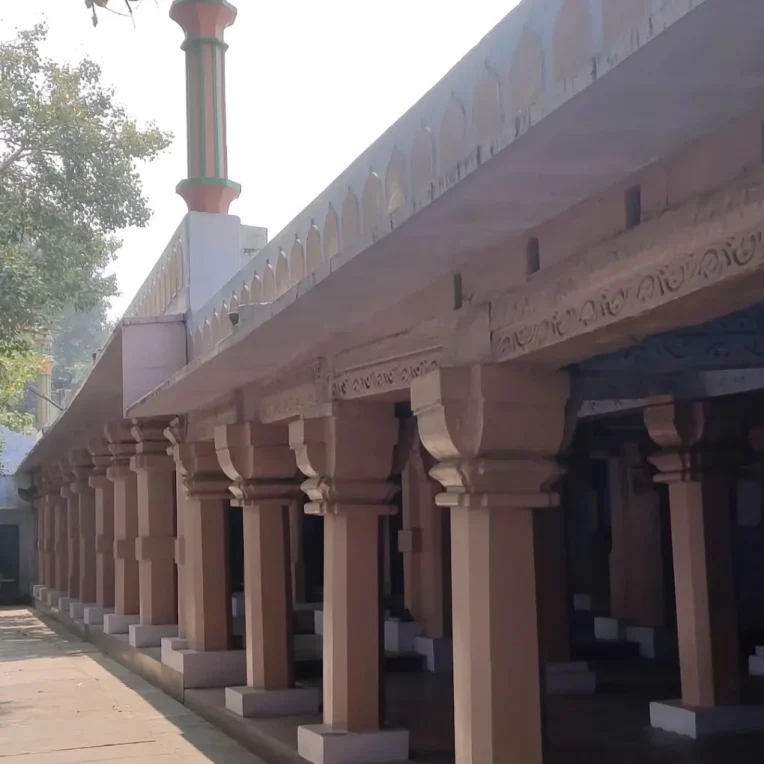
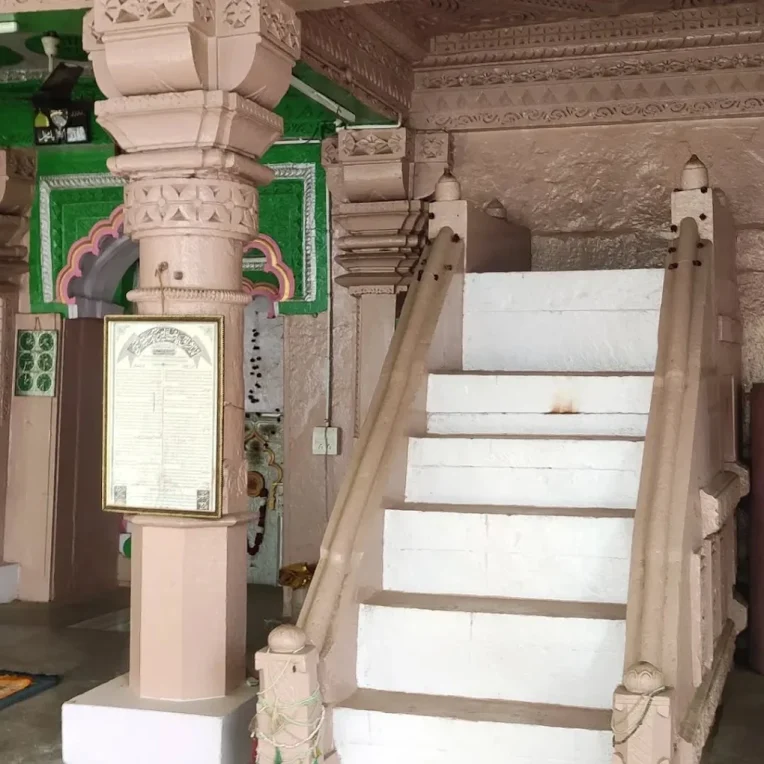
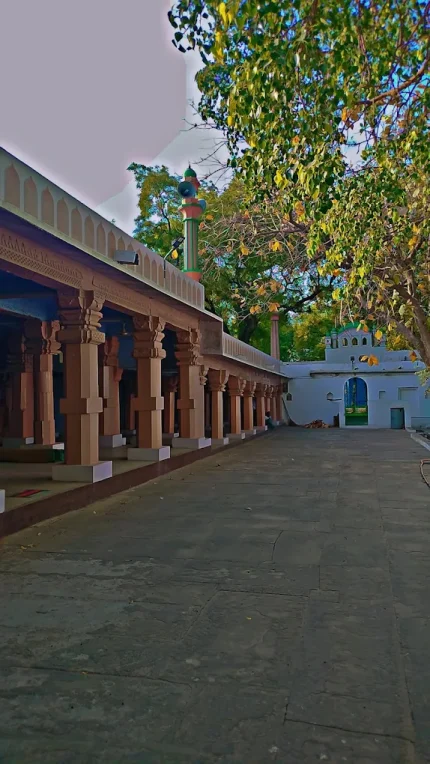
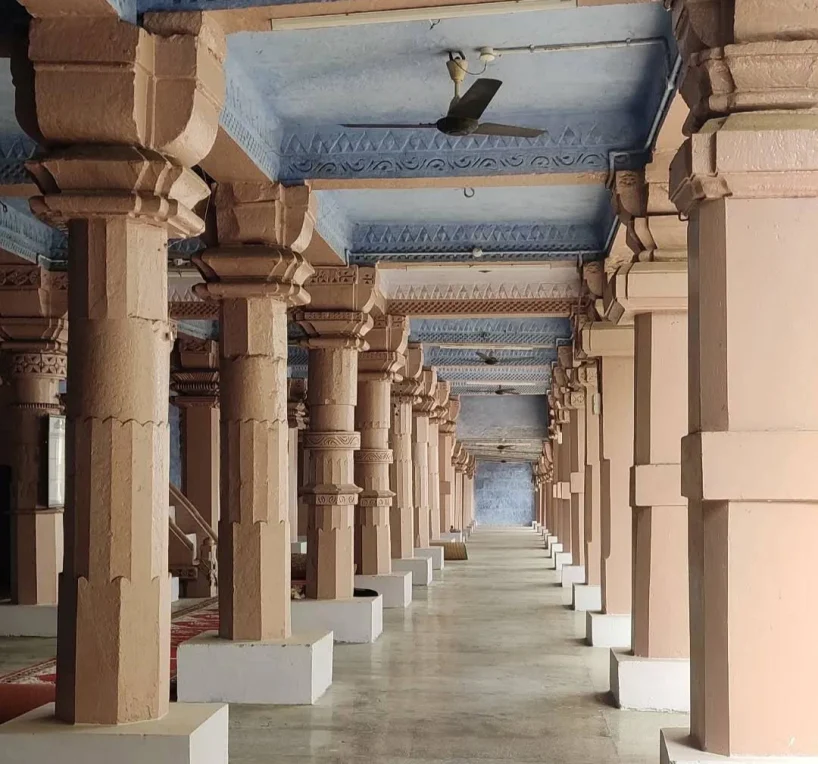
Yet, this is exactly the bizarre legal and chronological logic playing out in Varanasi right now. The Indian Railways has slapped a demolition notice on the historic Ganj Shahida Mosque, claiming it stands illegally on railway land needed for a 336-crore INR station expansion project. As the mosque committee prepares to fight this out in the Allahabad High Court, the situation exposes a much larger, deeply worrying trend in how history, law, and state power are being used in modern India.
Solid Proof vs. Blank Notices: The Committee’s Defense
Faced with a sudden ultimatum to clear out, the mosque’s management committee, Anjuman Intezamia Masajid, has come forward with concrete historical and administrative evidence that completely challenges the railway’s claims. Their counterarguments turn the “illegal encroachment” narrative upside down:
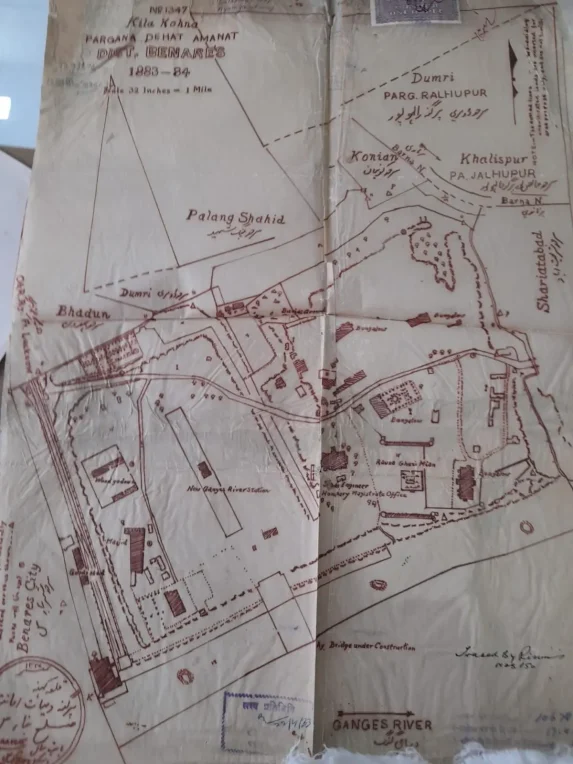
The Timeline Paradox: According to historical records, the Ganj Shahida Mosque dates back nearly a thousand years to 1034 AD. More importantly, the mosque is clearly documented and mapped out in the official Benaras Settlement Map of 1883-84. On the other hand, the Kashi Railway Station wasn’t even built until 1887. The committee raises a fundamental question: How can a structure that existed before the railway station was even conceived be labeled an “encroachment” on railway land?
The Paper Trail: The mosque is not a hidden or unauthorized structure. It holds an official municipal property registration number (Holding No. A 36/4) with the Varanasi Municipal Corporation and has been paying local taxes regularly. Furthermore, it was formally registered with the Uttar Pradesh Wakf Board back in 1967 as ‘Wakf No. 81’.
The Truth About the Court Case: The railway’s notice claims that a long-standing property dispute from 1991 was decided in their favor by a local civil court in August 2024. However, the committee clarified that the court never ruled on the actual merits or ownership of the land. The case was dismissed simply on a technicality because lawyers from both sides failed to appear in court on that specific day. Additionally, that old lawsuit was about some adjacent land, not the core plot where the mosque stands.
A Highly Suspicious Notice: Representatives from the committee pointed out that the actual eviction notice pasted on the mosque wall looks incredibly questionable. It contains no official date, no signature from an authorized official, no department seal, and not even an official Indian Railways logo.
There is a strategic reason why the authorities are framing this as a “railway encroachment” instead of a religious dispute. Direct religious conflicts run into major legal roadblocks like the Places of Worship Act of 1991, which strictly protects the status of all religious sites in India as they existed on the day of independence in 1947. To bypass this protection, the strategy has shifted toward using mundane, administrative language. By labeling a centuries-old mosque as an “obstruction to a smart city project,” “forest land encroachment,” or “illegal railway property,” the administration strips the issue of its historical and religious identity. Furthermore, old paper records—even valid ones like the 1883 maps—often do not align perfectly with modern, digital GPS land records used by the government today. Bureaucrats easily exploit these technical mismatches to declare ancient heritage sites “illegal” and bring in the bulldozers before the community can fully sort out the bureaucratic red tape.
2. Manufactured Hate and Social Media Blindness
If you look at the comment sections on social media regarding these demolitions, you will notice a frightening amount of aggressive support and celebration from the majority community. This hatred is not organic; it is the direct result of years of carefully manufactured narratives. The average social media user does not read court filings, historical maps, or municipal tax records. They do not care that the mosque was there before the railway tracks were even laid. They have been fed a steady diet of toxic, polarizing buzzwords like “Land Jihad” or “illegal occupation” by political IT cells and mainstream media channels. Once a society is thoroughly conditioned to see every minority landmark as an aggressive conspiracy, they will happily cheer for the destruction of a thousand-year-old heritage site in the name of “progress.”
What makes this battle truly terrifying for minorities is that it is no longer just fringe, radical groups demanding the removal of these structures. Today, the entire state apparatus appears to be moving in absolute sync. When the local police, the civil administration, the municipal corporations, and public utilities like the railways all coordinate to target a single community’s landmarks, it stops being a standard legal property dispute. It becomes institutionalized discrimination. The state machinery, which is constitutionally required to remain neutral, effectively bends its rules to serve a specific majoritarian political ideology.
The Road Ahead
ll
History and heritage are currently being held hostage by modern administrative power. For the Ganj Shahida Mosque, the impending battle in the High Court is the final line of defense. However, with the public increasingly questioning whether the judiciary can withstand intense political pressure, trust in the legal system is running dangerously thin. This is no longer just a fight over a few square meters of land next to a railway platform in Varanasi. It is a stark glimpse into a reality where raw political power can completely erase centuries of historical truth with the stroke of a pen.
Sharing accurate and reliable information is the job of the Information Bangla editorial desk. The editorial team thoroughly verifies the sources of each article so that you, as the reader, get accurate information. We don't just provide information, we ensure its authenticity and reliability. This team has been doing its job faithfully for five long years.