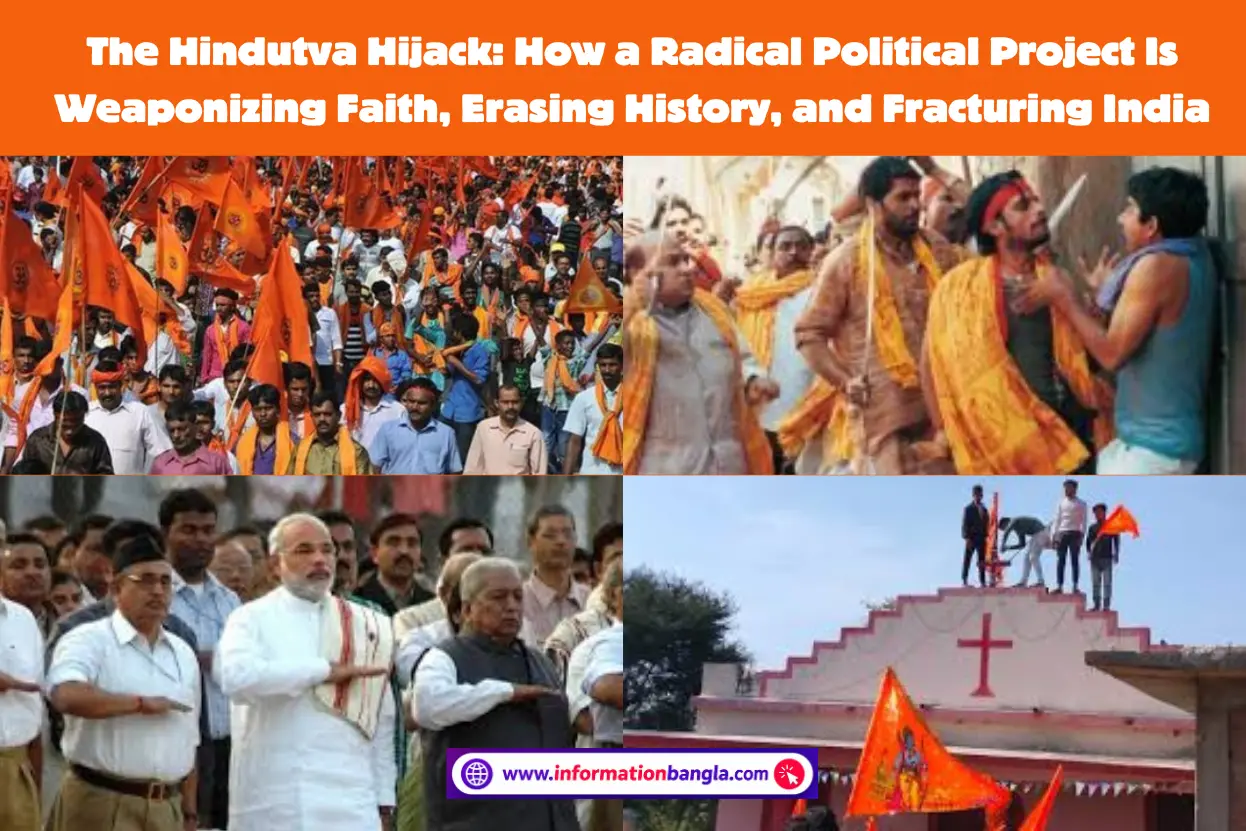
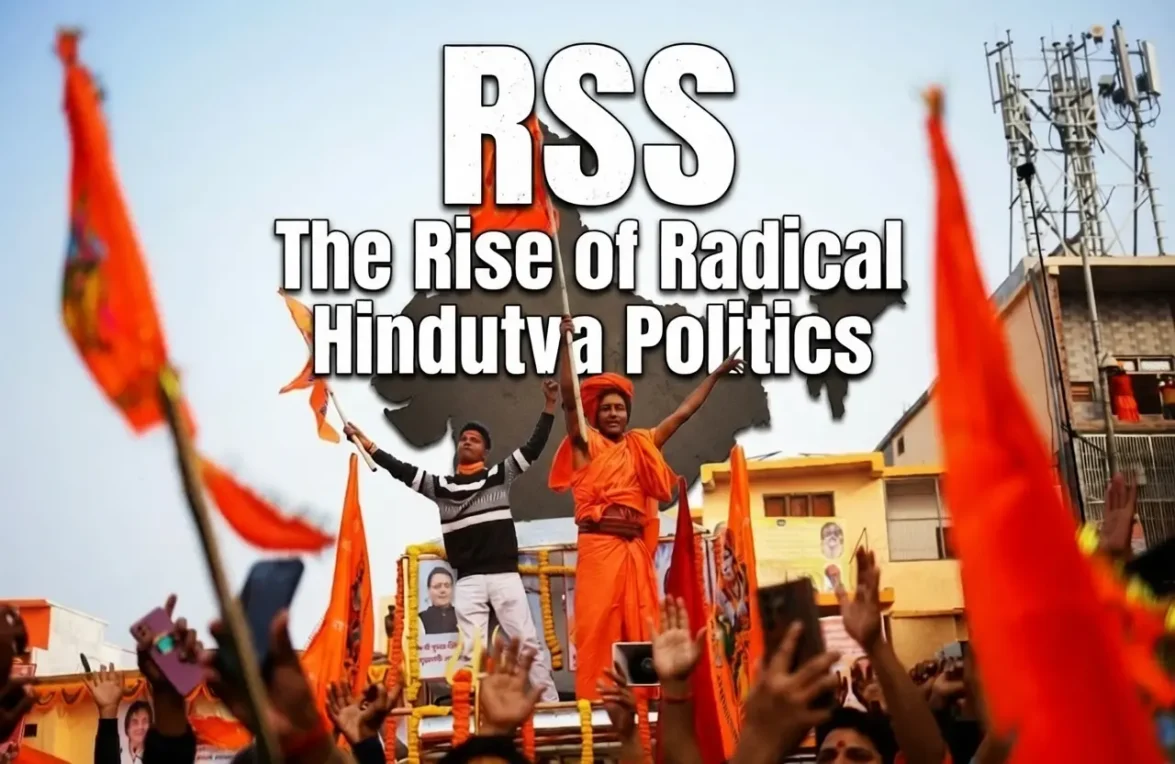
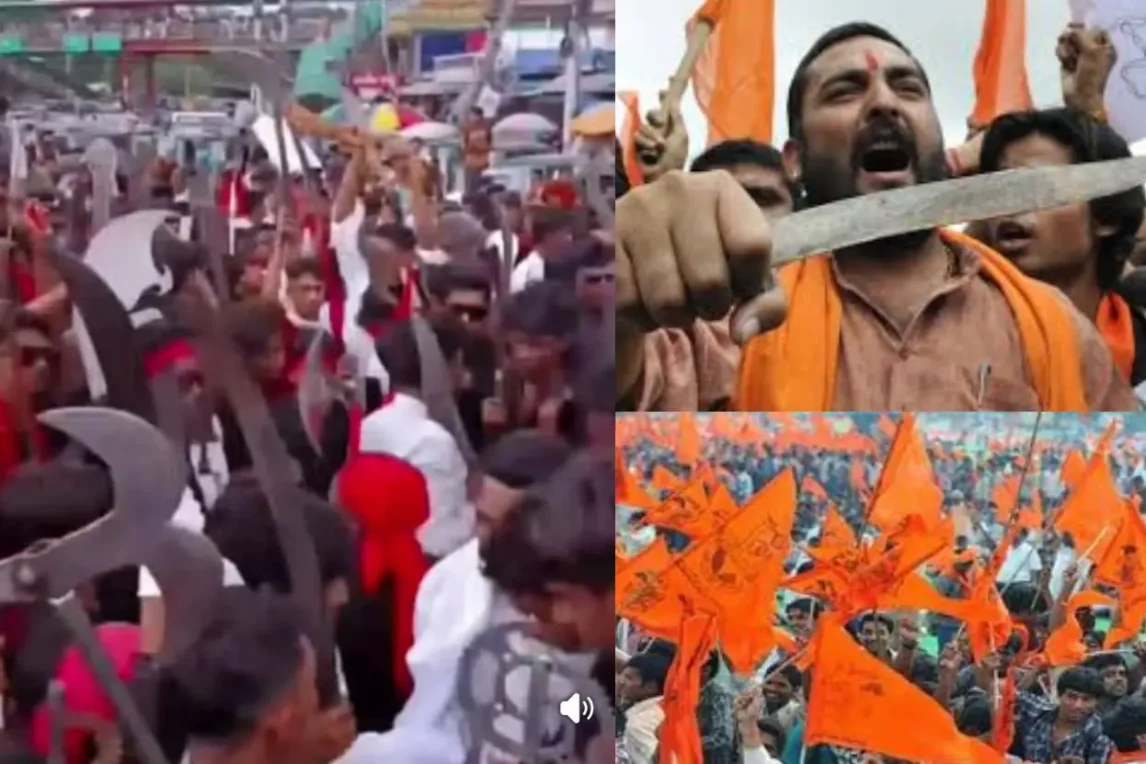
From 1992 to 2026: Understanding the Roots of India’s Deepening Divide
If you spend even an hour scrolling through social media or talking to regular people on the streets in India today, you can feel it. There is a heavy, sharp tension in the air that didn’t use to be this loud or this constant.
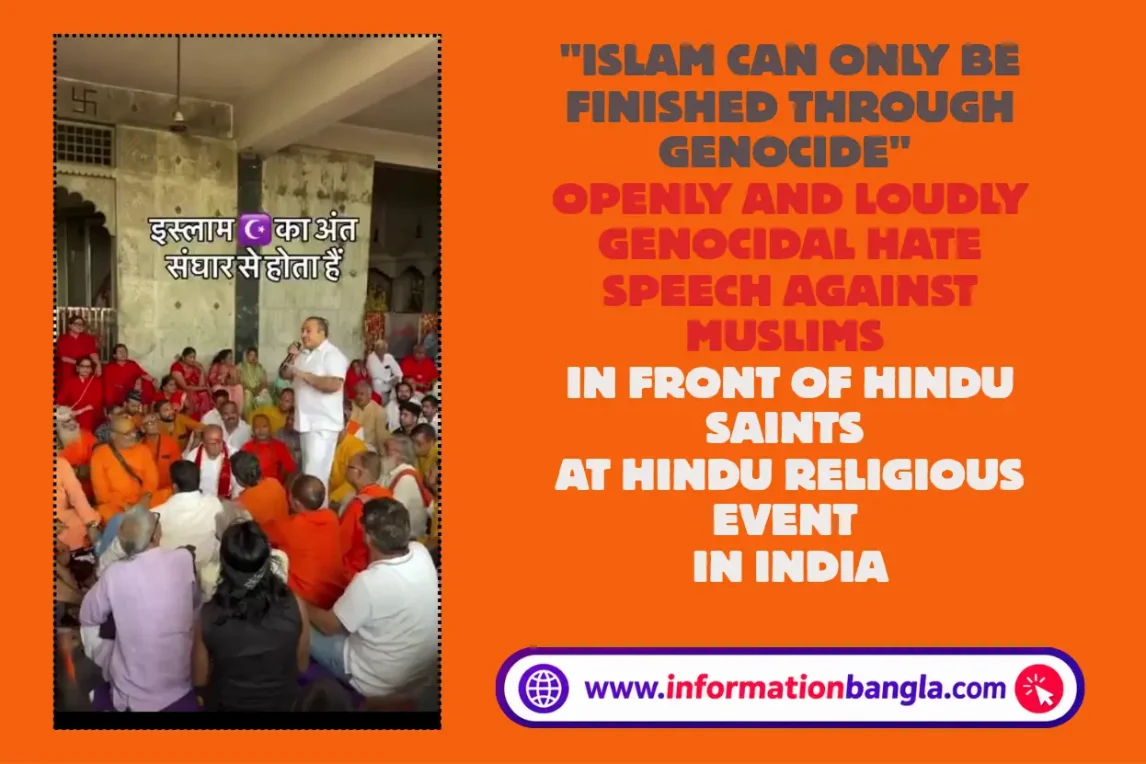
You see videos of centuries-old mosques being targeted, viral posts calling for economic boycotts of Muslim shopkeepers, and comment sections flooded with raw hostility. It is easy to look at all of this in 2026 and feel completely overwhelmed. It makes you wonder: Has the entire society suddenly changed? How did a country built on the promise of coexistence get to a point where regular, everyday people are consumed by this much anger?
To make sense of what is happening right now, we have to look past the chaotic social media feeds and understand the deeper machinery at work. This isn’t an overnight accident. It is the result of a decades-long, highly calculated hindutva political project.
1. The Trap of the “Sleeper Cell” Mental Shift
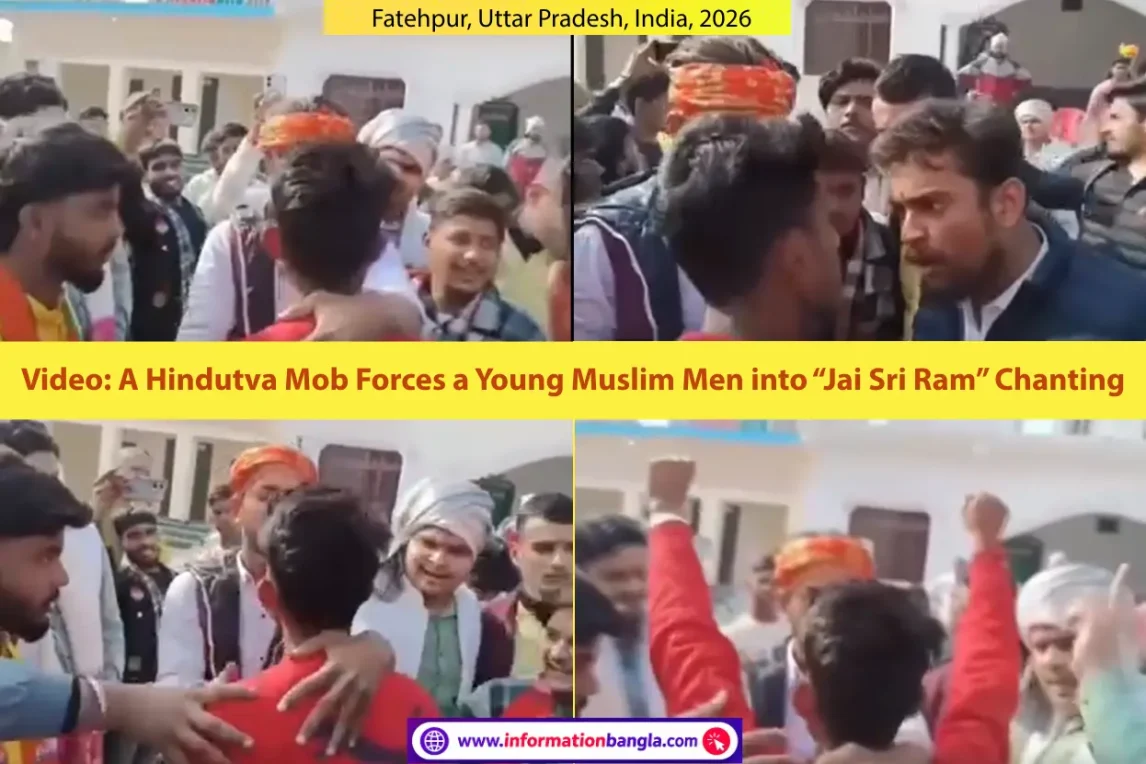
A lot of people notice the change during simple, everyday interactions. Imagine standing at a local grocery store, making a casual joke or critique about the Prime Minister’s policies. Suddenly, a senior citizen standing next to you—someone who looks like a harmless neighbor—snaps. They start screaming, telling you to “go to Pakistan,” calling you a traitor, and threatening you, without even knowing who you are or what religion you practice.
This isn’t an isolated incident anymore. It happens in tea stalls, trains, and family WhatsApp groups.
What we are witnessing is a successful psychological hijacking. A massive political machinery has spent the last 12 years—since the major political shift in 2014—drilling a very specific equation into people’s heads: When you criticize the government, people who have been fed this propaganda don’t hear a political opinion. They genuinely believe you are attacking their faith and their nation. The anger was systematically planted there, layer by layer, until it became a default reaction.
2. The Big Distinction of Hinduism and Hindutva
To talk about this honestly, we have to separate the faith from the politics. One of the greatest tricks of modern Indian politics has been blurring the line between Hinduism and Hindutva. They are not the same thing.
Hinduism is an ancient, deeply diverse spiritual tradition. It has lived and evolved for thousands of years. It doesn’t have a single central authority or a strict political rulebook. For the vast majority of regular people, practicing their faith means going to temples, celebrating festivals, focusing on their karma, and living peacefully with their neighbors.
Hindutva is a modern, 20th-century political ideology. It was formulated in the 1920s by figures like Vinayak Damodar Savarkar and institutionalized by the Rashtriya Swayamsevak Sangh (RSS). Hindutva is not about spirituality; it is about political power. Its goal is to turn a diverse cultural space into a rigid, majority-dominated nation-state where minorities are forced into the margins. When political groups use the defense of “Hinduism” to justify online hate or street violence, they are weaponizing a peaceful faith to fuel a political project.
3. How 1992 Created 2026
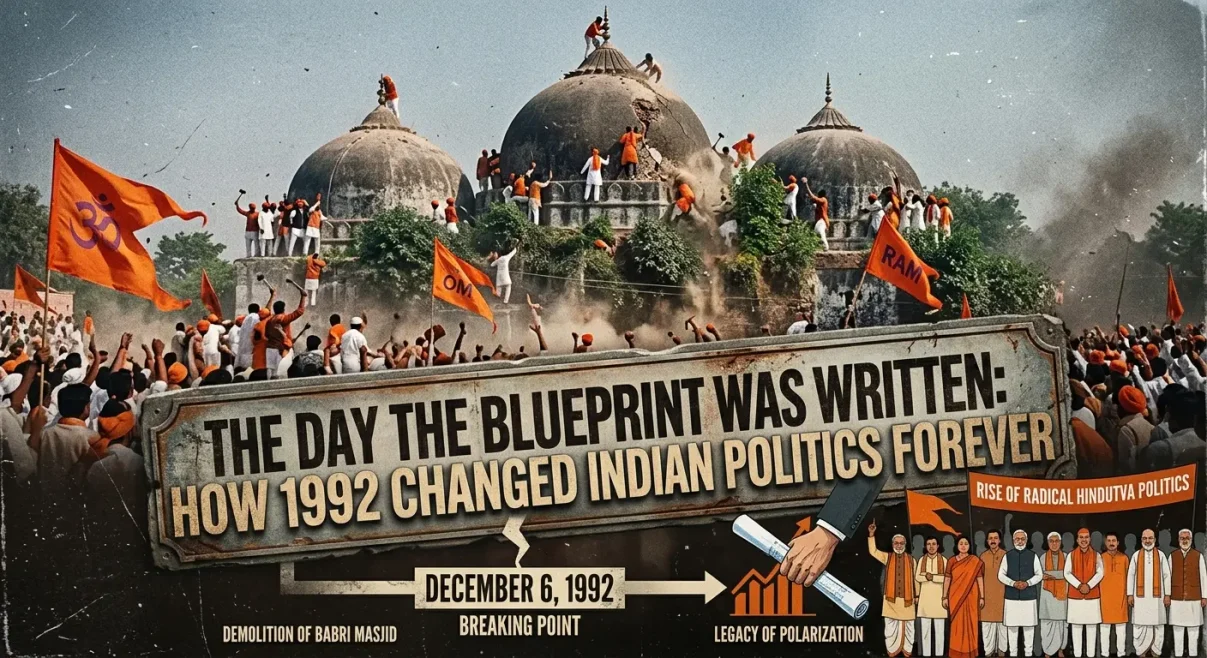
The aggressive polarization we see today didn’t start in 2014. The actual blueprint was tested and perfected on December 6, 1992, with the demolition of the Babri Masjid in Ayodhya.
Before that event, major political parties tried to play a careful game of balancing different communities, often falling into lazy, opportunistic politics. But the Ram Rath Yatra in the early 1990s changed the rules of the game entirely. It proved to political strategists that if you trigger religious anxiety deeply enough, you can consolidate a massive, permanent vote bank.
The aftermath of 1992 showed something even more dangerous: institutional vulnerability. Despite commissions, investigations, and thousands of pages of evidence showing that the demolition was planned, decades later, the courts acquitted the top leaders involved.
That moment taught the majoritarian movement a powerful lesson: if your political support is large enough, the institutions of law, media, and governance will eventually bend to your will.
4. The Digital Poison
If 1992 was the structural blueprint, the post-2014 era gave the movement a superweapon: the smartphone.
With some of the cheapest mobile data in the world, millions of people were suddenly connected to the internet. But instead of a tool for education, the internet became a pipeline for targeted propaganda. Day and night, IT cells and sensationalist news channels pump out highly manipulated short-form videos, fake historical grievances, and manufactured fears about minorities.
Social media algorithms are designed to keep you angry because anger drives engagement. If a regular person watches one biased video, the algorithm feeds them ten more. Over time, they find themselves in an “echo chamber,” completely cut off from real-world nuances. They begin to see their lifelong Muslim neighbors not as friends, but as part of a vague, existential threat.
5. The Bureaucratic Weapon of Erasing Muslim Structures and History Under “Illegal” Labels
We are seeing the real-world consequences of this digital conditioning play out in the legal system. In the past, communal tension meant spontaneous, chaotic riots on the street. Today, it looks like clinical, administrative actions.
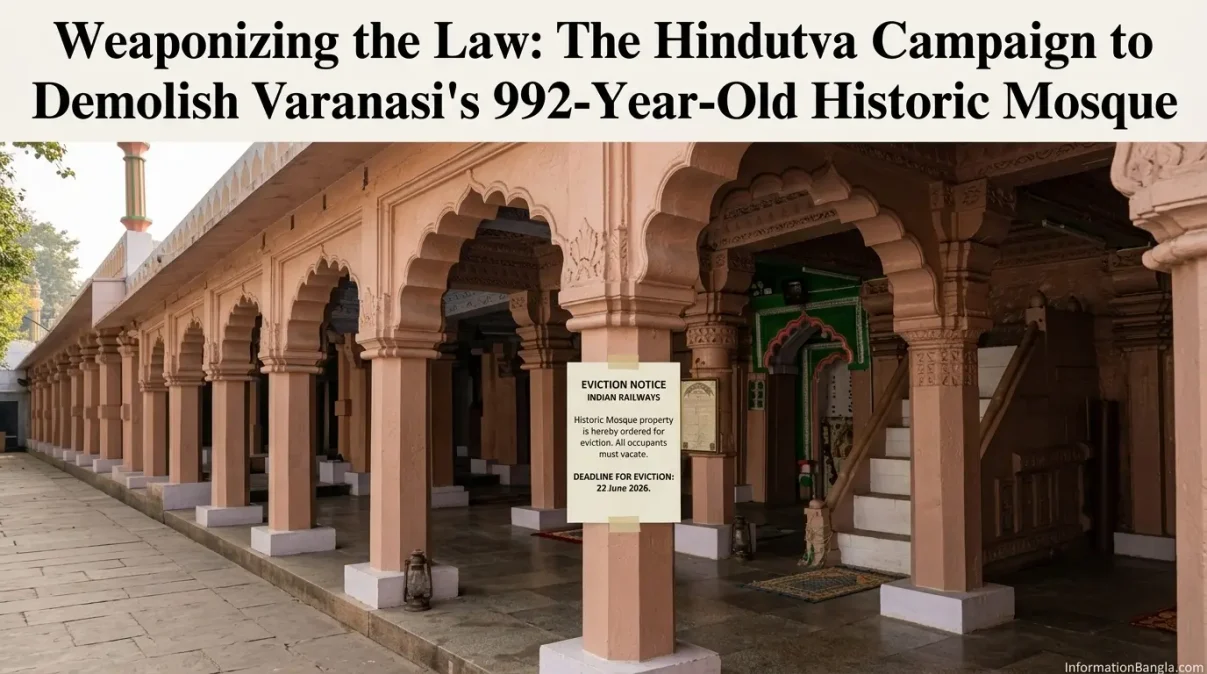
Take the recent controversy surrounding the Ganj Shahida Mosque in Varanasi. It is an ancient structure with historical roots dating back over 900 years. Yet, authorities have moved to target it under the guise of removing “illegal encroachments” on railway land.
Logically, this makes no sense. The Indian railways were built by the British a little over 150 years ago. A 900-year-old building cannot “encroach” on a 150-year-old railway line.
Yet, when you look at online forums, a massive percentage of the majority community blindly supports the demolition. Why? Because the propaganda has successfully replaced historical facts with simple, aggressive labels like “illegal” or “land jihad.” From old mosques to local madrasas, the strategy is now to use the legal and administrative machinery to slowly shrink the public visibility of Muslim heritage.
Faith vs. Power: The Crucial Difference Between Hinduism and Hindutva
Not long ago, a story made waves on social media that perfectly captures the confusion gripping modern India. A regular citizen was standing at a local grocery store, chatting with the shopkeeper. In the middle of a casual conversation about a seasonal flu going around, the customer cracked a joke, comparing the virus to the country’s political leadership.
Instantly, an elderly gentleman standing nearby lost his temper. He didn’t just argue politics; he started screaming, telling the customer to pack his bags and “go to Pakistan,” labeling him a traitor and a religious extremist. The twist? The angry gentleman didn’t even know the customer’s religious background.
This tiny, everyday interaction exposes a massive psychological shift. In the eyes of millions today, criticizing a political party or a politician is no longer seen as dissent—it is viewed as a direct attack on their faith. This confusion didn’t happen by accident. It is the result of a long, deliberate effort to blend two completely different things into one: Hinduism and Hindutva. To understand why India is so polarized today, we have to pull these two concepts apart.
Hinduism is A Spiritual Ocean
Hinduism is an ancient spiritual and cultural tradition that has existed for thousands of years. It doesn’t have a single founder, a single holy book, or a central governing body like the Vatican. It is decentralized, vastly diverse, and highly personal.
Within Hinduism, there is room for thousands of different practices. One person might pray to a specific deity, another might focus purely on meditation and philosophy, and a third might even be agnostic—yet all are considered part of the same tradition. At its core, the spiritual philosophy of Hinduism is built on ideas of universal truth, tolerance, and peaceful coexistence.
For the vast majority of ordinary people, practicing their faith has nothing to do with politics. It is about daily rituals, celebrating festivals with family, trying to be a good person, and living in harmony with whoever happens to live next door.
Hindutva is A 20th-Century Political Ideology
Hindutva, on the other hand, is a modern political ideology born in the 1920s. It wasn’t created by spiritual saints or sages; it was formulated by a political activist named Vinayak Damodar Savarkar in his 1923 book, Essentials of Hindutva.
Savarkar wasn’t interested in spiritual liberation or religious rituals. In fact, he was a known atheist. His goal was purely nationalistic. He wanted to unite a deeply divided, caste-ridden Hindu society under a single cultural and political identity to fight against British colonial rule and establish a dominant majority state.
Hindutva defines an Indian based on a specific geographical and cultural condition: you are a true citizen only if India is both your Pitri-bhoomi (fatherland) and your Punya-bhoomi (holy land). This definition immediately created an exclusionary hierarchy:
Because the holy sites of Muslims and Christians lie outside the Indian subcontinent (in places like Mecca or Jerusalem), Hindutva ideologues argued that their loyalty to the nation would always be questionable.
It ignored the historical reality that the vast majority of Indian Muslims and Christians are indigenous to the land, whose ancestors chose to stay in a secular India rather than migrate during the bloody partition of 1947. In short, Hindutva is not about faith; it is a majoritarian political movement aimed at turning a secular democracy into a cultural “Hindu Rashtra” (Hindu Nation).
The Guardians of the Ideology
In 1925, inspired by Savarkar’s writings, a man named Keshav Baliram Hedgewar founded the Rashtriya Swayamsevak Sangh (RSS). This volunteer organization became the backbone of the Hindutva movement.
Over the decades, the RSS quietly built a massive network across India, setting up schools, charity organizations, labor unions, and eventually, a political wing. That political wing evolved into what we know today as the Bharatiya Janata Party (BJP).
The early history of this movement reveals how deeply it clashed with India’s inclusive freedom struggle. While leaders like Mahatma Gandhi fought for a pluralistic India where all religions had equal rights, Hindutva leaders looked toward European nationalist models. The tension reached a tragic climax in 1948 when Mahatma Gandhi was assassinated by Nathuram Godse, a man deeply connected to the Hindutva ecosystem, who believed Gandhi was “appeasing” minorities.
If Hinduism and Hindutva are so fundamentally different, why do so many regular people confuse them?
The answer lies in raw political strategy. In a country where nearly 80% of the population is Hindu, you cannot win absolute power by simply selling a rigid political ideology. But if you can convince that 80% that their ancient, beloved faith is under threat, you can mobilize them instantly. By systematically blurring the lines, the political machinery achieves three major goals:
Immunity from Criticism: If the party is the religion, then criticizing the party’s economic failures, corruption, or policies becomes an act of blasphemy.
Manufactured Fear: It convinces a massive majority community that they are actually victims in their own country, creating a collective anxiety that can be easily triggered during elections.
Erasure of Internal Fault Lines: It glosses over deep, painful internal issues within Hindu society—such as caste discrimination against Dalits and indigenous tribes—by creating a common, external enemy.
The greatest victims of Hindutva’s political success are often ordinary citizens and the very faith the ideology claims to protect. When a peaceful, diverse spiritual tradition is shrunk into an aggressive political slogan used to justify street bullying and social boycotts, the essence of the faith is diluted.
Recognizing the difference between the two is not just an academic exercise; it is a necessity for survival in a diverse society. Loving your faith is a deeply personal, beautiful thing. But blindly supporting a political project that uses that faith as a weapon isn’t devotion—it is just falling for a very old political trick.
The Day the Blueprint Was Written: How 1992 Changed Indian Politics Forever
When we look at the aggressive political environment today, it feels like this intense polarization just dropped out of nowhere over the last decade. But if you talk to anyone who remembers the early 1990s, they will tell you a different story. The raw division, the weaponized rallies, and the institutional silence we see on our screens today aren’t new. The entire playbook was written, tested, and perfected on a single day: December 6, 1992.
The demolition of the Babri Masjid in Ayodhya wasn’t just a local dispute over a piece of land. It was the exact moment independent India’s political trajectory shifted toward deep, institutionalized majoritarianism.
1. The Sparks of Opportunistic Politics
For nearly four centuries after its construction in 1528 by Mir Baqi under Mughal Emperor Babur, the Babri Masjid was just a place of worship. For a long time, Muslims prayed inside, Hindus prayed in the outer courtyard, and everyday life went on.
The real trouble started cooking in the 1980s, and it didn’t just come from the right-wing. It was actually fueled by the political survival instincts of the mainstream secular government.
The Shah Bano Backlash: In the mid-1980s, the Congress government under Prime Minister Rajiv Gandhi faced massive backlash from conservative Muslims over a landmark court ruling regarding a Muslim divorcee’s alimony (the Shah Bano case).
The Balancing Act: To win back conservative Hindu voters and balance the political scales, Rajiv Gandhi’s administration supported a 1986 district court order to open the gates of the locked Babri Masjid for Hindu prayers. This single act of political opportunism handed the right-wing movement—led by the Vishva Hindu Parishad (VHP) and the Bharatiya Janata Party (BJP)—the ultimate golden ticket. They realized that religious anxiety was the quickest shortcut to absolute political power.
In September 1990, BJP leader L.K. Advani launched the “Ram Rath Yatra.” This wasn’t a quiet, spiritual pilgrimage. It was a massive, highly theatrical political procession that rolled across the heart of North India in a modified Toyota truck made to look like a mythological chariot.
The Yatra had a very clear operational goal: to unite a fractured Hindu voting base by giving them a singular focus, while simultaneously building up a deep undercurrent of anti-Muslim sentiment.
Even though Advani was eventually arrested in Bihar before reaching Ayodhya, the political damage was already done. The march had successfully radicalized thousands of volunteers—known as kar sevaks—and transformed a historical dispute into an emotional, existential crisis for millions of ordinary people.
3. December 6, 1992 is The Day the Barriers Melted
By the time December 1992 arrived, the tension had reached a boiling point. On December 6, the RSS and its allied organizations gathered a crowd of over 150,000 kar sevaks right outside the mosque structure. Top political leaders stood on stages nearby, giving fiery, emotionally charged speeches.
What happened next is a matter of historical record:
Despite heavy police cordons and promises made to the Supreme Court that the structure would be protected, the crowd broke through the barricades around noon.
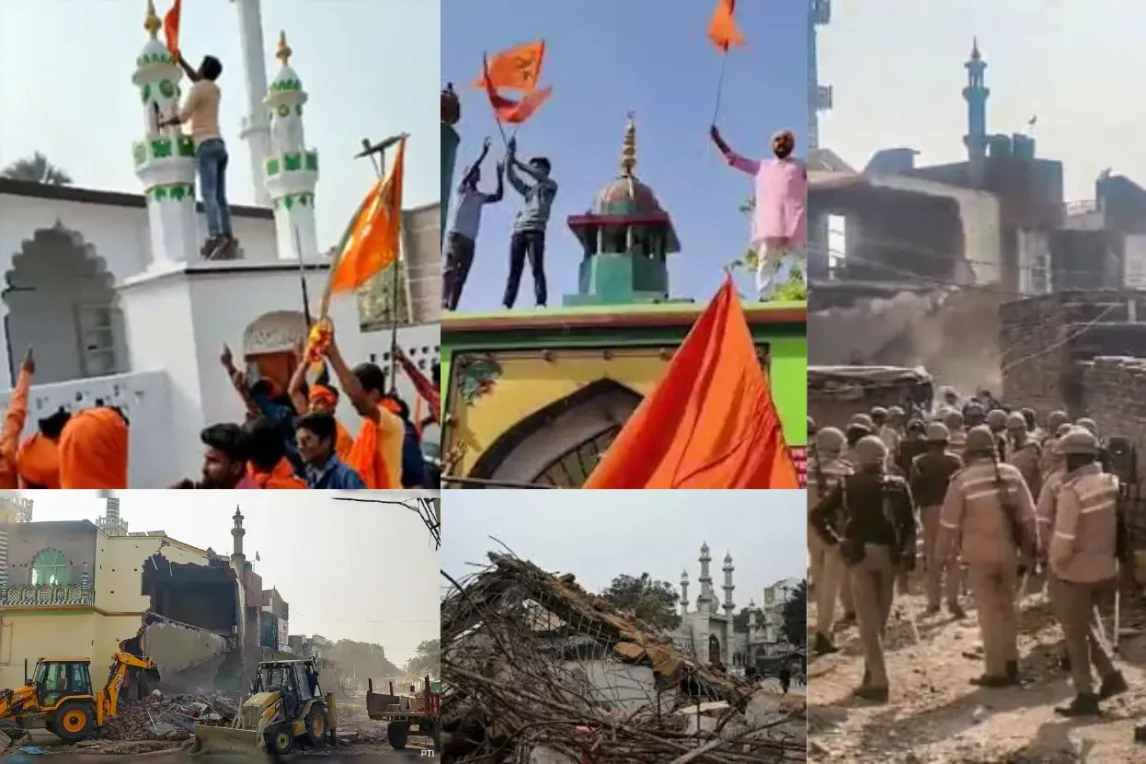
Armed with hammers, axes, and iron rods, men climbed the domes of the mosque while waving saffron flags.
Within a few hours, a 400-year-old monument was systematically reduced to a pile of dust and rubble while authorities and security forces essentially stood by and watched. The immediate fallout was catastrophic. The demolition triggered nationwide communal riots that claimed the lives of at least 2,000 people and caused massive economic destruction.
4. The Institutional Absolution “No One is Guilty”
If the demolition was a shock to India’s secular foundations, the real tragedy played out in the legal system over the next three decades.
In the years following the incident, mountain-loads of evidence came to light:
The Inside Scoop: In 2005, former intelligence official Maloy Krishna Dhar revealed that the demolition was planned ten months in advance by top leaders, and that the Prime Minister’s office had been warned.
The Official Blame: The government’s own Liberhan Commission report in 2009 explicitly blamed 68 people, including top BJP leaders like Vajpayee and Advani, for orchestrating the event and criticized the local administration’s deliberate inaction.
The Sting Operation: In 2014, an investigative journalism piece by Cobrapost proved through hidden cameras that the entire destruction was a highly coordinated, secret operation by right-wing outfits. Yet, in September 2020, a special court dropped a bombshell verdict. It acquitted all 32 remaining accused leaders. The judge ruled that the audio and video evidence wasn’t clear enough, and remarkably claimed that the top leaders were actually trying to save the mosque from “anti-social elements.”
The Ultimate Legacy of 1992
The reason 1992 matters so much today is because it proved to political strategists that anger works, and it has no legal consequences.
It showed that if you can mobilize a large enough crowd under the banner of religious pride, the police will step aside, the media will change the narrative, and decades later, the courts will eventually find a way to clear your name.
When we see ancient mosques being labeled as “illegal encroachments” or ordinary citizens being harassed at local shops today, we are simply watching the descendants of the 1992 movement using the exact same blueprint—only this time, they have high-speed internet and the full backing of the state machinery to back them up.
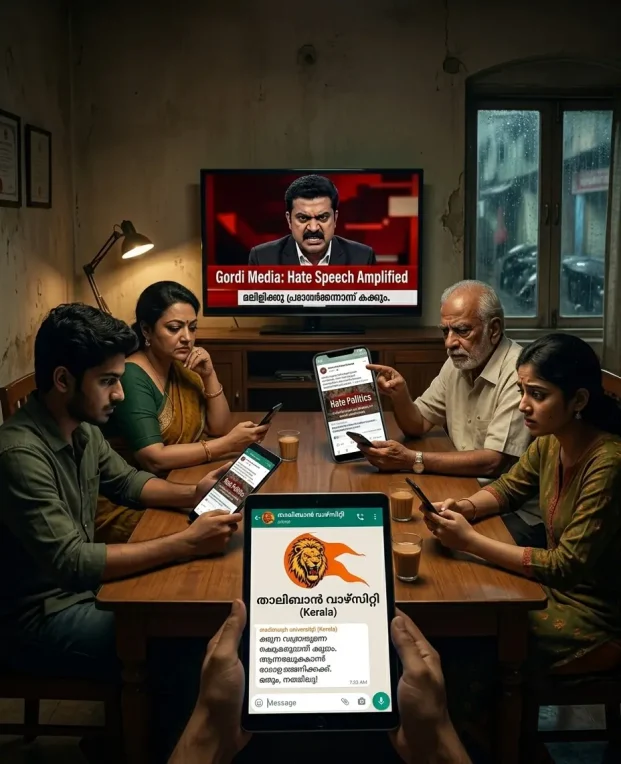
The IT Cell, Godi Media, Whatsapp University: How Smartphones and Social Media Wired India for Hindutuva’s Hate Politics
If you sit down with older folks in India and ask them how rumors used to spread thirty years ago, they will tell you about village gossip, word-of-mouth tall tales, or cheap printed pamphlets. It took days, sometimes weeks, for a fake story or an angry rumor to travel from one town to another.
But if you look at the incident at the local grocery store—where a casual joke about politics caused a regular neighbor to instantly explode into screaming threats of “go to Pakistan”—you realize something has fundamentally broken. Anger doesn’t travel by foot anymore. It travels at the speed of light, straight into the palm of your hand. While the structural blueprint for political polarization was laid back in 1992, the post-2014 era gave the movement a nuclear engine: the smartphone and cheap mobile data.
Public opinion is systematically shaped and manipulated through a specific digital ecosystem by Hinduva government BJP, political wing of the RSS hinduva organization:
The IT Cell: The organized, behind-the-scenes digital machinery used to flood online spaces with targeted political narratives and campaigns.
Godi Media: The role of mainstream, sensationalist television networks and media outlets acting as echo chambers for the state’s majoritarian hinduva politics and agenda.
WhatsApp University: The grassroots spread of unverified history, manufactured outrage, and targeted misinformation directly to the smartphones of everyday citizens.
Essentially, it explores how the daily habit of scrolling through social media has been weaponized into a powerful tool for political radicalization.
1. The Shock of Sudden Connectivity
Around 2016, India went through a massive digital revolution. Almost overnight, mobile data became some of the cheapest on the planet. Millions of people who had never owned a computer or used the internet were suddenly handed smartphones. It was a beautiful thing for digital banking and staying in touch with family, but it had a dark, unintended side effect. A massive population entered the digital world without any training in media literacy.
To a regular uncle sitting in a small town or a young guy looking for a job, everything on the screen looked real. They didn’t know what an “IT cell” was. They didn’t know that videos could be cleverly edited, that old clips from other countries could be mislabeled as “happening right now in India,” or that text messages could be manufactured to trigger raw fear.
2. The Algorithm Game
We often blame political parties for spreading hate, but the tech giants in Silicon Valley built the delivery system.
Platforms like Facebook, YouTube, and TikTok-style short video apps (like Instagram Reels and YouTube Shorts) operate on a very simple business model: they need to keep your eyes glued to the screen for as long as possible so they can show you ads. What is the easiest way to keep a human being hooked? Not through calm,
educational content. It is through high-emotion content—specifically, fear and rage.
The Trap: If an ordinary person watches a single video about a local scuffle between two individuals of different faiths, the platform’s algorithm notes that they watched it till the end.
The Feeding: The next time they open the app, the algorithm serves them three more videos of similar religious disputes.
The Matrix: Within a month, that user’s entire feed is a non-stop loop of minorities committing crimes, fake historical grievances, and fiery political speeches. For that user, reality has shifted. They don’t see the millions of people living peacefully around them. Their screen tells them that their religion is under imminent attack, and they believe it.
In India, WhatsApp isn’t just a messaging app; it is the primary source of information for millions. This is where the real psychological damage happens.
Because messages on WhatsApp usually come from trusted sources—a cousin, a lifelong friend, a respected elder from the neighborhood—people drop their guard. When an uncle receives a forward claiming that a 992-year-old mosque was actually built illegally on historic temple land, or that a minority group is plotting to outnumber the majority, he doesn’t double-check the facts. He trusts the sender, clicks “Forward,” and sends it to twenty more people.
Over a decade of this non-stop digital dripping, the human brain changes. Complex historical and social issues are reduced to brainless, aggressive slogans. Nuance dies a quiet death. You are either “with us” or “against us.”
4. The Psychological Redline
This digital conditioning explains the wild overreactions we see in everyday life. The elderly man at the grocery store who lost his mind over a political joke wasn’t born a radical. He is likely a grandfather who loves his family and treats his regular neighbors fine.
But his digital diet has convinced him that the political leader of the country is the only shield protecting his faith from destruction. In his mind, the algorithm has wired this toxic equation: When someone trips that wire, the person doesn’t see a fellow customer making a casual comment; they see an existential enemy who needs to be crushed immediately.
The Hindutva Bureaucratic Bulldozer: How Muslim Structures and History is Erased Under the Label of “Illegal Encroachment”
When people think of religious conflict in India, the mind usually goes to the chaotic scenes of the past—frenzied crowds on the street, flags being waved over domes, and sudden, tragic outbursts of violence. But in recent years, the strategy has quietly shifted.
The primary weapon against minority heritage is no longer a mob with iron rods. Today, it is an official notice printed on government letterhead, an administrative order, and a yellow municipal bulldozer arriving under heavy police escort.
This clinical, legalistic method of erasing history is what critics call “Bulldozer Justice.” By turning deep-rooted historical and religious disputes into simple municipal code violations, the state machinery has found a way to bypass constitutional protections with alarming efficiency.
The Irony of the Varanasi Mosque Case
A perfect example of this modern administrative strategy is unfolding right now around the Ganj Shahida Mosque in Varanasi.
The facts of the case are simple yet mind-boggling:
The mosque is an ancient structure with a documented history going back roughly 992 years.
Recently, the local administration and Indian Railways targeted the site, claiming the mosque structure is an “illegal encroachment” on railway land and must be removed. If you pause and think about the basic timeline of history, the logic falls apart completely. The Indian railway network was first introduced by the British in the 1850s—a little over 150 years ago. The country we know as modern India drew its constitutional borders in 1947. How can a building that has stood on the ground for nine centuries suddenly “encroach” on a railway line that was built hundreds of years after the mosque’s foundation stones were laid?
Finding the Legal Loophole
To understand why the authorities use this bizarre logic, you have to look at India’s legal framework, specifically a law called The Places of Worship (Special Provisions) Act of 1991.
Passed right before the height of the Babri Masjid crisis, this law was meant to be a permanent shield for the country’s diversity. It explicitly states that the religious character of any place of worship must remain exactly as it was on India’s Independence Day (August 15, 1947). Under this law, you cannot legally go to court to reclaim or convert an old mosque into a temple, or vice versa.
Because the Places of Worship Act makes direct religious takeovers difficult, the administrative machinery changed its tactics:
Shift the Goalposts: Instead of filing a lawsuit claiming a mosque belongs to another religion, government agencies (like the railways, forest departments, or municipal corporations) claim the land itself belongs to the state.
Avoid the Religious Label: By framing the issue as an administrative cleanup—like removing an illegal shop from a sidewalk or clearing a road—they avoid the strict restrictions of the 1991 Act.
Create a New Reality: Once the structure is labeled “illegal” or an “encroachment,” the bulldozers are sent in under the guise of routine city planning, giving the minority community very little time to gather old land records, Waqf documents, or seek emergency help from higher courts.
The Online Cheerleading by Radical Hindus
What makes this bureaucratic strategy truly terrifying is how easily the public accepts it. If a political leader openly said, “We are going to destroy this 900-year-old historic monument because we hate the people who pray there,” it would cause an immediate international outcry.
But when the state prints the word “ILLEGAL” in bold letters on a notice, public perception changes instantly.
If you look at the comment sections on social media platforms like Facebook or YouTube regarding these demolitions, a massive percentage of the majority community blindly cheers the move. People who don’t know a single thing about the history of Varanasi or land registry laws will confidently type: “Rules are rules, illegal structures must be broken.”
The propaganda has successfully turned off people’s basic logical filters. It treats a ancient piece of heritage the exact same way it treats a temporary roadside tea stall built without a permit last Tuesday.
The Danger of Weaponizing the Law
This systematic targeting of old mosques, shrines, and local madrasas across various states isn’t just an attack on a single community—it is a dangerous erosion of the rule of law itself.
When the institutions that are supposed to protect history, culture, and citizen rights—like the local administration, the police, and public utilities—become active participants in a majoritarian political agenda, the very foundation of a fair society cracks.
Ancient monuments are meant to be preserved by governments as a testament to a land’s rich, layered past. When a state decides that its primary job is to find administrative excuses to tear those layers down, it leaves a scar on the cultural landscape that no amount of modern infrastructure can ever truly cover up.
Sharing accurate and reliable information is the job of the Information Bangla editorial desk. The editorial team thoroughly verifies the sources of each article so that you, as the reader, get accurate information. We don't just provide information, we ensure its authenticity and reliability. This team has been doing its job faithfully for five long years.