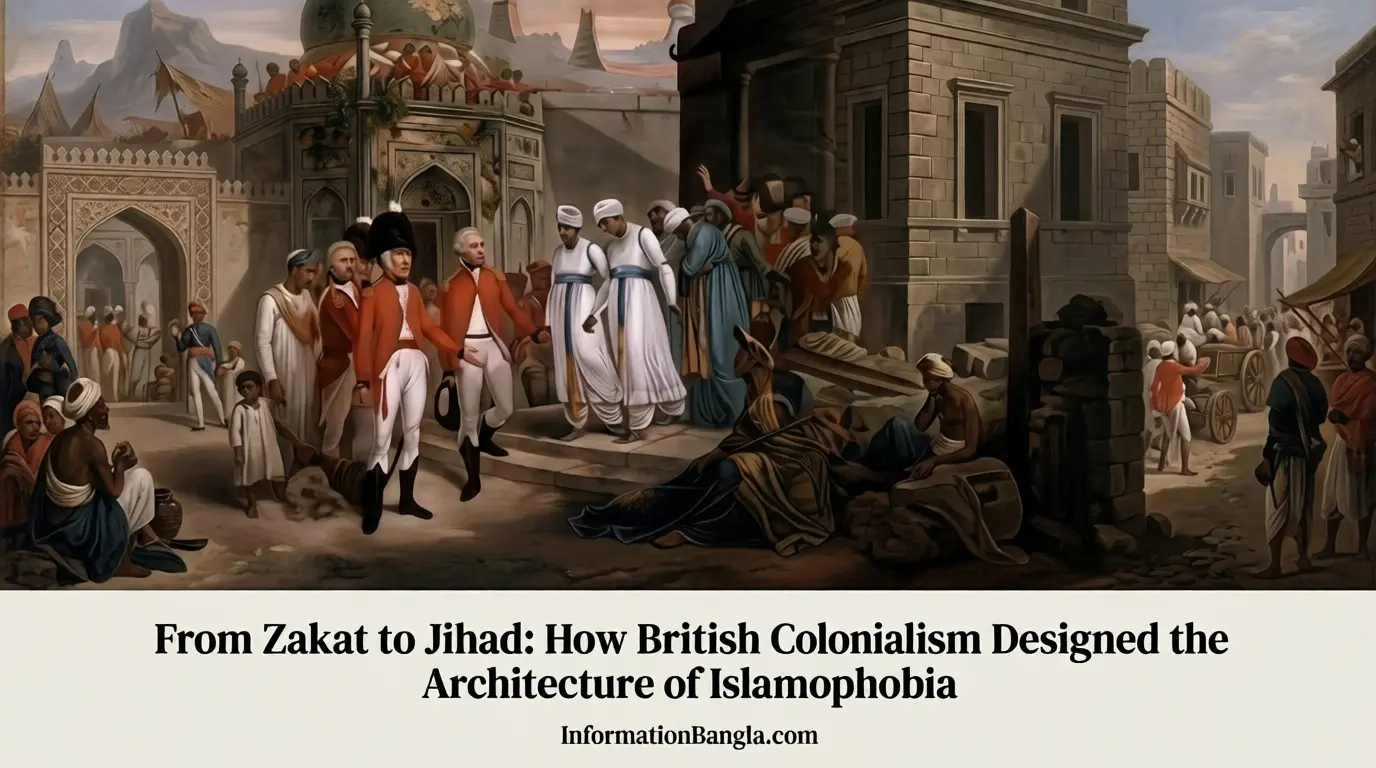
The history of the Indian subcontinent is a tapestry of rich culture, spiritual profoundness, and an enduring struggle for freedom. However, it is also a history scarred by the deliberate, systemic distortion of Islamic values and Muslim identity by colonial rulers.
A profound example of this historical injustice is captured in the William Hunter’s infamous 1871 book, ‘The Indian Musalmans’. This publication served as a foundational blueprint for British colonial Islamophobia, deliberately mischaracterizing Bengali Muslims, twisting sacred Islamic practices, and justifying the dismantling of Islamic social structures.
By examining the historical realities this article aims to dismantle these centuries-old colonial lies, vindicate the noble struggle of Muslim freedom fighters, and present the true, beautiful nature of Islam against institutionalized prejudice.
1. Weaponizing the Sacred: The Distortion of Namaz, Roja, and Zakat
One of the most malicious aspects of colonial propaganda was its attempt to criminalize the core pillars of Islam. William Hunter’s text went so far as to frame basic acts of worship—such as prayer (Namaz), fasting (Roja), and obligatory charity (Zakat)—as the “funding and organization of rebellion.”
To understand how profound this injustice is, we must look at what these pillars truly represent in Islam:
Namaz (Prayer): Ritual prayer is a deeply spiritual connection between a human being and their Creator. It instills discipline, humility, and a sense of absolute equality, as kings and laborers stand shoulder-to-shoulder in the mosque. To frame this spiritual alignment as a political conspiracy was a desperate attempt by the British to criminalize Muslim gathering and solidarity.
Roja (Fasting): Fasting during the month of Ramadan teaches self-restraint, empathy for the hungry, and spiritual purification. It is an internal struggle against one’s ego and desires, not an external plot against an empire.
Zakat (Almsgiving): Zakat is a mandatory spiritual tax meant entirely for socioeconomic justice. It ensures that wealth does not remain concentrated among the rich but is redistributed to the poor, orphans, and destitute.
The Colonial Fear of Islamic Charity
The British empire viewed Zakat through a lens of extreme paranoia. Because Zakat empowered marginalized Muslim communities, making them financially independent of the predatory, British-backed Zamindari (landlord) system, the colonial administration chose to demonize it. They rebranded a divine mechanism of poverty alleviation as a financial pipeline for “terror” or “rebellion,” setting a dangerous precedent for modern Islamophobic narratives that view Muslim charity with inherent suspicion.
2. Reclaiming History: Freedom Fighting vs. “Jihadi Camps”
Hunter labeled indigenous, anti-colonial peasant movements—such as the Faraizi Movement and the Wahhabi/Titu Mir resistance—as mere “Jihadi camps.” In doing so, the British attempted to strip these movements of their legitimate political and economic grievances. The truth is far nobler:
The Faraizi Movement: Founded by Haji Shariatullah and later led by his son Dudu Miyan, this was fundamentally a religious revivalist and peasant protection movement. Bengali Muslim peasants were being brutally exploited, tortured, and heavily taxed by British rulers and their local elite proxies. The Faraizis stood up for the basic human rights of peasants, declaring that all land belongs to God and that human beings cannot be unjustly subjugated.
The Struggle for Justice: When Muslims engaged in Jihad against the British, it was not out of blind hatred or a desire to cause senseless destruction. In Islam, Jihad against oppression is a legitimate defense of life, property, and freedom of faith. The Muslims of Bengal refused to bow down to an occupying force that was draining the wealth of their homeland and starving their families.
By labeling freedom fighters as dangerous fanatics, the British attempted to erase their bravery and justify the brutal military crackdowns, executions, and land confiscations they unleashed upon Muslim communities.
3. The Making of Stereotype: “Lazy, Stubborn, and Unfit to Rule”
To justify their occupation, the British had to invent a narrative that Muslims were inherently incapable of self-governance. Hunter established harmful stereotypes, characterizing Muslims as “lazy,” “stubborn,” and “unfit to rule.”
This was a psychological war designed to give Muslims an inferiority complex while validating British white supremacy. Let us look at the reality:
The Real Legacy of Muslim Governance and Culture
A History of Sophistication: Prior to the British invasion, Muslims had successfully governed the subcontinent for centuries, overseeing eras of immense economic prosperity, architectural marvels, legal order, and global trade. Bengal under Muslim rule was known as the “Paradise of Nations” due to its wealth and thriving textile industries.
The Theft of Wealth: The apparent economic decline or lack of institutional participation among Muslims in the late 19th century was not due to “laziness.” It was the direct result of deliberate British economic sabotage. The British systematically seized Muslim-owned lands, shut down traditional madrasas, and replaced Persian and Arabic with English in administration, effectively rendering the educated Muslim population overnight illiterate and unemployed in the new colonial system.
4. The Erasure of Justice: Dismantling the Qazi System
Hunter argued for the abolition of the post of the Qazi (Islamic judge), framing this destruction of the Islamic legal system as a “reform.” This was an act of cultural and religious erasure:
Destruction of Community Autonomy: The Qazi system provided local, accessible, and faith-congruent justice for Muslims regarding family law, marriage, inheritance, and civil disputes. By abolishing it, the British forced Muslims into a foreign, expensive, and biased colonial legal framework designed to control them rather than protect them.
The Strategy of “Othering”: By destroying indigenous legal institutions, the British successfully turned Muslims into a marginalized, permanently suspected “Other.” They stripped Muslims of their institutional representation, ensuring that their religious identity would always be viewed as incompatible with state governance.
The revelations from William Hunter’s ‘The Indian Musalmans’, serve as a stark reminder that modern Islamophobia is not a new phenomenon. It is a recycled colonial tool. The British empire realized that the greatest threat to their exploitative rule was the unyielding, justice-driven spirit of Islam and the unity of its followers. Therefore, they chose to attack the faith itself—turning charity into conspiracy, prayer into subversion, and resistance into terrorism.
As Muslims and truth-seekers today, rewriting this narrative is a duty. Islam is a religion of peace, systemic justice, spiritual depth, and profound human dignity. The Muslims of Bengal were not “perpetual rebels” out of malice; they were courageous human beings who chose dignity over subjugation. By understanding these historical injustices, we can proudly defend the purity of Islamic principles and stand firmly against the remnants of colonial prejudice that still echo in the world today.
Sharing accurate and reliable information is the job of the Information Bangla editorial desk. The editorial team thoroughly verifies the sources of each article so that you, as the reader, get accurate information. We don't just provide information, we ensure its authenticity and reliability. This team has been doing its job faithfully for five long years.